
Key Takeaways: AI Documentation Integration for Epic and Athena Health Users
-
1Independent platform, native feel: MedLaunch is an independent documentation system, not a built-in feature of Epic or Athena Health. It integrates so deeply that generated notes land directly in the patient record as if they were native.
-
2Eliminating the “Clipboard Workaround”: Integration means no copy-pasting or app-switching. Using the EHR’s own API infrastructure, MedLaunch moves the note from generation to the chart automatically.
-
3The Record System vs. The Engine: Epic and Athena Health act as the secure landing zone. MedLaunch acts as the intelligence layer generating the note, flagging prior auth gaps, and ensuring coding accuracy before delivery.
-
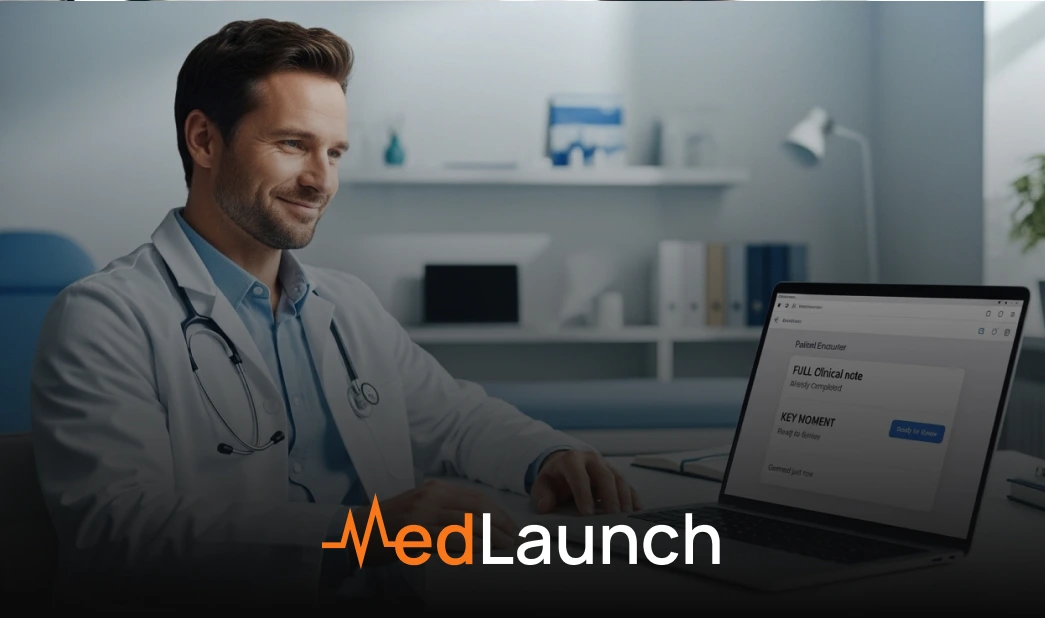
4Seamless Clinical Workflow: Clinicians conduct visits as normal. A draft note appears in the patient record for review and approval without requiring a new login, new interface, or additional administrative steps.
-
5Managed Configuration: MedLaunch handles the heavy lifting of go-live, including API connections, custom note templates, clinical language preferences, and prior auth logic. The clinic handles none of the technical setup.
When clinic owners on Epic or Athena Health ask about AI documentation integration, the question they are actually asking is almost never a technical one. They are not asking about API architecture or authentication flows.
They are asking: What actually changes for my team when this goes live?
That is the right question. And it has a specific, practical answer. But before getting to it, one concept needs to be clear from the start.
MedLaunch Documentation Intelligence is not a feature inside Epic or Athena Health. It is a standalone clinical documentation platform with its own capabilities, its own configuration, and its own managed implementation model. What connects it to your clinic’s EHR is an integration, built into Epic and Athena Health’s open API architecture, that delivers the notes MedLaunch generates directly into the patient record.
Epic and Athena Health are where the notes land. MedLaunch is what generates them, structures them, and makes them coding-ready before they get there.
This guide explains how that integration works in plain clinical terms, what your team experiences day to day, and what MedLaunch configures so your clinic never has to.
Table of Contents
1. What integration actually means for a GP or specialty clinic
The word integration gets used loosely in healthcare technology. It is worth defining precisely what it means in the context of AI documentation and your EHR.
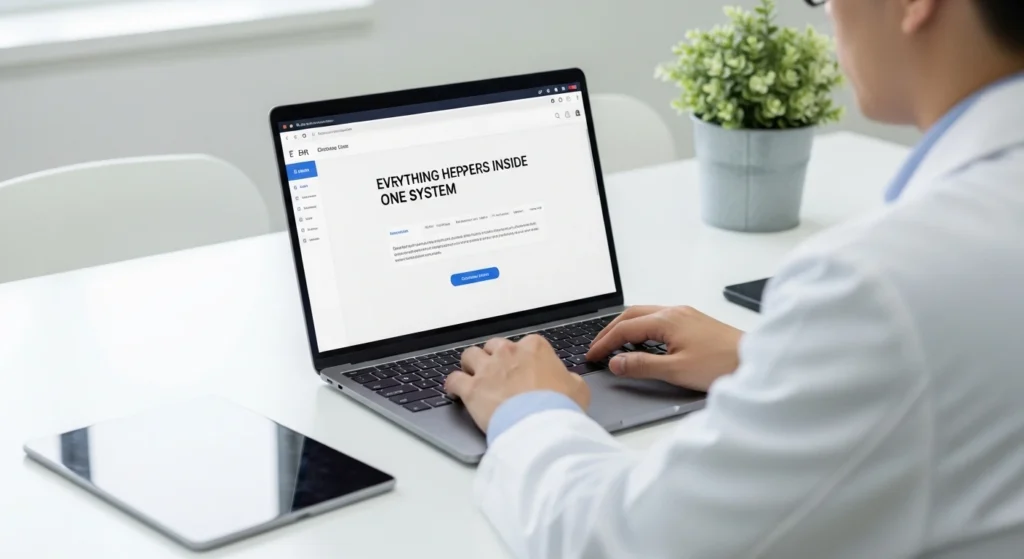
True integration means the AI-generated note lands directly inside the patient record in your EHR, in the correct note format, under the correct encounter, without the clinician copying anything, pasting anything, or switching between applications.
Non-integrated documentation means the note is generated inside a separate app. The clinician copies it. The clinician opens the EHR, finds the correct patient and encounter, and pastes the note in. This clipboard workflow introduces HIPAA exposure, creates friction, and is the primary reason adoption rates for many AI documentation tools collapse after the first few weeks.
When MedLaunch Documentation Intelligence is configured for your Epic or Athena Health environment, the note goes directly into the patient record through the EHR’s own API infrastructure. That is what integration means. Everything else in this guide follows from that definition.
2. What MedLaunch Documentation Intelligence is and what it does
MedLaunch Documentation Intelligence is a standalone clinical documentation platform. It runs independently of your EHR. It has its own processing layer, its own intelligence for prior authorisation gap detection, its own configuration for coding-ready note structure, and its own managed implementation model.
It is not built into Epic. It is not an athenaOne module. It is its own system that integrates with those EHR environments so that everything it generates flows directly into the chart.
What MedLaunch Documentation Intelligence does
During every patient visit, MedLaunch listens using ambient audio technology. It identifies the clinically relevant content from the natural conversation and drafts a structured SOAP note in real time.
Before the clinician signs the note, the system surfaces any documentation gaps that commonly trigger prior authorisation delays or denials. Missing functional impact statements, undocumented conservative treatment history, and absent medical necessity rationale. These are flagged at the point of approval, where they can still be addressed, not after a claim comes back rejected.
Every note is structured for accurate ICD-10 and CPT coding, so billing teams receive documentation that supports the level of care delivered without needing to chase providers for clarification.
The provider reviews, edits if needed, and approves before the note is finalised. Nothing is filed automatically.
What the integration does
The integration is the pathway through which MedLaunch delivers its output into your EHR. It uses the API architecture that Epic and Athena Health both support for third-party clinical tools. The note lands in the correct encounter, in the correct format, directly in the patient record. The clinician never leaves their existing EHR workflow to use MedLaunch.
3. How the integration works with Epic
What Epic is and who uses it
Epic is the largest EHR platform in the US, installed across more than 3,700 hospitals and 45,000 clinics globally. For GP and specialty clinics running on Epic, it is where patient records live, where notes are filed, where billing is driven, and where the clinical team spends its working day.
How third-party tools connect to Epic
Epic’s open API architecture supports third-party clinical tools through a framework called SMART on FHIR. This is the standard pathway for embedding external applications directly into Epic’s clinical workflow. A third-party tool using this integration pathway launches within Epic’s interface, receives patient context from the active encounter, and can write structured data, including clinical notes, directly back into the patient record.
MedLaunch Documentation Intelligence uses this integration pathway. When a clinician is working in Epic and Documentation Intelligence is active, the note generated by MedLaunch is written back into Epic through the same infrastructure Epic itself uses for data exchange. No clipboard. No manual transfer. No additional steps.
What the clinician experiences in Epic
The clinician opens Epic as they always do. They activate the Documentation Intelligence session for the visit, typically a single tap or click within the Epic interface. They conduct the consultation normally. After the visit, the draft note is inside the patient record in Epic, ready for review and approval. Prior auth gaps that were detected are surfaced at that point. The clinician approves the note. Done.
Nothing about how the clinician uses Epic changes other than the note being ready before the next patient comes in.
4. How the integration works with Athena Health
What Athena Health is and who uses it
Athena Health serves more than 160,000 providers through its athenaOne platform. It is built specifically for independent and group practices, which makes it a common EHR choice for the small and mid-size outpatient clinics MedLaunch Documentation Intelligence is designed for. For clinics on athenaOne, it is the EHR where patient records, clinical notes, billing, and scheduling all live.
How third-party tools connect to Athena Health
Athena Health operates as an open, cloud-native platform that supports third-party integrations through its API architecture. Athena Health specifically supports external clinical tools connecting directly to athenaOne, writing notes and structured data back into the patient record without requiring clipboard transfer or manual data entry.
MedLaunch Documentation Intelligence integrates with athenaOne through this same architecture. The note generated by MedLaunch is delivered into the athenaOne patient record through the platform’s API structure. Direct to chart. No switching between applications.
What the clinician experiences in Athena Health
The experience in Athena Health mirrors the Epic experience. The clinician works in athenaOne as they always do. They activate the Documentation Intelligence session at the start of the visit. The consultation proceeds normally. After the visit, the draft note is inside the patient record in athenaOne, prior auth gaps are surfaced if any were detected, and the clinician reviews and approves before signing.
The clinical workflow does not change. The documentation experience does.
5. What the integrated workflow looks like visit by visit

This is what a clinical day actually looks like when MedLaunch Documentation Intelligence is running inside an Epic or Athena Health environment.
Before the visit
Nothing changes. The provider opens their schedule in Epic or athenaOne as they always do. There is no separate login, no separate app to open, and no setup required before each session. The integration is already in place.
During the visit
The clinician activates the Documentation Intelligence session, typically a single tap or click from within the EHR environment. The patient is informed that an AI tool is assisting with note-taking. The consultation proceeds as normal. MedLaunch listens passively in the background, identifying the clinically relevant content from the natural conversation.
Immediately after the visit
Before the next patient is called, a draft note is inside the patient record, ready for review and approval. Prior auth gaps that were detected during the visit are surfaced at this point. The clinician reads the note, edits anything they want to change, and approves it. The note is finalised in the record.
End of the clinical day
The notes are done. Not pushed back to evenings. Not waiting in a backlog. Reviewed, approved, and filed during the session before the last patient leaves. The 1.2 hours of average after-hours documentation that defines clinical life for many GP and specialty providers disappears.
6. What your clinicians never have to touch

This is the part clinic owners rarely hear about because it is not technically interesting. It is operationally the most important.
When Documentation Intelligence is properly integrated with your EHR, your clinicians never have to:
- Copy a note from one application and paste it into another
- Reformat AI-generated output to match the clinic’s note templates
- Manually route notes to the correct encounter or patient record
- Chase down a prior auth issue that should have been caught at the visit. If you want to understand what those gaps cost when they are not caught, the AI Medical Scribe vs Documentation Intelligence comparison covers this directly.
- Answer billing team queries about undercoded or incomplete notes
Everything in that list either disappears entirely or is handled at the point of the visit before the clinician ever leaves the room.
7. What MedLaunch configures before your first live session
The clinic’s experience on day one is entirely dependent on how well the integration is configured before go-live. This is where most AI documentation implementations either succeed or quietly fail.
MedLaunch handles the entire setup process. The clinic’s team involvement during setup is minimal, which matters for a small or mid-size outpatient practice that does not have a dedicated IT team or clinical documentation specialist to manage an implementation project.
EHR API connection and authentication
MedLaunch establishes the integration with your specific Epic or Athena Health environment. This includes the API connection, authentication configuration, data access controls, and the note write-back pathway. Everything is tested end to end before any live patient sessions.
Note template configuration
Before go-live, MedLaunch configures Documentation Intelligence to match your clinic’s specific note templates, preferred clinical language, and documentation structure. Notes generated by the system read as if your providers wrote them. Not generic AI output that requires significant editing. Configured output that reflects how each provider in your clinic actually documents.
Per-provider preferences
In a multi-provider clinic, each provider has their own preferred documentation conventions. A cardiologist documents differently from a GP. A physiotherapist documents differently from a psychologist. MedLaunch configures per-provider templates and language preferences before the first live session so each clinician receives notes that reflect their style from day one.
Prior auth gap logic
MedLaunch configures the prior authorisation gap detection logic based on the specific payers and specialties your clinic works with. The gaps that are flagged are the ones that matter for your clinic’s revenue, not a generic checklist. For more on what documentation gaps actually cost when they are not caught at the point of care, see how documentation quality affects clinic revenue.
Go-live timeline
From initial setup through EHR integration, template configuration, per-provider preferences, and staff briefing, most clinics are fully live within two to four weeks. After go-live, MedLaunch stays embedded as the clinic’s technology partner. Ongoing monitoring, performance refinement, and technical maintenance are handled by MedLaunch. The clinic does not manage the documentation technology.
Frequently Asked Questions
Is MedLaunch Documentation Intelligence a feature inside Epic or Athena Health?
No. MedLaunch Documentation Intelligence is a standalone clinical documentation platform. It is its own independent system with its own processing, prior auth gap detection, and coding-ready note generation. It integrates with Epic and Athena Health through those EHRs’ API architecture so that notes land directly in the patient record. Your EHR is where the notes live. MedLaunch is the platform that generates, structures, and delivers them.
What happens if my Epic or Athena Health system updates?
MedLaunch monitors and maintains the integration on an ongoing basis. If your EHR updates and the integration needs to be verified or adjusted, MedLaunch handles it. The clinic does not manage the technical maintenance of the connection. This is part of the ongoing managed partnership, not a separate support request.
Can each provider in my clinic have different note templates?
Yes. MedLaunch configures per-provider templates and language preferences as part of the setup process. In a multi-provider clinic, each clinician can have their own note format, preferred clinical language, and documentation conventions configured before the first live session. Notes produced for each provider reflect their individual documentation style, not a generic clinic-wide template.
How long does the EHR integration setup take?
Most clinics are fully live within two to four weeks from the start of setup. MedLaunch manages the entire implementation including EHR API connection, note template configuration, per-provider preferences, prior auth gap logic, and staff briefing. The clinic’s involvement during this period is minimal. No IT team or project management resource is required from the clinic’s side.
Is patient data protected through the EHR integration?
All data processed through the integration is encrypted in transit and at rest. The integration uses the EHR’s native authentication and access control infrastructure, meaning data access is governed by the same security architecture your clinic already relies on. Audio is deleted after note generation. A Business Associate Agreement is in place with MedLaunch before any patient data is processed. For a detailed walkthrough of every compliance element, see the full HIPAA compliance guide for AI clinical documentation.
Conclusion
The integration question that most Epic and Athena Health users have is not really about technology. It is about what changes, who manages it, and whether the tool is built for a clinic their size.
MedLaunch Documentation Intelligence is its own platform. It generates the notes, flags the prior auth gaps, and structures the documentation for coding accuracy. The integration with Epic and Athena Health is what delivers that output into the patient record, seamlessly, inside the EHR workflow your team already uses.
The setup is managed entirely by MedLaunch. The ongoing maintenance is managed by MedLaunch. Your clinicians conduct their visits as they always have and find a draft note ready for review before the next patient walks in.
If you want to see how the integration is configured specifically for your Epic or Athena Health environment, the assessment call is where that conversation starts.
Ready for seamless integration with Epic or Athena Health?
Book a free assessment call to see how MedLaunch delivers automated notes directly to your patient charts with zero copy-pasting.