
Key Takeaways: What chiropractic patients ask in Instagram DMs
-
1The Five Categories: Chiropractic patient DMs fall into five predictable categories: condition questions, pricing and billing, first visit logistics, wait times and availability, and trust and credentials.
-
2The Pre-Qualification Phase: The most common DM is not a booking request. It is a question. Patients are pre-qualifying your clinic before they commit to making first contact.
-
3Quality of Response: How a clinic responds to these questions, not just whether it responds, is what converts a curious DM into a confirmed appointment.
-
4Strategic Conversion: Each question category has a specific response pattern that moves the patient toward booking rather than leaving them in a holding pattern.
-
5Automated Pre-Booking: An AI bot configured with the right responses to these questions can handle the entire pre-booking conversation automatically, at any hour, without involving the front desk.
Before a chiropractic patient books an appointment, most of them have a conversation. Not on the phone. Not through a contact form. In the Instagram DMs of the clinic they have been watching.
These conversations follow remarkably consistent patterns. The same questions appear across different clinics, different locations, and different patient demographics. Patients who have never seen a chiropractor before ask the same things as patients who are returning after a gap. New patients comparing two clinics ask the same things as patients who have already decided on the clinic but have not yet committed.
Understanding exactly what these questions are, what they signal about the patient’s mindset, and how to respond to them in a way that moves the conversation toward a booking is one of the most practical improvements a chiropractic clinic can make to its Instagram setup. This post breaks down the five question categories, gives you the exact DMs patients send, and shows you how to respond to each one.
Table of Contents
1. Why Patients DM Before Booking: The Psychology Behind the Question
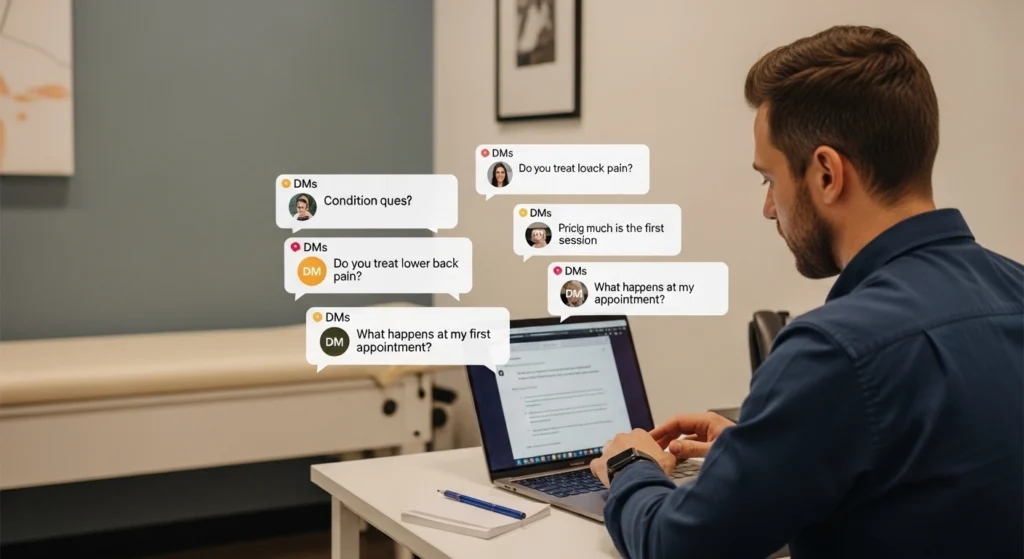
Instagram has changed the patient research journey in a specific way. According to EBSCO’s social media in healthcare research, more than 40% of healthcare consumers use social media to guide their selection of providers, hospitals, and clinics. Patients now arrive at the DM conversation having already done significant trust-building through your content.
The patient who sends an Instagram DM before booking is not behaving irrationally. They are doing exactly what any informed consumer does before committing to a service they have never used or a provider they have never visited. They are pre-qualifying.
Instagram has changed the patient research journey in a specific way. Patients now arrive at the DM conversation having already done significant trust-building through your content. They have watched your Reels, read your captions, and seen how you interact with comments. By the time they send a DM, they are not starting from zero. They are finishing the evaluation.
The DM question is the last barrier between a warm prospect and a booked patient. It is the moment where the patient is essentially saying: “I am close to booking. I just need this one thing confirmed first.”
The implications for how a clinic should respond are significant. These patients do not need to be sold to. They do not need marketing language or enthusiastic pitches. They need a clear, specific, trustworthy answer to their question, followed by a natural invitation to take the next step.
2. Category One: Condition and Treatment Questions
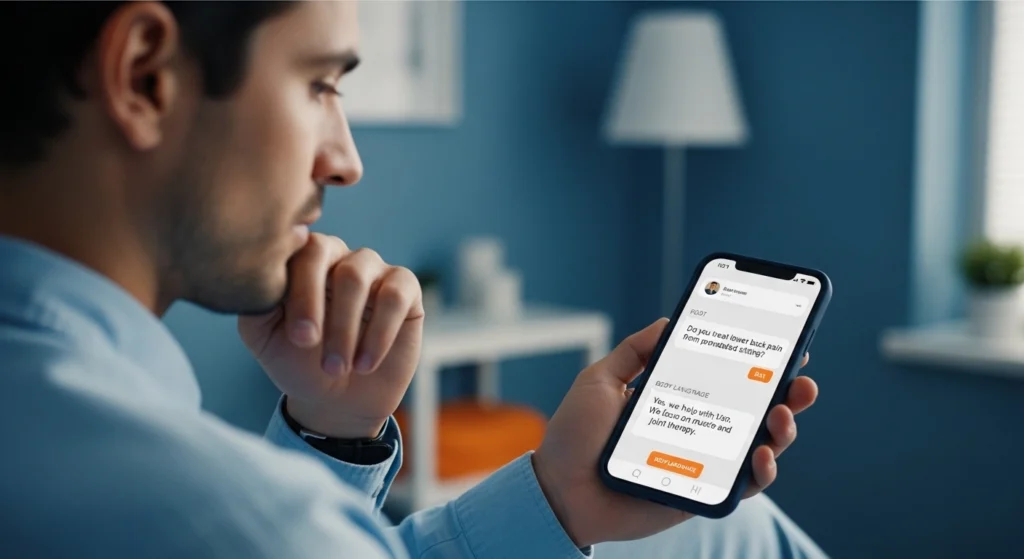
This is the most common DM category for chiropractic clinics and the one with the highest conversion potential. The patient is describing a specific symptom or condition and asking whether chiropractic treatment can help. They are not asking out of academic curiosity. They are asking because they have a problem, and they want to know if you are the solution.
The DMs You Will Recognise
“Do you treat lower back pain from sitting at a desk all day?” — New patient, self-identified pain source
“I have a herniated disc at L4/L5. Can chiropractic help with that?” — Patient with diagnosis, evaluating suitability
“My neck has been locked up for two weeks. Would this be something you see?” — Acute presentation, high urgency
“I was in a car accident six months ago and still have whiplash. Is it too late to see a chiropractor?” — Post-trauma patient with time concern
“I get migraines every week. Has chiropractic helped with that for other patients?” — Seeking evidence, not just confirmation
What These DMs Signal
Every one of these messages is from a patient who has already done enough research to know that chiropractic might be relevant to their situation. The question is whether your clinic specifically treats its specific issue. The subtext is: “I want reassurance that I am not wasting my time or money.”
How to Respond
The response to a condition question should do three things. First, confirm directly that you treat this type of issue. Second, add one specific detail that demonstrates clinical familiarity with their condition, not a generic answer. Third, move toward a booking with a specific and low-friction invitation.
Example response: “Yes, lower back pain from prolonged sitting is one of the most common presentations we see. We assess the specific muscles and joints involved and work on both the immediate pain and the postural patterns contributing to it. Do you want to grab a new patient spot this week? We have availability on Wednesday and Thursday.”
The response that does not convert is the one that is technically accurate but impersonal. “Yes, we treat back pain. Please call us to book,” loses the patient at the point of peak interest. The specificity of the response is what builds the final layer of trust.
3. Category Two: Pricing and Billing Questions
Pricing questions are the second most common DM category and the one clinic owners tend to find most awkward to answer. There is a natural instinct to avoid specific numbers in a DM conversation and redirect to the phone or to a consultation. This instinct, while understandable, consistently kills conversions.
The DMs You Will Recognise
“How much does a first appointment cost?” — Direct pricing question, decision depends on the answer
“Do you accept private health insurance?” — Practical qualifier, patient needs this confirmed
“Is there a Medicare rebate for chiropractic?” — Government billing question, common in Australia
“Do you offer payment plans or health fund rebates?” — Budget-conscious patient, not necessarily price sensitive
“What is the difference in cost between an initial and a follow-up appointment?” — Patient planning ahead, high intent signal
What These DMs Signal
A patient asking about pricing via DM has usually already decided they want to book. The price question is the final practical filter, not the first question for someone who is unsure. If the price is within their range, they will book. If the clinic fails to answer clearly, they will move on to a competitor who does.
How to Respond
Give a direct answer. If there is a range, give the range. If you accept specific health funds, name them. If there is a Medicare item number that applies, say so. Patients asking pricing questions via DM are not going to call to find out if you cannot give them a number in the chat.
Example response: “Initial consultations are $90, and follow-ups are $65. We accept all major health funds, including Medibank, BUPA, and HCF, so most patients receive a rebate on the spot. Would you like to lock in a new patient appointment this week?”
The one exception where redirecting makes sense is if the pricing question involves complex billing scenarios that genuinely require a conversation. Even then, acknowledge the question directly first before redirecting: “Our billing depends on your specific cover level, which we can check on the spot when you arrive. Initial consultations are $90 before your rebate. Want to grab a time this week?”
4. Category Three: First Visit Logistics Questions
First visit logistics questions come almost exclusively from patients who have never seen a chiropractor before. They are not asking because they are indecisive. They are asking because the unknown is the barrier. Once they know what to expect, they are ready to book.
The DMs You Will Recognise
“What happens at the first appointment?” — Classic new patient question, an unfamiliarity barrier
“How long does the first session usually take?” — Time management concern, not a hesitation signal
“Do I need to bring anything with me?” — Practical logistics, the patient is planning to come
“Should I wear anything specific?” — Comfort concern, patient is visualising the visit
“Will you actually adjust me on the first visit or is it just an assessment?” — Expectation management question
“I have never been to a chiropractor before. What should I expect?” — Broadest version of the logistics question
What These DMs Signal
Every logistics question is a signal that the patient is mentally preparing for the visit. They are not asking whether to come. They are asking what the future will be like. This is one of the highest intent DM categories because the patient has already made the internal decision and is now in preparation mode.
How to Respond
Walk them through the first appointment in three to four sentences. Be specific about timing, what will happen, and what they need to bring or wear. End immediately with a booking invitation because this patient is ready.
Example response: “The first appointment is around 45 minutes. We start with a full health history and assessment to understand exactly what is going on, then move into treatment if appropriate. Wear comfortable clothing you can move in and bring any relevant scans or previous treatment notes if you have them. We have availability this week if you want to get started.”
This category of DM is the one most benefited by a behind-the-scenes first visit Reel pinned to your profile. If patients can watch a 60-second walkthrough of a first appointment before they even DM, this entire category of questions reduces significantly.
5. Category Four: Wait Time and Availability Questions
Availability questions have the shortest conversion window of any DM category. According to Marketing Charts research surveying over 1,000 social media users, 52% of consumers expect a brand to respond to a social media message within one hour. For patients in active pain asking about this week’s availability, that window is even shorter.
Availability questions are almost always asked by patients in active pain or with a specific time pressure. They are not browsing. They need an appointment, and they need to know if they can get one soon.
The DMs You Will Recognise
“How long is the wait for a new patient appointment?” — Urgency driver, patient may go elsewhere if wait is long
“Do you have anything available this week?” — Immediate need, decision made in minutes
“Are there any cancellations or last minute spots?” — Patient in pain, urgency is high
“What are your hours? Do you have early morning or evening appointments?” — Scheduling constraint, not a hesitation signal
“Do you see patients on weekends?” — Work schedule conflict, a common barrier for full-time workers
What These DMs Signal
Availability questions have the shortest conversion window of any DM category. The patient asking “do you have anything this week” is simultaneously asking the same question to one or two other clinics. Whoever responds first with an available time wins the booking.
This is the DM category where response time has the most direct and measurable impact on revenue. A response that arrives two hours later often finds that the patient has already booked elsewhere.
How to Respond
Name specific times immediately. Do not say “yes we have availability, please call to book.” That extra step loses the patient. Check your schedule and give them two or three concrete options in the DM itself.
Example response: “Yes, we have new patient spots available this week. Tuesday at 10 am, Wednesday at 4pm, and Thursday at 8am are all open. Which of those works for you?”
This is the category where automation has the most dramatic impact. A patient who DMs at 9 pm asking about this week’s availability and receives an immediate response with specific times will book that night. The same patient who receives a response the following morning has a 70% chance of having already booked elsewhere. For a full breakdown of the after-hours booking gap for chiropractic clinics, Where Chiropractic Patients Actually Want to Book: 6 Surprising Truths in 2026 covers the data in detail.
6. Category Five: Trust and Credentials Questions
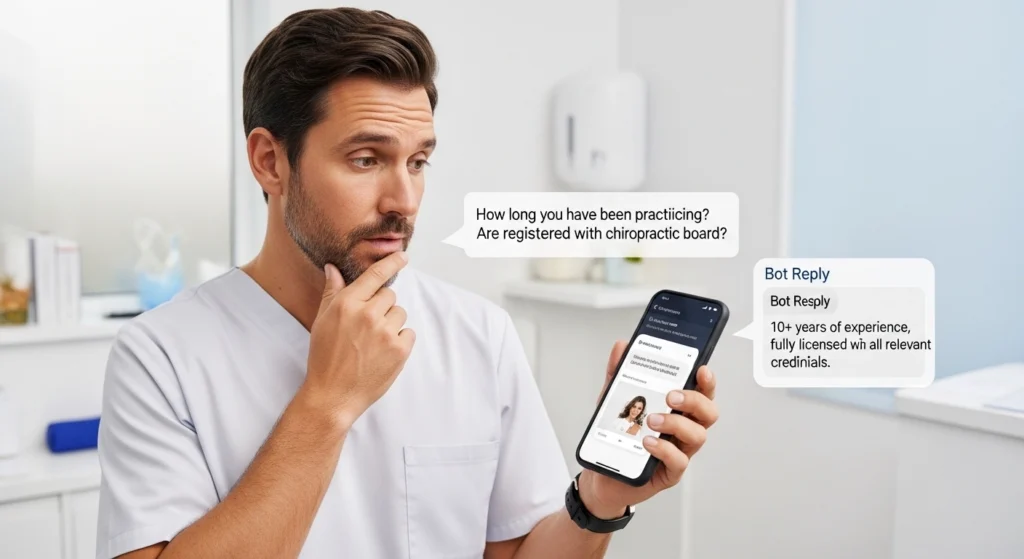
Trust questions are the most emotionally significant DM category and the one that requires the most careful response. Patients asking about credentials, experience, or results are not being difficult. They are managing risk around a health decision they feel vulnerable about.
The DMs You Will Recognise
“How long have you been practising?” — Experience qualifier, patient wants a senior practitioner
“Do your chiropractors specialise in anything in particular?” — Specialty match question
“Have you treated people with my condition before? What kind of results do you get?” — Evidence of effectiveness, common from sceptical patients
“Are you registered with a chiropractic board?” — Legitimacy check, often from patients new to chiropractic
“I have had a bad experience with a chiropractor before. What makes your approach different?” — Previous negative experience, trust needs to be rebuilt
“Is the adjustment safe? I am nervous about the neck cracking.” — Safety concern, very common from first time patients
What These DMs Signal
These are the questions from patients who want to book but have something holding them back. It might be a previous bad experience, a family member’s warning, or simply the unfamiliarity of manual therapy on the spine. The question is not an objection. It is a request for reassurance from someone who is leaning toward yes.
How to Respond
Answer the specific question directly and personally, not with a generic credential list. Acknowledge the concern behind the question before answering it. If the patient mentions a previous bad experience, acknowledge it genuinely before explaining your approach.
Example response to the safety concern: “It is completely normal to feel nervous, especially if you have not been adjusted before. The sound you sometimes hear is just gas releasing from the joint, not anything cracking. We always explain exactly what we are doing before we do it and never apply a technique without your understanding and comfort. We also use gentler methods for patients who prefer to avoid the traditional adjustment entirely. Happy to chat more about this when you come in.”
Example response to the previous bad experience: “That is really understandable and I am sorry to hear that. The most common reason people have bad experiences is a mismatch between their specific issue and the technique used, or not enough time taken on the initial assessment. We spend the whole first appointment understanding exactly what is going on before we touch anything. Would it help to come in for a chat first before committing to a full treatment?”
7. The Response Principles That Convert Every Category
Across all five question categories, the responses that convert DM conversations into bookings share four consistent characteristics.
Specificity Over Generality
A specific answer builds more trust than a comprehensive one. “We have treated hundreds of patients with sciatica” is less persuasive than “we see a lot of patients with sciatica specifically from lumbar disc issues, which is the most common source.”
Acknowledgement Before Answer
For questions that carry emotional weight, particularly trust and safety questions, a brief acknowledgement of the concern before the answer creates a completely different tone. “That is a great question” is not an acknowledgement. “It is completely normal to feel nervous.”.
Answer Then Invite, Every Time
Every response to a DM question should end with a specific, low-friction booking invitation. Not “let us know if you want to book” but “we have Tuesday at 10 am and Thursday at 4 pm available this week. Which works better for you?” The specificity of the invitation reduces the patient’s cognitive load and makes booking the path of least resistance.
Speed Above All Else
All of the above is irrelevant if the response arrives six hours after the question. In the DM environment, a well-crafted response that arrives in the morning is beaten by an adequate response that arrives in under five minutes. Speed of response is the single highest-impact variable in DM conversion for chiropractic clinics. This is covered in depth in the context of the response gap in Why Your Chiropractic Clinic Is Losing Patients in the DMs.
8. How an AI Bot Handles These Conversations Automatically
The practical challenge for most chiropractic clinics is not knowing how to respond to these questions. It is responding to them fast enough, consistently enough, and at the right hours. A front desk team that is managing a full clinic cannot monitor Instagram DMs in real time. The conversations that happen after 5pm, on weekends, and during busy treatment sessions go unanswered until it is too late.
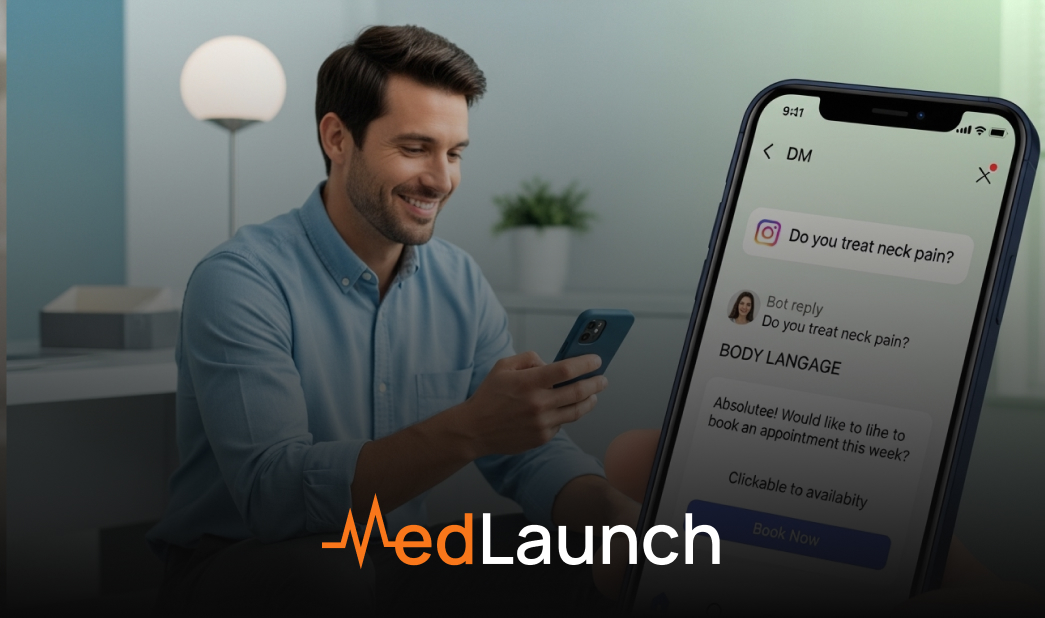
A properly configured Instagram AI bot handles this by pre-loading the clinic’s specific responses to each question category. When a patient DMs a condition question, the bot responds with a clinic-specific answer about that condition. When a patient asks about availability, the bot checks the live schedule and offers real times. When a patient asks about pricing, the bot gives the actual numbers.
The bot does not give generic answers. It gives the answers the clinic has configured, in the clinic’s voice, to the specific question being asked. And it does it in under one minute, at any hour, without any involvement from the front desk.
For complex questions that fall outside the bot’s configured scope, particularly detailed clinical questions or patients with complicated histories, the bot flags the conversation and notifies a staff member to follow up personally. The human handles the edge cases. The bot handles the 80% of DMs that follow predictable patterns.
For a full walkthrough of how MedLaunch’s Instagram AI Bot is configured for chiropractic clinics, How Instagram AI Bots Help Chiropractic Clinics Book More Patients on Autopilot covers the setup and workflow in detail.
Conclusion
The patients DMing your chiropractic clinic are not difficult to convert. They are asking predictable questions in predictable patterns and they are doing so because they are close to booking. The question about their condition is asking: “Can you help me?” The question about pricing is asking: “Can I afford this?” The question about the first visit is asking: “What is this going to feel like?” The availability question is asking: “Can I come soon?” The trust question is asking: “Can I trust you?”
Every single one of those questions has a response pattern that answers it directly and ends with a booking invitation. The clinics that have these responses ready, that deliver them within minutes rather than hours, and that do so around the clock without relying on the front desk to monitor Instagram, are the clinics converting their Instagram audiences into full appointment books.
The content attracted them. The response converts them.
Frequently Asked Questions
What do chiropractic patients ask in Instagram DMs before booking?
Chiropractic patient DMs fall into five predictable categories: condition and treatment questions where patients ask whether you treat their specific issue, pricing and billing questions about cost and health fund cover, first visit logistics questions about what to expect, wait time and availability questions from patients with urgency, and trust and credentials questions from patients managing risk around a healthcare decision.
How should a chiropractic clinic respond to a condition question on Instagram?
The response should confirm directly that you treat the condition, add one specific clinical detail that demonstrates familiarity with that issue, and end with a concrete booking invitation including specific available times. A response that is technically accurate but impersonal fails to convert. Specificity is what builds the final layer of trust that moves a curious DM into a confirmed booking.
Should chiropractors answer pricing questions in Instagram DMs?
Yes. Patients asking pricing via DM have almost always already decided to book and are using price as a final practical filter. A clinic that redirects to the phone without giving a number loses a high proportion of these patients to competitors who answer directly. Give a clear number, name the health funds you accept, and end with a booking invitation.
Why do new chiropractic patients ask logistics questions before booking?
First visit logistics questions come almost exclusively from patients who have never seen a chiropractor before and are managing uncertainty about an unfamiliar healthcare experience. These questions signal high intent. The patient has already decided to come. They are mentally preparing for the visit. A clear, specific walkthrough of the first appointment followed by a booking invitation converts this category at a very high rate.
How quickly does a chiropractic clinic need to respond to an Instagram DM?
Within one hour is the standard expectation, but for availability questions from patients in active pain the window is shorter. Patients asking about this week’s availability are often simultaneously contacting multiple clinics. The clinic that responds first with specific available times wins the booking. After hours enquiries that receive an automated response within minutes convert at significantly higher rates than those that receive a manual response the following morning.
What should a chiropractic clinic say to a patient who mentions a bad previous experience in a DM?
Acknowledge the previous experience genuinely before explaining your approach. Do not minimise it or immediately pivot to marketing language. Briefly explain the most common causes of poor chiropractic experiences, such as inadequate initial assessment or technique mismatch, and explain specifically how your intake process addresses these. Offer a lower commitment first step such as an initial assessment conversation before a full treatment session.
Can an AI bot handle chiropractic patient DM questions effectively?
Yes, when it is configured with clinic-specific responses to each question category. A healthcare-specific Instagram AI bot pre-loaded with the clinic’s actual pricing, available conditions treated, first visit process, and scheduling availability can answer the majority of chiropractic patient DMs accurately and immediately. Complex clinical questions and patients with complicated histories are flagged for human follow up. The bot handles the predictable 80% so the clinic team can focus on the edge cases.
What is the most common Instagram DM a chiropractic clinic receives?
Condition and treatment questions are the most common category, where patients describe a specific symptom and ask whether chiropractic can help. These are followed by pricing and billing questions. Both categories have high conversion potential because the patient is close to booking and needs only a clear, specific answer to commit. The question is not an obstacle. It is the last step before a confirmed appointment.
How do chiropractic patient DMs differ from website enquiries?
Instagram DMs come from patients who have already done trust-building through your content. They arrive warmer and more specific than website contact form submissions. The questions are more personal and more detailed. The conversion window is also much shorter. A website enquiry can wait several hours. An Instagram DM from a patient asking about this week’s availability has a conversion window measured in tens of minutes before the patient moves on.
How can a chiropractic clinic use common DM questions to improve its content?
The five DM question categories are a direct map of what your audience needs before they feel confident booking. Condition questions signal a need for more condition-specific Reels. Logistics questions signal a need for a first visit walkthrough video. Trust questions signal a need for more patient results content and credentials visibility. Each category of DM you receive consistently is a content brief. Creating content that answers these questions proactively reduces the DM volume while also converting followers who would never have reached out directly.
Stop Losing Leads to Slow Response Times
The content attracted them, now let the response convert them. See how MedLaunch configures Instagram AI to answer patient questions and book appointments 24/7.