

Key Takeaways: Why GPs Charting After Hours in 2026
-
1The “After-Hours” Tax: 85% of clinicians perform after-hours charting, losing an average of 8.2 hours weekly the equivalent of 53 full working days lost every year to documentation.
-
2The Real Driver of Burnout: Administrative load, not patient complexity, is the leading cause of GP burnout. 62% of physicians cite the EHR and the “piles of notes” following them home as their primary stressor.
-
3The 15:9 Ratio: For every 15 minutes spent with a patient, GPs spend 9 minutes charting. Over one-third of clinical time is currently spent staring at a screen rather than delivering care.
-
4Structural Failures: Current EHR systems are built for billing and compliance rather than clinical workflow. Because the problem is structural, “typing faster” or better habits cannot fix the inherent inefficiency.
-
5The AI Solution: MedLaunch Documentation Intelligence ends the workday when the clinic closes. By listening to consultations and structuring SOAP notes in real-time, it delivers finished records to Epic or Athena before the next patient arrives.
The scene is familiar to every GP who has been in practice for more than a week. The last patient leaves at 6pm. The notes are not done. There are 20 encounters to close, a stack of results to review, and a backlog that grew during a lunch break that did not happen.
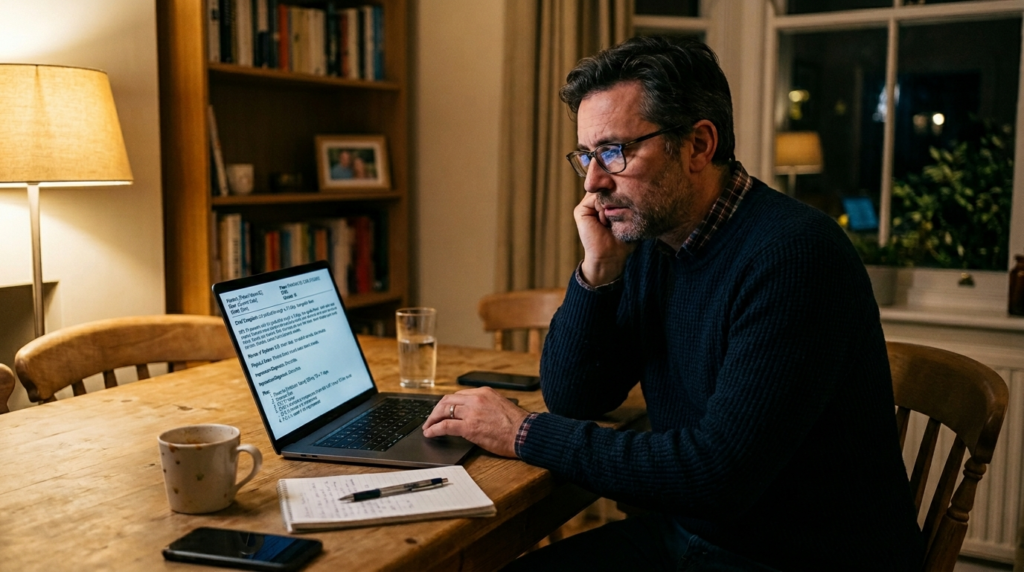
By 10pm, the laptop is on the kitchen table. The notes are almost finished. Tomorrow’s clinic starts at 8am.
This is not a time management problem. It is not a typing speed problem. It is not a problem that another reminder to “chart in real time” is going to fix. It is a structural feature of how clinical documentation works in 2026, and for most GPs it has been the defining feature of their professional life for years.
This guide explains exactly why it happens, what it costs, and how AI documentation has finally made it unnecessary.
Table of Contents
1. What the data actually says about after-hours charting
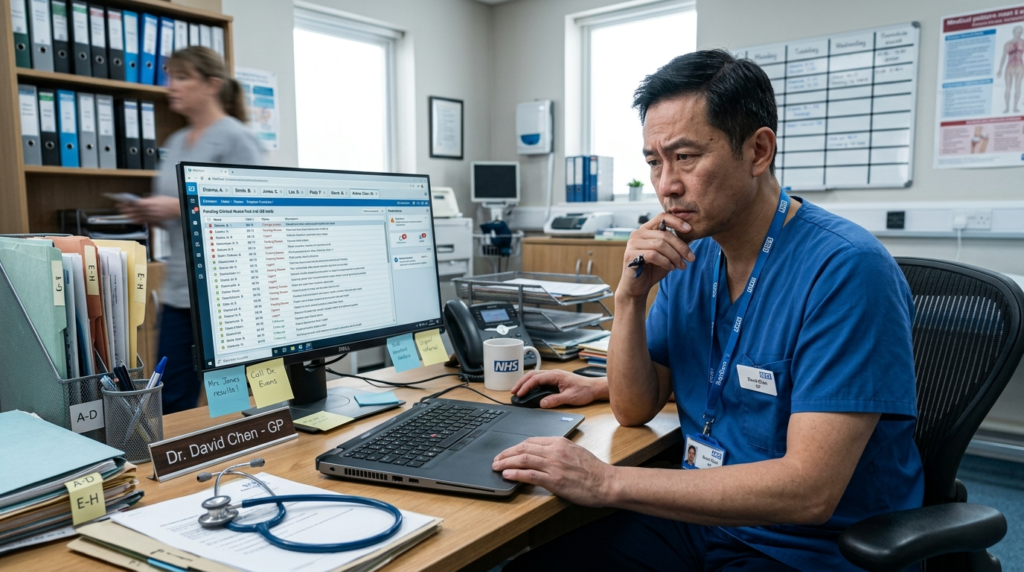
The scale of the problem is larger than most clinic owners recognise because it is so normalised within clinical culture that it rarely gets measured directly.
A survey of 252 US healthcare professionals found that 85% participate in after-hours charting, averaging 8.2 hours of it every week. That is not a rounding error. It is the equivalent of a full additional working day every week, logged after clinic hours, at home, without recognition or compensation.
For primary care physicians specifically, the burden is heavier. Studies estimate primary care physicians spend approximately 3 hours per day on clinical documentation alone. For every 15 minutes spent with a patient, 9 minutes go to EHR charting. More than one third of clinical time is screen time rather than patient time.
According to an exclusive AMA survey, 20.9% of physicians reported spending more than eight hours on the EHR outside normal work hours per week, which is the same figure as in 2022. Despite years of EHR improvements, awareness campaigns, and efficiency initiatives, the volume of after-hours charting has not moved.
What clinicians are actually doing during pajama time
The most time-consuming tasks during after-hours EHR work included charting at 56%, responding to patient messages at 40%, and reviewing labs or imaging at 33%. Charting alone accounts for more than half of all after-hours EHR time. It is the single largest component of what clinical life looks like after the clinic closes.
One in three clinicians do their after-hours charting between 6pm and 9pm, cutting directly into dinner, family time, and rest. Half have cancelled or delayed personal plans due to after-hours charting. One in five has had it cause conflict with a partner, family member, or friend.
2. Why documentation follows GPs home in the first place
Understanding why this problem persists requires understanding how clinical documentation actually works in a GP setting, not how EHR vendors describe it.
The consultation is designed for the patient. The EHR is designed for the record.
A GP consultation lasts 10 to 15 minutes. In that time, the clinician is listening, examining, reasoning, communicating, and making decisions. They are not typing. The consultation cannot be a documentation session and a clinical encounter at the same time without one of them suffering.
The moment documentation is deferred beyond the consultation, it enters a queue. That queue grows across the clinical day. By the time the last patient leaves, the queue is the day’s work done in reverse, reconstructed from memory, shorthand, and whatever fragments made it into the system in real time.
EHR design creates the backlog, not clinician habits
EHR designs that require excessive clicks or fields, suffer from slow system performance, or lack automation were identified as the top contributors to after-hours charting by clinicians themselves.
The design of most EHR systems prioritises billing compliance, regulatory documentation, and audit-ready records. They are not designed to capture a clinical encounter as it happens. They are designed to record it afterward in a structured format that serves payers and administrators rather than the clinician who needs to document it quickly and move to the next patient.
High patient volumes eliminate the time to chart between consultations
A typical GP sees 20 to 30 patients per day. The gap between consultations is the transition time: walking the previous patient out, calling the next one in, reviewing the prior notes before sitting down. There is no administrative window between patients for a 10-minute SOAP note. That window does not exist on a full GP schedule.
The documentation backlog builds continuously from the first patient of the day. The clinical day ends. The administrative day continues at home.
3. What after-hours charting costs beyond the obvious
The personal cost of after-hours charting is visible in every GP’s domestic life. The professional and financial costs are less discussed but equally significant.
Documentation is the leading driver of GP burnout
Nearly two-thirds of physicians, 62%, point to administrative work, specifically charting and paperwork, as their top source of burnout. Not difficult diagnoses. Not complex patients. Not the emotional weight of delivering bad news. The paperwork. The screen. The notes.
In 2024, 43% of physicians reported burnout, rising to 53% among primary care doctors. The leading cause was documentation. Primary care, the specialty with the highest patient volumes and the broadest documentation requirements, consistently shows the highest burnout rates in national surveys.
A new study published in Academic Medicine in 2026 found that nearly one third of medical residents regularly spend hours after their shift on after-hours charting. Those who typically spend three or more hours per night on pajama time are significantly more likely to experience burnout. The pattern established in residency follows clinicians into career-long practice.
Burnout directly affects clinical quality
Burned-out physicians are more likely to make medical errors, reduce their clinical hours, and leave medicine entirely. In a system already facing a projected shortage of up to 86,000 physicians by 2036, losing experienced doctors to burnout is a problem the industry cannot afford to ignore.
For a GP clinic owner, that translates directly into staff retention costs, locum expenses, and the quality of care delivered by a clinician who is cognitively depleted from documenting the previous day at midnight.
After-hours charting degrades note quality
A note written from memory at 10pm is a different clinical document from a note written from the actual consultation. The functional limitations the patient described, the treatment rationale discussed, the plan elements agreed during the visit. All of it depends on memory that has been eroded by 20 subsequent encounters and six hours of elapsed time.
That documentation quality gap flows directly into coding accuracy, prior auth outcomes, and the continuity of care for any clinician who reads the note next.
4. Why the standard advice does not work
The advice most GPs receive about after-hours charting tends to fall into one of three categories. None of them solve the structural problem.
“Chart in real time during the consultation”
This advice assumes the consultation has administrative capacity that does not exist. A GP who is actively typing a note during a patient encounter is not fully present with the patient. Patients notice. Clinical nuance is missed. The consultation becomes a data entry session with a person in the room.
Real-time charting during the consultation is not documentation efficiency. It is documentation at the expense of clinical quality.
“Use templates and macros to chart faster”
Templates and macros reduce typing time. They do not reduce the cognitive load of post-consultation documentation. They do not capture what the patient actually said. They produce structurally complete notes that are clinically thin, because the template cannot reproduce the specifics of the encounter. Billing teams, payers, and the next clinician who reads the note all experience the gap.
“Dictate notes between patients”
Dictation requires a physical gap between consultations that does not exist on a full GP schedule. It also requires the clinician to reconstruct the encounter verbally, which is still a memory-dependent process happening after the fact. Voice-to-text tools reduce friction. They do not change where in the clinical day the documentation happens.
Nearly one third of clinicians have searched online for hacks or tips to make their EHR systems more manageable. The fact that GPs are searching for workarounds rather than finding solutions reflects the fundamental inadequacy of the advice currently available to them.
5. How AI ambient documentation changes the structure of the problem

The reason AI ambient documentation is different from every previous solution is that it addresses the structural cause of after-hours charting rather than the symptoms.
The structural cause is this: documentation currently happens after the consultation, from memory, in an EHR interface designed for compliance rather than clinical workflow.
AI ambient documentation moves documentation into the consultation itself, from the actual encounter, through a system that generates the note rather than requiring the clinician to reconstruct it.
Ambient listening during the visit
The system listens passively during the patient consultation. The GP conducts the visit as they normally would. The AI captures the clinically relevant content from the natural conversation, not a transcript of everything said, but the clinical material: symptoms, findings, reasoning, plan elements.
Real-time SOAP note generation
By the time the consultation ends, a structured SOAP note is ready for review. Not a raw transcript. Not a summary that needs to be reformatted. A clinical note in the GP’s own documentation style, mapped to the correct SOAP sections, ready to approve with edits if needed.
Direct delivery into the patient record
The note goes directly into the patient record in Epic or Athena Health through the EHR’s API integration. No clipboard transfer. No copy-paste. No switching between applications. The GP reviews and approves inside the EHR they already use.
The queue disappears because the notes are done during the clinical day, one by one, before the next patient arrives. By 6pm, the documentation is complete. The laptop stays in the bag.
One study across 263 doctors in six hospitals found that burnout dropped from 51.9% to 35.9% in just 30 days of using an AI scribe. A larger study of over 1,400 physicians at Mass General Brigham and Emory saw burnout fall from 50.6% to 29.4% within 42 days and stay there.
For every hour of direct patient care, physicians currently lose two additional hours to clerical tasks. AI documentation removes that imbalance entirely.
6. What changes for a GP when MedLaunch Documentation Intelligence goes live
MedLaunch Documentation Intelligence is a standalone clinical documentation platform that integrates with Epic and Athena Health. Here is what the day looks like after go-live.
During the visit
The GP activates the Documentation Intelligence session from within their EHR at the start of the consultation. The patient is informed. The visit proceeds as it always has. MedLaunch listens in the background. The GP is fully present.
Between patients
The draft note is inside the patient record before the next patient is called in. The GP reads it, makes any changes needed, and approves it. Prior auth gaps that were detected are surfaced at this point, before the note is signed and while they can still be addressed. The note is filed. The encounter is closed.
End of the clinical day
The notes are done. Not pushed to the evening. Not waiting in a queue. Approved and filed during the session, one by one, in the minutes between patients that already exist in the schedule.
What MedLaunch configures before go-live
Before the first live session, MedLaunch configures Documentation Intelligence to match the clinic’s specific note templates, the GP’s preferred clinical language, and any per-provider documentation conventions. Most clinics are fully live within two to four weeks. The clinic’s team involvement during setup is minimal. MedLaunch manages the entire implementation.
Frequently Asked Questions
Why do GPs do so much after-hours charting if EHRs are supposed to make documentation easier?
EHRs were designed for compliance, billing accuracy, and audit-ready record-keeping. They were not designed to capture a clinical encounter efficiently during or immediately after a GP consultation. The result is a documentation workflow that cannot be completed within the consultation itself and must therefore follow the clinician home. EHR improvements have reduced some friction but have not changed the structural requirement that the GP must reconstruct the visit in a format that serves the record rather than their workflow.
Is after-hours charting a GP-specific problem or does it affect all clinicians?
It affects clinicians across all specialties, but primary care physicians carry the highest burden. Family medicine and general practice report some of the highest burnout rates of any specialty, with documentation consistently identified as the primary driver. The combination of high patient volume, broad documentation requirements, and short consultation windows makes GP clinics particularly vulnerable to after-hours charting accumulation.
How much time does AI documentation actually save a GP per day?
Time savings vary by clinic size, patient volume, and documentation complexity, but the evidence from 2025 and 2026 studies is consistent. AI ambient documentation reduces charting time by 50 to 75%. For a GP seeing 20 to 25 patients per day, that translates to 90 minutes to 2.5 hours recovered from documentation each day. For clinicians doing three or more hours of after-hours charting per night, the impact is immediate and complete.
Does AI documentation affect the quality of clinical notes compared to manually written ones?
In most cases, AI-generated notes are more complete than manually written ones because they are generated from the actual consultation rather than from memory after the fact. Functional limitations the patient described, treatment rationale discussed during the visit, and plan elements agreed in the room are captured at the moment they are said. Notes written from memory after 20 subsequent encounters consistently lose granularity, particularly in the Objective and Assessment sections.
What happens to after-hours charting when AI documentation goes live?
It stops. Not because the GP has become more efficient at typing but because the notes are generated during the clinical day rather than reconstructed afterward. Each note is ready for review and approval before the next patient arrives. By the end of clinic hours, the documentation is complete. The queue that previously followed the clinician home no longer exists.
Does the GP still need to review and approve notes generated by AI?
Yes, always. Every note generated by MedLaunch Documentation Intelligence is presented to the GP for review before it is finalised. The provider reads the draft, edits anything they want to change, and approves it. Nothing is filed automatically. The GP remains legally accountable for the accuracy and completeness of every clinical record. AI is a documentation assistant. The provider’s clinical judgment and sign-off are the final authority on every note.
Is AI documentation HIPAA compliant for GP clinics?
Yes, when the vendor meets specific requirements: a signed Business Associate Agreement before any patient data is processed, deletion of audio recordings after note generation, end-to-end encryption of data in transit and at rest, role-based access controls, and audit logging. MedLaunch signs a BAA with every clinic before go-live. For a complete walkthrough of every compliance requirement, the HIPAA compliance guide for AI clinical documentation covers each element in detail.
How long does it take to go live with AI documentation on Epic or Athena Health?
Most clinics are fully live within two to four weeks. MedLaunch manages the entire setup including EHR API connection, note template configuration, per-provider preferences, prior auth gap logic, and staff briefing. The clinic’s team involvement during implementation is minimal.
Is after-hours charting a GP-specific problem or does it affect all clinicians?
It affects clinicians across all specialties, but primary care physicians carry the highest burden. Family medicine and general practice report some of the highest burnout rates of any specialty, with documentation consistently identified as the primary driver. The combination of high patient volume, broad documentation requirements, and short consultation windows makes GP clinics particularly vulnerable to after-hours charting accumulation.
Does AI documentation affect the quality of clinical notes compared to manually written ones?
In most cases, AI-generated notes are more complete than manually written ones because they are generated from the actual consultation rather than from memory after the fact. Functional limitations the patient described, treatment rationale discussed during the visit, and plan elements agreed in the room are captured at the moment they are said. Notes written from memory after 20 subsequent encounters consistently lose granularity, particularly in the Objective and Assessment sections.
Does the GP still need to review and approve notes generated by AI?
Yes, always. Every note generated by MedLaunch Documentation Intelligence is presented to the GP for review before it is finalised. The provider reads the draft, edits anything they want to change, and approves it. Nothing is filed automatically. The GP remains legally accountable for the accuracy and completeness of every clinical record. AI is a documentation assistant. The provider’s clinical judgment and sign-off are the final authority on every note.
Conclusion
After-hours charting is not a GP discipline problem. It is not a time management problem. It is the predictable result of a documentation system designed to serve billing and compliance requirements that cannot be completed during the clinical encounters it documents.
The reason 85% of clinicians are still doing it, and the reason the AMA’s own data shows no reduction over three consecutive years of measurement, is that the standard advice, faster typing, better templates, dictation, has never addressed the structural cause.
AI ambient documentation addresses the structural cause directly. Notes are generated from the consultation itself, in real time, and delivered to the patient record before the next patient comes in. The queue never forms. The evening stays free.
For GP clinic owners whose documentation burden is personal, meaning they are the ones at the kitchen table at 10pm, this is not an efficiency upgrade. It is a structural change to the part of clinical practice that has been most reliably broken for the longest time.
Fix the structural cause of your 10 PM charting.
End the documentation queue. See how MedLaunch delivers real-time SOAP notes to Epic or Athena before your next consultation begins.