
Key Takeaways: How AI Reduces Front-Desk Burnout
-
1Front desk burnout is a workflow problem, not a people problem:
The cause is not poor performance or lack of effort. It is the structural reality of managing high call volume, complex scheduling, insurance verification, EHR data entry, and in-person patient management simultaneously and under constant interruption. Fixing workflows fixes burnout faster and more sustainably than hiring more staff. -
2AI redistributes workload without reducing headcount:
The goal is not to eliminate positions. It is to remove the most repetitive and cognitively draining tasks from existing staff so they can focus on the complex, empathy-requiring work that only humans can do well. Time saved through automation should be actively reassigned to higher-value patient-facing interactions. -
3Cognitive load reduction is as important as time savings:
Decision fatigue from constant micro-decisions accumulates across a shift and degrades judgment, empathy, and accuracy by afternoon. AI that standardises scripts, surfaces next-best actions, and handles routine call triage reduces the number of decisions staff must make per hour, restoring mental capacity for the interactions that genuinely require it. -
4Staff must be involved in AI design or adoption will fail:
Front desk staff who feel AI is being implemented to monitor or replace them will resist it, consciously or not. Involving them in workflow design sessions, validating automation plans with their input, and making iterative adjustments based on feedback creates ownership and ensures the AI actually addresses the tasks they find most draining. -
5Clear escalation rules between AI and humans are non-negotiable:
Every automated touchpoint needs a defined trigger for when a human takes over. Without clear handoff rules, patients in distress encounter an AI that cannot respond appropriately, and staff encounter escalations with no context. Warm handoffs with full interaction history protect both patient experience and staff confidence in the system. -
6Burnout reduction metrics must be tracked just as rigorously as operational ones:
If you only measure call abandonment rates and check-in times, you will miss whether the intervention is actually helping your staff. Track turnover rate, absenteeism, and role satisfaction scores alongside operational metrics quarterly. Burnout reduction is the goal; operational improvement is the mechanism that gets you there.
In today’s healthcare environment, front-desk burnout has become a pressing concern. Administrative staff in clinics are juggling calls, patient check-ins, scheduling, and insurance verification, often under constant interruptions and high expectations.
This not only impacts staff morale but also patient experience and clinic efficiency. Fortunately, AI technologies offer practical solutions to reduce front-desk workload with AI, helping clinics address front-desk staff fatigue in clinics without replacing personnel.
Before implementing AI, it’s crucial to understand the root causes of front-desk burnout in healthcare and how administrative burden translates into fatigue, turnover, and errors. Begin by auditing your front-desk workload for a full business day.
Track every interruption staff handles between 8 AM and 12 PM, distinguishing between tasks that require empathy versus those that are repetitive.
By framing burnout as a workflow problem, rather than a staffing failure, clinics can take strategic steps to improve operations.
Table of Contents
Understanding Front-Desk Burnout in Healthcare
What Front-Desk Staff Actually Do All Day
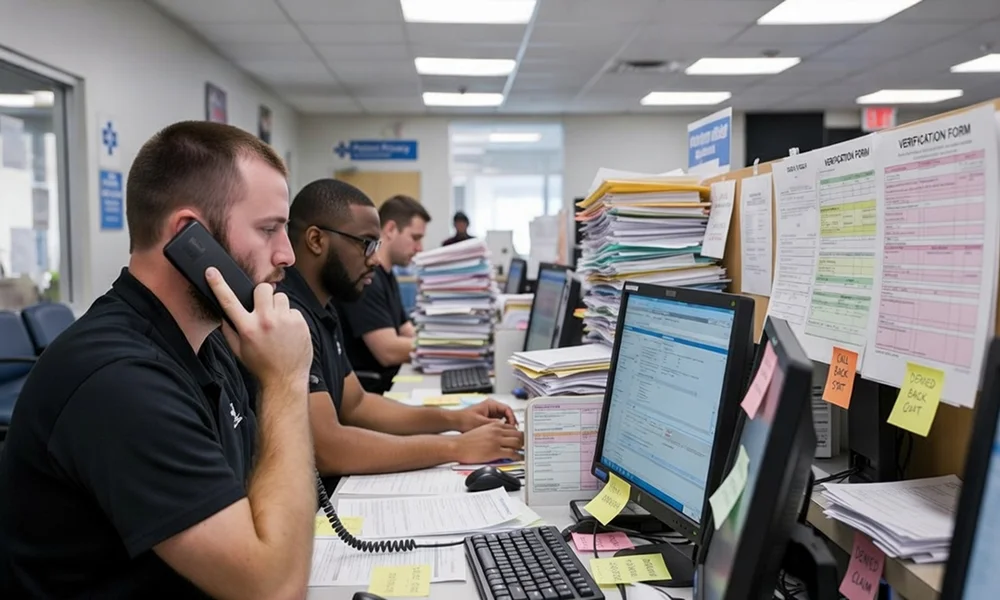
Front-desk employees are the first point of contact for patients and serve as the backbone of clinic operations. Shadowing staff for a shift reveals the scope of their responsibilities:
- Calls: Answering patient inquiries, rescheduling, reminders, and handling urgent messages.
- Intake: Collecting patient information, insurance details, and updating electronic health records (EHRs).
- Coordination: Communicating between clinical staff, labs, and external providers.
- Administrative tasks: Filing, data entry, claim verification, and appointment confirmations.
By measuring time spent per task, clinics can flag repetitive tasks occurring more than ten times per hour, which are primary contributors to administrative burnout in medical practices.
Key Drivers of Front-Desk Overload in Medical Practices
High-volume calls, complex scheduling, and fragmented systems amplify stress for front-desk staff. Conduct a 30-day review of call volume to identify peak periods causing overload. Document systems staff must switch between during a single call and how often interruptions occur mid-task. This analysis highlights how front-desk overload in medical practices directly contributes to fatigue and mistakes.
The Cost of Administrative Burnout in Medical Practices
Burnout is more than an HR issue, it has measurable business impacts:
- Increased staff turnover and absenteeism.
- Higher call abandonment and missed appointments.
- Lost revenue due to delayed bookings.
- Patient dissatisfaction due to long wait times and mismanaged requests.
By correlating burnout indicators with operational outcomes, healthcare leaders can quantify the cost of healthcare staff burnout from call volume and make a compelling case for workflow improvements.
Why Clinics Need AI Support, Not AI Staff Replacements
Debunking the “AI Will Replace Front-Desk Staff” Myth
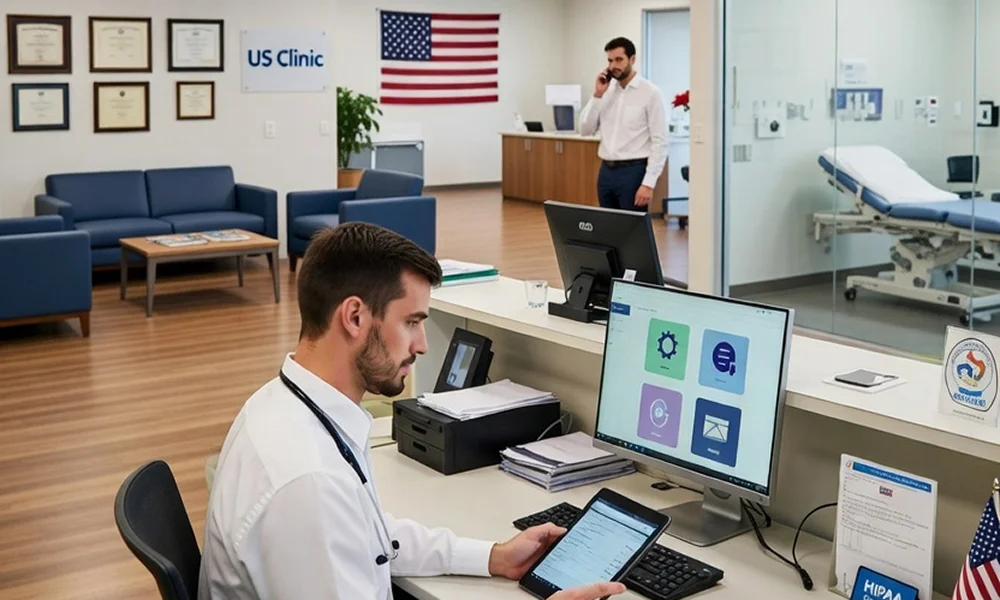
A common misconception is that AI is meant to eliminate jobs. In reality, AI is designed to support human staff by handling repetitive and high-volume tasks. Communicate clearly to staff that AI will reduce front-desk workload with AI rather than replace them. Define tasks that remain human-owned and show examples where AI absorbs volume, not responsibility, so employees feel secure in their roles.
What AI Is Good (and Bad) at on the Front Line
Tasks AI Handles Well
AI excels at predictable, rule-based, repetitive work:
- Responding to high-frequency patient inquiries with low variability.
- Automating confirmations, reminders, and intake forms.
- Maintaining consistency in routine workflows.
By allowing AI to handle these tasks, clinics can reduce front-desk staff fatigue in clinics without diminishing human oversight.
Tasks That Require Humans
Certain responsibilities demand empathy, nuance, and judgment:
- Handling emotional or sensitive patient interactions.
- Offering clinical advice or interpreting complex patient information.
- Final decision-making, particularly regarding scheduling conflicts or exceptions.
Maintaining a clear division ensures AI reduces burnout without compromising the human connection.
Mapping AI to the Front-Desk Workload
Digital Intake and Smart Check-In
Digital intake replaces paper forms with adaptive workflows that adjust based on visit type. Structured data feeds directly into the EHR, eliminating manual re-entry and minimizing errors. Automating this process can significantly reduce front-desk workload with AI, freeing staff to focus on patient interaction.
AI Call Handling to Reduce Healthcare Staff Burnout
AI voice agents can handle routine calls, consistently capturing reason-for-call and routing urgent issues to humans. Weekly monitoring of call deflection rates helps refine the system. Proper configuration reduces healthcare staff burnout from call volume while maintaining high-quality service.
AI for Scheduling, Reminders, and No-Show Management
AI automates appointment confirmations, reminders, and self-service rescheduling, significantly reducing outbound calls. Tracking no-show rates before and after automation demonstrates measurable improvement, addressing a common source of administrative burnout in medical practices.
AI-Powered Messaging and FAQ Automation
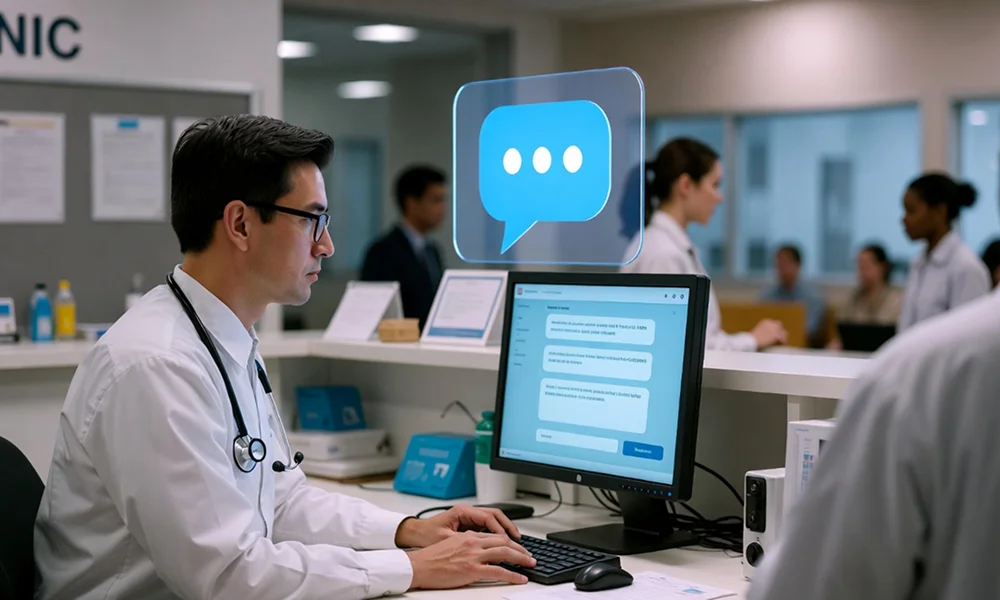
Repetitive patient questions—like office hours, documentation requirements, or preparation instructions—can be handled by chatbots or SMS responses. Keeping answers concise and non-clinical ensures clarity, while weekly reviews ensure escalation rules are functioning. This mitigates front-desk overload in medical practices and reduces staff interruptions.
Insurance and Eligibility Automation
AI streamlines insurance verification by capturing cards digitally and checking eligibility in real time. Manual payer verification is reduced, and audits of denial rates post-automation show tangible efficiency gains. These improvements lessen front-desk staff fatigue in clinics caused by administrative bottlenecks.
How AI Reduces Front-Desk Burnout Without Replacing Staff
Redistributing Workload, Not Headcount
Time saved through AI should be reassigned to patient-facing activities. Reducing multitasking expectations and protecting uninterrupted work blocks allows staff to focus on complex tasks, improving satisfaction and reducing errors.
Reducing Cognitive Load and Decision Fatigue
AI standardizes scripts, surfaces next-best actions, and limits the number of decisions per call, reducing cognitive strain. By taking over repetitive judgment calls, AI allows staff to reserve mental energy for high-stakes interactions.
Improving Role Satisfaction and Human Connection
With AI handling routine tasks, staff spend more time on nuanced patient interactions, increasing engagement and satisfaction. Patient surveys can quantify improvements, showing a direct link between workflow optimization and perceived empathy.
Impact on Turnover, Absenteeism, and Training

By measuring burnout indicators quarterly, clinics can assess the impact of AI on turnover and absenteeism. AI-assisted workflows also streamline training, allowing new staff to quickly acclimate to the front-desk environment.
Quantifying the Impact of AI on Front-Desk Burnout
Key Metrics to Track Burnout Reduction
Operational Metrics
- Average speed of answer.
- Call abandonment rate.
- Check-in time per patient.
HR Metrics
- Front-office turnover.
- Absenteeism trends.
Experience Metrics
- Access-related patient complaints.
- Patient satisfaction post-interaction.
Real-World Outcomes from AI-Enabled Clinics
Comparing baseline data to post-AI implementation helps identify which workflows yield the greatest burnout reduction. Adjusting automation scope based on these results ensures continued optimization.
Designing AI to Support, Not Replace, Front-Desk Teams
Involving Front-Desk Staff in AI Design
Staff input ensures AI addresses the most draining tasks. Conduct workflow design sessions, validate automation plans, and make iterative adjustments.
Clear Rules of Engagement Between AI and Humans
Define escalation triggers and allow staff to override AI recommendations. Ensure warm handoffs for sensitive interactions, maintaining a human-centered workflow.
Trust, Safety, and Compliance Considerations
Ensure HIPAA compliance, limit data access by role, and communicate AI use transparently to patients. Trust in AI is essential for adoption and burnout reduction.
Implementation Roadmap to Reduce Front-Desk Workload
Assessing Your Current Front-Desk Workload
Audit call types, identify automation-ready tasks, and gather staff feedback to determine priority areas.
Prioritizing Use Cases for Maximum Burnout Relief
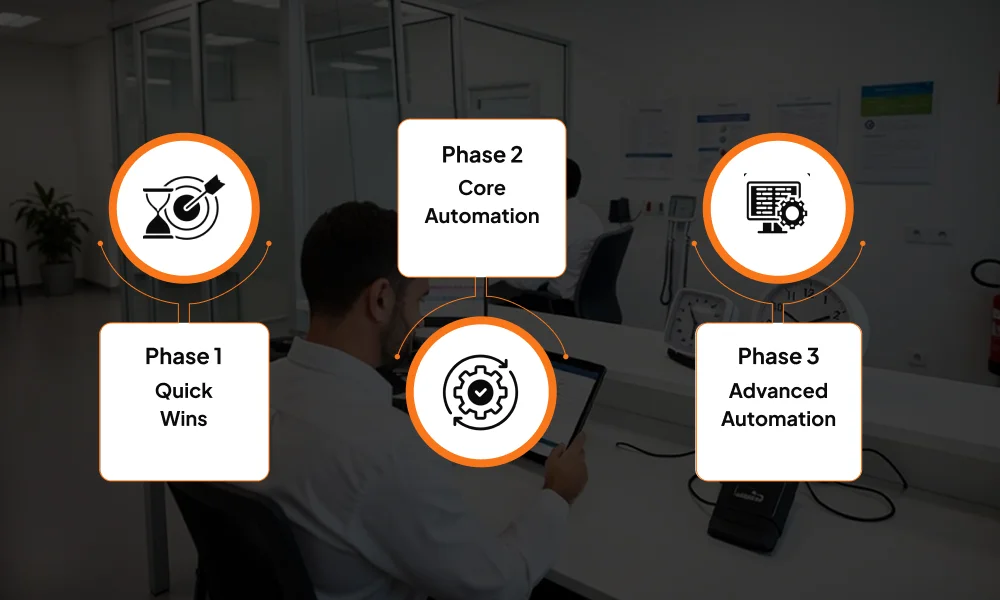
Phase 1 – Quick Wins
- Automate reminders.
- Deploy FAQ chatbots.
Phase 2 – Core Automation
- Digital intake forms.
- AI-assisted scheduling.
Phase 3 – Advanced Automation
- AI voice agents.
- EHR integration for seamless workflows.
Change Management and Staff Enablement
Train staff before launch, provide escalation playbooks, and collect weekly feedback to ensure adoption and satisfaction.
Choosing the Right AI Front-Desk Partner
Select partners with healthcare experience, proven integration capabilities, and robust security protocols to minimize risk and maximize ROI.
Future Outlook – From Burnout to a Resilient Hybrid Front Desk
The Evolving Role of Front-Desk Staff
AI allows staff to shift focus from repetitive call handling to patient coordination and navigation, increasing role satisfaction and operational efficiency.
Beyond the Front Desk Across the Patient Journey
Integrating AI into clinical and revenue workflows creates a unified patient experience, streamlining interactions across the healthcare journey.
Final Perspective on Human-Centered AI
Use AI to remove friction, not humanity. Prioritize staff well-being strategically and scale AI responsibly, starting small, measuring impact, and refining workflows iteratively.
Conclusion
Front-desk burnout stems from workload, inefficiencies, and broken processes, not poor staff performance. AI offers a human-centered approach to absorb repetitive tasks, flatten peak demand, and preserve staff attention for complex patient needs.
Clinics can reduce front-desk overload in medical practices while maintaining empathy and patient satisfaction. Start small, define escalation rules clearly, track outcomes with metrics, and continually refine processes.
By leveraging AI thoughtfully, healthcare organizations can achieve a resilient hybrid front desk that enhances staff well-being, operational efficiency, and patient experience.
Frequently Asked Questions
Will AI replace my front desk staff?
No. AI is designed to handle repetitive, rule-based, high-volume tasks so your staff can focus on the complex, emotionally sensitive interactions that require human judgment. Scheduling automation, reminder sending, FAQ chatbots, and eligibility verification absorb volume without absorbing responsibility. The roles stay; the most draining parts of those roles are reduced.
What front desk tasks can AI safely automate?
AI reliably handles: appointment confirmations and reminders, digital intake form collection and EHR population, routine patient FAQ responses via chatbot or SMS, insurance eligibility verification, call routing for non-urgent inquiries, and self-service scheduling and rescheduling. These are predictable, rule-based, high-frequency tasks where automation consistently outperforms manual effort without risk to care quality.
What should AI never handle at the front desk?
AI should never manage emotionally distressed patients, clinical advice or interpretation, complex scheduling exceptions requiring judgment, complaints requiring de-escalation, or any interaction where the patient has expressed confusion or upset. These interactions require human presence, contextual understanding, and emotional intelligence that automation cannot replicate.
How does AI reduce cognitive load for front desk staff?
By reducing the number of decisions staff must make per hour. AI standardises call scripts, surfaces next-best actions, handles routine triage, and removes repetitive judgment calls from the daily flow. Decision fatigue accumulates across a shift and degrades judgment, accuracy, and empathy. Fewer low-stakes decisions per hour means more mental capacity for the high-stakes ones.
How do you keep AI front desk tools HIPAA compliant?
Limit data access strictly by role so staff and AI systems only see the information necessary for their function. Encrypt all patient communications. Ensure your AI vendor signs a Business Associate Agreement (BAA) and operates on HIPAA-compliant infrastructure. Communicate clearly to patients when they are interacting with an automated system. Audit access logs regularly and define escalation protocols for data incidents.
How do you measure whether AI is actually reducing front desk burnout?
Track three metric categories: operational metrics including average speed of answer, call abandonment rate, and check-in time per patient; HR metrics including front office turnover rate and absenteeism trends; and experience metrics including access-related patient complaints and post-interaction satisfaction scores. Establish baselines before deployment and review at 30, 60, and 90 day intervals to confirm the intervention is working.
Is Your Front Desk Team Running on Empty?
Book a call to see how MedLaunch helps clinics reduce front desk burnout with AI that handles scheduling, reminders, intake, and routine patient inquiries automatically so your team can focus on the patients who need them most.