


Key Takeaways: Patient Experience Examples
-
1Patient experience is a sequence of events, not a score:
Patients don’t remember clinical precision, they remember how the phone was answered, whether anyone explained the delay, and whether someone followed up. These micro-interactions collectively shape reputation, retention, and referrals far more than survey numbers ever will. -
2Access is the first experience and the most often overlooked:
If scheduling is confusing or slow, patients abandon the process before the clinical experience even begins. Seamless online booking signals respect for the patient’s time and builds trust before the first visit. -
3Transparency about wait times improves satisfaction even when waits don’t decrease:
Research consistently shows that informed waiting feels shorter than silent waiting. Proactively updating patients about delays reframes inconvenience as transparency, one of the easiest and cheapest experience improvements available. -
4The consultation is where trust is made or broken:
Patients who feel truly listened to; not interrupted, not rushed, not spoken to in jargon — are more likely to follow treatment plans, return for follow-ups, and recommend the clinic. Perceived listening time matters more than actual appointment length. -
5Aftercare follow-up is where most clinics leave loyalty on the table:
The period after discharge is when confusion and anxiety peak and when a proactive call or message has the most impact. Clinics that follow up consistently see lower readmissions, higher adherence, and significantly stronger patient loyalty. -
6Patient experience examples only scale when embedded in culture and systems:
One exceptionally kind staff member is not a proven example, it’s a lucky hire. Proven examples are standardized into scripts, training modules, and daily workflows so that every patient receives the same quality of experience regardless of who is on shift.
Patient experience examples are no longer optional talking points in healthcare strategy meetings. They are operational necessities.
As healthcare becomes more consumer-driven, patients increasingly evaluate providers not only on clinical outcomes but on how care feels, how accessible it is, and how respected they feel throughout their journey.
It is important to clarify the distinction between patient experience examples and generic satisfaction scores. Satisfaction scores are often numerical summaries collected after care is delivered.
They measure perception at a moment in time. Patient experience, however, is built from observable interactions across the entire continuum of care.
It reflects what actually happened, how the phone was answered, whether instructions were clear, whether the clinician listened attentively, and whether someone followed up after discharge. Satisfaction is a rating; experience is a sequence of events.
Organizations that focus on specific, repeatable patient experience improvements examples consistently outperform competitors in online reputation, patient retention, referral growth, and clinical adherence.
Vague goals such as “improve empathy” rarely change outcomes. Clear, actionable healthcare experience examples — such as “update patients every 15 minutes about wait times” — create operational clarity and measurable progress.
This article explores 9 trusted patient experience success stories that reflect real-world patient experience examples seen across high-performing healthcare organizations.
These examples demonstrate best practices in patient interaction and illustrate how small, intentional changes can dramatically transform care delivery.
Table of Contents
Understanding Patient Experience Through Real-World Examples
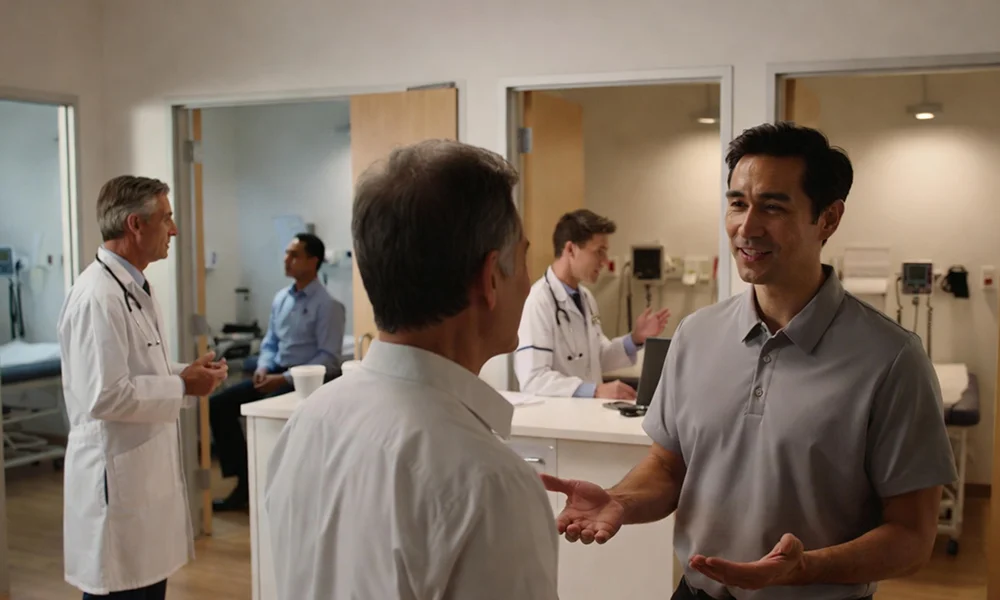
From Metrics to Moments: How Patients Actually Experience Care
Patients do not experience healthcare as a set of survey questions. They experience it as moments.
A patient’s perception begins the second they search for your clinic online. It continues when they attempt to schedule an appointment. It evolves when they walk through your doors, interact with your staff, wait to be seen, speak to their clinician, and receive follow-up communication.
Healthcare patient interaction examples often emerge from seemingly small encounters. A receptionist who greets a patient by name and makes eye contact can immediately reduce anxiety.
A nurse who explains a procedure calmly can build trust. A physician who pauses to ask, “Does that make sense?” can dramatically improve understanding and adherence.
Real examples of patient-centered care are rarely dramatic gestures. Instead, they are consistent micro-interactions repeated across thousands of patient journeys. These moments collectively shape reputation, loyalty, and outcomes.
When organizations examine healthcare patient feedback examples, they consistently find that patients remember how they were treated far more vividly than the clinical details of their care. That insight shifts the focus from abstract metrics to concrete, repeatable behaviors.
What Makes a “Proven” Patient Experience Example
Not every positive interaction qualifies as a proven model. For an initiative to become one of the patient experience success stories worth replicating, it must meet clear criteria.
First, it must be repeatable. If an example depends entirely on one exceptionally kind staff member, it cannot scale. Proven examples can be standardized through scripts, workflows, or training.
Second, it must be patient-validated. The example should appear consistently in healthcare patient feedback examples such as online reviews, survey comments, or testimonials. Repetition in feedback signals that the behavior truly matters to patients.
Third, it must link to measurable outcomes. Effective patient experience improvements examples correlate with metrics such as higher satisfaction scores, improved adherence, lower readmissions, stronger online ratings, or increased retention.
The nine examples below reflect patterns observed across leading healthcare organizations. They represent practical, real-world patient experience examples that can be implemented across diverse clinical settings.
9 Trusted Patient Experience Examples
Example 1: Seamless Online Scheduling and Easy Access

Access is the first experience of care. If scheduling is difficult, confusing, or time-consuming, patients may abandon the process entirely.
One of the most impactful healthcare experience examples involves seamless online scheduling. When patients can view real-time availability, book appointments in under two minutes, receive immediate confirmation, and complete digital paperwork in advance, the organization communicates efficiency and professionalism before the first visit.
Real-world patient experience examples consistently show that reducing friction in access improves attendance rates and decreases no-shows. Patients appreciate convenience, especially in competitive healthcare markets where alternative providers are just a click away.
Easy access does more than improve logistics. It signals respect for the patient’s time and establishes trust from the outset.
Example 2: Personalized Pre-Visit Communication That Calms Anxiety
Many patients feel anxious before a medical visit. Personalized patient care examples that address this anxiety can significantly improve the overall experience.
Instead of sending generic reminders, high-performing clinics provide tailored pre-visit communication. These messages include preparation instructions, parking guidance, arrival expectations, estimated visit length, and even clinician introductions. Some organizations provide language-specific materials or short educational videos explaining what to expect.
These patient satisfaction examples reduce uncertainty. When patients feel informed, they feel more in control. Anxiety decreases, and the visit begins with greater calm.
Pre-visit communication is one of the most accessible patient experience improvements examples because it requires modest operational change but delivers substantial impact.
Example 3: Warm, Respectful Front-Desk Interactions
Front-desk interactions are among the most cited healthcare patient interaction examples in reviews. Patients often form lasting impressions within the first 60 seconds of entering a facility.
Warmth, eye contact, clear explanations, and acknowledgment of delays communicate respect. When staff treat patients as individuals rather than tasks, the emotional tone of the visit shifts positively.
Examples of compassionate care frequently involve simple gestures — offering reassurance, apologizing sincerely for delays, or acknowledging visible distress. These behaviors cost nothing but require intentional training and cultural reinforcement.
A respectful check-in experience consistently appears in healthcare patient feedback examples and strongly influences patient satisfaction scores.
Example 4: Honest, Proactive Communication About Wait Times

Wait times are one of the most common sources of dissatisfaction. However, silence about delays is often more frustrating than the delay itself.
One of the strongest patient experience improvements examples involves proactive communication about wait times. Organizations that provide regular updates — whether through digital displays, SMS notifications, or verbal check-ins — demonstrate transparency and accountability.
When patients understand why they are waiting and how long the delay may last, frustration decreases. Transparent communication reframes waiting as a shared challenge rather than neglect.
These healthcare experience examples consistently show improved satisfaction scores even when actual wait times remain unchanged.
Example 5: Truly Patient-Centered Consultations
At the heart of healthcare are consultations. Examples of patient-centered care become most visible in this moment.
Clinicians who listen without interrupting, explain diagnoses in plain language, invite questions, and confirm understanding through teach-back create meaningful engagement. Patients want to feel heard and understood, not rushed.
Healthcare experience examples repeatedly demonstrate that perceived listening time often matters more than actual appointment length. When patients feel validated, trust deepens.
Improved communication directly influences adherence, follow-through, and clinical outcomes. Patient-centered consultations are foundational patient satisfaction examples that shape long-term loyalty.
Example 6: Coordinated Team-Based Care for Complex Patients
Complex patients often navigate fragmented systems. Coordinated care stands out as one of the most impactful patient experience success stories.
When physicians, nurses, pharmacists, and care navigators collaborate on a unified plan, patients experience continuity rather than confusion. They are not required to repeat their history multiple times or reconcile conflicting advice.
Healthcare patient interaction examples that demonstrate coordination significantly reduce stress for high-risk patients. They also improve safety and reduce preventable complications.
Team-based collaboration represents advanced healthcare experience examples that enhance both emotional reassurance and clinical quality.
Example 7: Clear, Supportive Aftercare and Follow-Up

The patient journey does not end at discharge. In fact, the period immediately after a visit is often when confusion arises.
Personalized patient care examples include clear written instructions, medication summaries, warning signs explained in simple language, and proactive follow-up calls or secure messages. When patients receive reassurance after returning home, their confidence in self-care increases.
Healthcare experience examples consistently link proactive follow-up with lower readmissions and improved safety outcomes. Follow-up also strengthens trust, reinforcing the message that care continues beyond the clinic walls.
Example 8: Turning Positive Patient Feedback Into Daily Practice
Collecting feedback is common. Acting on it consistently is less common.
Effective healthcare patient feedback examples involve systematically reviewing survey comments and online reviews, identifying recurring themes, and incorporating positive behaviors into training and recognition programs.
When staff see their efforts recognized publicly, morale improves. When positive patterns are codified into training modules, consistency improves across teams.
Patient experience success stories often stem from organizations that treat feedback not as data storage, but as operational intelligence.
Example 9: Organization-Wide Culture of Kindness and Compassion
The most sustainable patient satisfaction examples are rooted in culture.
Organizations that embed kindness into hiring practices, onboarding processes, leadership rounding, and performance evaluations create environments where compassionate care is the norm rather than the exception.
Examples of compassionate care multiply when leadership models empathy and accountability. Culture shapes behavior at scale, ensuring that patient experience examples are consistent across departments and locations.
A culture-driven approach generates continuous improvement rather than isolated initiatives.
Patterns Behind High-Impact Patient Experience Examples
Common Themes Across the 9 Examples
Across all nine healthcare experience examples, consistent themes emerge: clear communication, emotional intelligence, respect for time, coordination, and continuity.
These themes are not cosmetic enhancements. They directly influence clinical adherence, retention, and reputation. Patients who feel respected are more likely to return, recommend, and comply with care plans.
Experience and outcomes are interconnected, not separate domains.
Linking Patient Experience Examples to Measurable Outcomes
Each of these patient experience improvements examples connects to measurable performance indicators. Improved access increases booking rates. Better communication reduces complaints. Coordinated care lowers readmissions. Follow-up improves safety metrics. A culture of compassion elevates online reputation.
Patient experience examples are not soft metrics. They are strategic levers that influence lifetime patient value and long-term organizational growth.
How to Use These Patient Experience Examples in Your Organization
Auditing Your Current Patient Journey
Begin by mapping the patient journey from pre-visit to post-visit. Identify strengths and weaknesses. Analyze healthcare patient feedback examples to detect patterns in both praise and complaints.
This audit often reveals quick wins that require minimal investment but deliver substantial improvements.
Prioritizing High-Impact Changes
Rather than launching multiple initiatives simultaneously, select two or three focus areas with high visibility and measurable impact. Pre-visit communication, check-in experience, and aftercare follow-up frequently offer strong starting points.
Focused execution increases the likelihood of sustained improvement.
Embedding Best Practices in Patient Interaction
Transform successful examples into standardized procedures. Develop scripts, templates, training modules, and checklists. Reinforce behaviors during onboarding and team huddles.
Best practices in patient interaction become powerful when they are embedded into everyday workflows.
Building a Living Library of Patient Experience Examples
Continuously Capturing New Stories
Encourage staff to share small success stories. Monitor online reviews and surveys for recurring positive healthcare patient feedback examples. Over time, these stories create a growing repository of internal best practices.
Sharing and Scaling What Works
Share patient experience success stories across departments and locations. Highlight examples in meetings, newsletters, and recognition programs. Scaling stories accelerates cultural alignment and operational consistency.
Conclusion
Patient experience examples are not abstract ideals. They are practical, repeatable blueprints for delivering safer, kinder, and more effective care.
Organizations that systematically collect, refine, and implement real-world healthcare experience examples position themselves for long-term success.
As patient expectations continue to rise, clinics and hospitals that learn from concrete examples, rather than relying solely on scores, will lead in outcomes, reputation, and loyalty.
Frequently Asked Questions
What are patient experience examples in healthcare?
Patient experience examples are specific, repeatable interactions that shape how patients perceive their care, seamless scheduling, personalised pre-visit communication, respectful check-in, transparent wait time updates, attentive consultations, and proactive aftercare follow-up. Unlike satisfaction scores, they reflect what actually happened across the full care journey, not just a rating at one moment.
What is the difference between patient experience and patient satisfaction?
Patient satisfaction is a rating collected after care, a number on a survey. Patient experience is the sequence of events that produced that rating, including how the phone was answered, whether instructions were clear, whether the clinician listened without interrupting, and whether someone followed up. Organizations that improve experience consistently see satisfaction scores follow, but not the reverse.
What are the most impactful patient experience improvements a clinic can make?
The five highest-impact changes are: reducing friction in online scheduling, providing personalised pre-visit communication, training front desk staff to greet patients by name and explain delays proactively, ensuring consultations feel unhurried and attentive, and implementing structured aftercare follow-up. These appear most consistently in positive patient reviews and correlate directly with retention and clinical adherence.
How do patient experience examples connect to clinical outcomes?
Improved scheduling access increases booking rates and reduces no-shows. Attentive consultations improve treatment adherence. Structured aftercare follow-up lowers readmissions. Patients who feel respected and informed are significantly more likely to follow care plans and return for preventive visits. Patient experience and clinical outcomes are directly connected, not separate domains.
How can small clinics improve patient experience without a large budget?
The most impactful improvements cost almost nothing. Greeting patients by name at check-in, providing a brief honest explanation for any delay, sending a personalised pre-visit preparation message, and making one follow-up call after discharge create measurable experience improvements without new staff or technology. Consistency and intentionality matter more than budget.
How should a clinic measure patient experience success?
Track a combination of leading and lagging indicators: online review sentiment and volume, patient retention rate, no-show rate, follow-up completion rate, and complaint volume. Qualitative feedback from surveys and reviews reveals the specific interactions patients remember most positively and negatively, which is more actionable than aggregate scores alone.
Ready to Turn These Patient Experience Examples Into Reality at Your Clinic?
Book a call to see how MedLaunch helps clinics implement the systems behind great patient experiences.