

Key Takeaways: What Physical Therapy Patients Ask in Instagram DMs Before Booking
-
1Five Predictable Categories: PT patient DMs consistently fall into five buckets: condition/injury questions, insurance/pricing, first session logistics, therapist credentials, and recovery timeline expectations. These patterns hold across demographics and locations.
-
2The Final Evaluation Step: A pre-booking DM isn’t just a casual query; it’s usually the final barrier before a confirmed appointment. Patients have already researched your content; they are DMing to finish their evaluation and book.
-
3Insurance Anxiety: Unlike other wellness sectors, PT patients arrive with high insurance expectations. How a clinic handles billing questions in a DM is a high-stakes conversion moment that determines if the lead books or leaves.
-
4High Emotional Weight: Questions about recovery timelines for ACL or rotator cuff surgeries carry significant emotional weight. Patients aren’t just curious; they are asking about their future quality of life, sport, or independence.
-
5Automating the Routine 80%: An AI bot configured for PT can handle routine questions about insurance, logistics, and availability automatically. This allows the clinical team to focus on edge cases while the bot manages pre-booking 24/7.
Before a physical therapy patient books an appointment, most of them have a conversation. Not on the phone. Not through a website contact form. In the Instagram DMs of the clinic, they have been watching.
A Central Florida physiotherapy clinic demonstrated exactly what is possible: 1,100% follower growth and 500 extra appointments from a $200 monthly social media strategy. Those appointments did not come from followers passively discovering a booking link. They came from patients who had watched the content, built enough trust to reach out, and received responses that answered their questions and converted their interest into a confirmed session.
Understanding exactly what those questions are, what they signal about where the patient is in their decision process, and how to respond to each category in a way that moves the conversation toward a booking is one of the most practically impactful improvements a PT clinic can make to its Instagram setup.
This post breaks down the five question categories that PT clinic DMs consistently fall into, gives you the exact messages patients send, and shows you the response pattern that converts each one.
Table of Contents
1. Why Physical Therapy Patients DM Before Booking: The Psychology Behind the Question
Physical therapy is a different kind of healthcare decision from most. Patients are often coming from a place of vulnerability: post-surgery, post-injury, managing chronic pain, or facing a functional limitation that is affecting their daily life, their sport, or their work.
More than 80% of patients consult online sources before choosing a healthcare provider, including researching services, reading reviews, and interacting with clinics on social media platforms. Medical Billers and Coders PT patients arrive at the DM conversation having already done significant trust-building through your content. They have watched your exercise demos, read your recovery stories, seen how you handle comments. By the time they send a DM, they are not starting from zero. They are finishing the evaluation.
The DM question is the last barrier between a warm prospect and a booked patient. The patient is essentially saying: I am close to booking. I just need this one thing confirmed first.
This matters for how a PT clinic should respond. These patients do not need to be sold to. They do not need marketing language or generic enthusiasm about your services. They need a clear, specific, trustworthy answer to their question followed by a natural invitation to take the next step.
The five categories below represent exactly what those questions are and what they signal.
2. Category One: Condition and Injury Questions
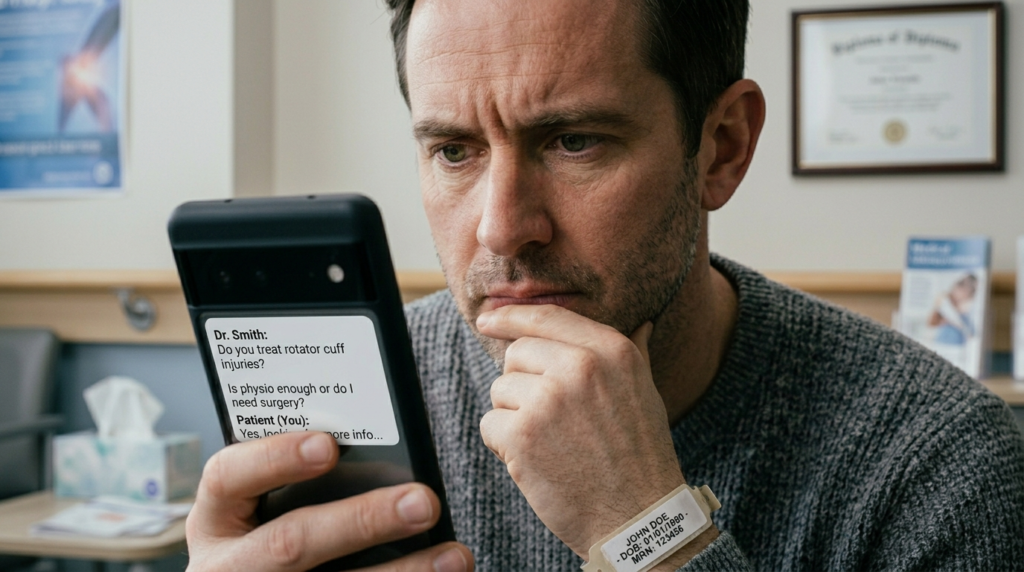
This is the most common DM category for PT clinics and the one with the highest conversion potential. The patient is describing a specific injury, condition, or symptom and asking whether physical therapy can help, whether your clinic treats it, and whether you have experience with it specifically.
The DMs You Will Recognise
“I had ACL reconstruction surgery 6 weeks ago. Is it too early to start PT?” Post-surgical patient, timing concern
“Do you treat rotator cuff injuries? Mine was diagnosed by ultrasound, but my surgeon said I could try PT before deciding on surgery.” Conservative management of the patient, high intent
“I have had lower back pain for three months. I have tried massage, and it helps for a day or two, but comes back. Would PT be worth trying?” Chronic pain patient, previous treatment history
“I am a runner, and I keep getting shin splints every training cycle. Is that something physio can actually fix, or is it just rest and ice?” Sports patient, sceptical tone, looking for evidence, not reassurance
“My 14-year-old plays football and has been having knee pain. Do you see younger patients?” The parent enquiring on behalf of a child needs specific confirmation
“I have had a frozen shoulder for four months. My GP referred me for physio, but I wanted to ask first whether it is something you see a lot.” Referred patient who is still self-selecting, wants specialist familiarity confirmed
What These DMs Signal
Every one of these messages is from a patient who has already done enough research to know that physical therapy is relevant to their situation. The question is whether your clinic specifically treats their specific issue. The subtext is consistent: I want reassurance that I am not going to waste my time or money on a clinic that does not understand my condition.
How to Respond
The response to a condition question should do three things. Confirm directly that you treat this type of presentation. Add one specific clinical detail that demonstrates genuine familiarity with the condition, not a generic reassurance. Move toward a booking with a specific and low-friction invitation.
Example response to the ACL question:
“Six weeks post-op is exactly when most surgeons want PT to start in earnest. We work closely with patients at every stage of ACL recovery from early range of motion work through full return-to-sport. What surgery did you have and are you on any specific protocol from your surgeon? We have availability this week if you want to get started.”
The response that does not convert is the technically accurate but impersonal one. “Yes, we treat knee injuries, please call to book” loses the patient at the point of peak interest. The specificity of the response is what builds the final layer of trust.
3. Category Two: Insurance and Pricing Questions

Insurance and pricing questions are the second most common DM category for PT clinics and carry a unique dynamic that differs from other healthcare specialties. Physical therapy is frequently prescribed after surgery or injury, which means many patients arrive at the DM conversation expecting their insurance to cover the treatment. Their question is not “how much is it” but “how much will I actually have to pay.”
The DMs You Will Recognise
“Do you accept Blue Cross Blue Shield? My surgeon referred me for PT after my knee replacement.” Referred patient, insurance coverage is the primary concern
“How much is a session if I do not have insurance?” Cash-pay patient, direct question, decision depends on the answer
“I have Medicare. Does that cover physical therapy?” Older patient, a common demographic for PT, needs specific confirmation
“My deductible has not been met yet. Do you know roughly what the cost per session would be before insurance kicks in?” Informed patient, managing out-of-pocket costs
“Does workers comp cover PT? I injured my back at work.” Workers’ compensation patient, specific billing pathway question
“Do you offer any kind of payment plan or sliding scale?” Budget-conscious patient, not necessarily price sensitive but needs to understand options
What These DMs Signal
Unlike chiropractic, where pricing questions typically come from patients self-paying, PT insurance questions often come from patients who have a referral and a genuine expectation of coverage. The question is administrative, not cost-based. A clinic that cannot answer it clearly, or that redirects to “call us to find out,” loses the patient on a practical barrier rather than a clinical one.
How to Respond
Answer as specifically as the question allows. Name the insurance plans you accept. If you can confirm coverage for the patient’s specific plan, say so. If the answer depends on the patient’s specific deductible situation, explain that clearly and give a ballpark for self-pay rates so they have a frame of reference.
Example response to the Blue Cross Blue Shield question:
“Yes, we are in-network with Blue Cross Blue Shield. For a surgical referral, PT is typically covered under your medical benefits. The exact out-of-pocket depends on your plan’s deductible and copay structure, which we can check when you arrive or ahead of time if you want to send through your member ID. We have new patient slots this week if you want to lock in a time.”
The instinct to redirect pricing questions entirely to a phone call consistently loses patients at this stage. Answer first, offer the phone for complexity second.
4. Category Three: First Session Logistics Questions
First session logistics questions come almost exclusively from patients who have never been to physical therapy before or who are returning after a significant gap. They are not asking because they are indecisive. They are asking because the unknown is the barrier. Once they know what to expect, they are ready to book.
The DMs You Will Recognise
“What happens at the first appointment?” Classic new patient question
“How long is the initial assessment usually?” Time management concern
“Do I need a referral or can I just book directly?” Direct access question, common in states where PT does not require a physician referral
“Should I bring my MRI results or my surgeon’s notes?” Practical logistics, the patient is planning to come
“Will I need to do exercises there or is the first session just an assessment?” Expectation management, patient is managing mental preparation
“I had PT years ago somewhere else. Does the new clinic start from scratch or can you work from previous treatment notes?” Returning patient question, continuity concern
What These DMs Signal
Every logistics question signals that the patient is mentally preparing for the visit. They are not asking whether to come. They are asking what coming will be like. This is one of the highest intent DM categories because the patient has already made the internal decision and is now in preparation mode.
How to Respond
Walk them through the first appointment in three to four specific sentences. Be direct about timing, what will happen in the session, and what they need to bring. End immediately with a booking invitation because this patient is ready.
Example response:
“The first appointment is around 45 to 60 minutes. We spend the first part doing a thorough assessment of your movement, strength, and the specific area you are dealing with, then we usually start some treatment in the same session if appropriate. Bring any relevant imaging reports or your referral if you have one, but neither is required to start. We have availability this week if you want to get in.”
On the direct access question specifically, the answer matters clinically and commercially. In most US states, patients can now self-refer to PT without a physician referral. If your clinic accepts direct access patients, say so explicitly in the DM response. Patients who do not know this are losing time and adding friction by seeking a referral they may not need.
5. Category Four: Treatment Approach and Therapist Credentials Questions
Credentials and treatment approach questions are the most emotionally significant DM category for PT clinics. They come from patients who are managing real vulnerability around a health decision that often follows a significant injury, surgery, or period of pain. These patients are not being difficult. They are protecting themselves from the risk of a poor outcome.
The DMs You Will Recognise
“Do your physios specialise in sports rehab or is it more general?” Specialty match question, patient wants a therapist who has experience with their population
“I had PT at another clinic after my surgery and I did not feel like I progressed. What is your approach different?” Previous bad experience, trust needs to be rebuilt
“Are you a dry needling clinic? I have heard that can help with my neck.” Specific modality question, patient has done research
“Is the same therapist at every session or does it change each time?” Continuity of care concern, very common for PT patients with complex presentations
“My friend went to another physio and said the exercises were too easy and she did not feel challenged. Do you tailor programs individually?” Quality concern, patient wants evidence of personalisation
“Are your therapists trained in manual therapy? I want more than just exercises.” Modality expectation, patient has a specific treatment preference
What These DMs Signal
These are questions from patients who want to book but have something specific holding them back. A previous poor experience. A concern about the quality or fit of the treatment. A specific modality expectation. The question is not an objection. It is a request for reassurance from someone who is leaning toward yes.
How to Respond
Answer the specific question directly and personally. Acknowledge the concern behind the question before answering it. If the patient mentions a previous poor experience, acknowledge it genuinely before explaining your approach.
Example response to the previous poor experience:
“That is frustrating and more common than it should be. Progress in PT depends heavily on the specificity of the initial assessment and whether the program is actually adjusted as you improve. We do individual assessments that result in a specific program, and we review and progress it at every session. The exercises get harder as you do. Would it help to come in for an initial assessment first so you can see the approach before committing to a full program?”
Example response to the dry needling question:
“Yes, several of our therapists are certified in dry needling and it is commonly used here for neck and upper trap presentations. Whether it is appropriate depends on your specific findings on assessment. We can talk through that in detail when you come in. We have availability this week if you want to get started.”
6. Category Five: Recovery Timeline Questions
Recovery timeline questions are unique to physical therapy in their frequency and their emotional weight. Unlike a chiropractic patient asking about a first adjustment or a GP patient asking about a consultation, a PT patient asking about recovery timeline is often asking about something much more significant: when they will be able to walk again, return to sport, go back to work, or pick up their child without pain.
The DMs You Will Recognise
“How long does recovery usually take after a total knee replacement?” — Surgical patient, managing expectations
“I have a marathon in 14 weeks. Is that enough time to fix a hip flexor strain?” — Athlete with a deadline, high urgency
“My physio at the hospital said 6 to 8 weeks but that feels too optimistic. What do you usually see?” — Patient who has already received an estimate and is seeking a second opinion
“How many sessions do I typically need per week? I work full time and need to plan around it.” — Practical planning question, patient is managing schedule constraints
“Will I ever get full mobility back after a frozen shoulder?” — Outcome question, patient is managing fear and uncertainty
“My doctor said I will need physio for 3 months. Does that sound right to you?” — Referred patient seeking confirmation of the recommended duration
What These DMs Signal
Recovery timeline questions carry more emotional weight than any other DM category because the patient is not just asking about logistics. They are managing hope, fear, uncertainty, and often a significant disruption to their life. These questions require the most careful response of any category. A dismissive or overly generic answer damages trust more severely here than in any other category.
How to Respond
Acknowledge the emotional significance of the question before giving clinical information. Give a realistic but honest framing of what recovery typically looks like for this presentation. Avoid false precision, which erodes trust. Invite them in for an assessment, which is the only honest way to give a meaningful timeline.
Example response to the marathon question:
“Fourteen weeks for a hip flexor strain is workable depending on how significant it is and how you respond to treatment. The honest answer is that we cannot give you a realistic timeline without knowing the severity, but most hip flexor strains at a manageable presentation respond well within four to six weeks of consistent treatment and load management. The bigger question is what your current training looks like and how much we need to modify it. Want to come in this week for an assessment so we can give you an actual plan rather than a guess?”
Example response to the frozen shoulder question:
“Yes, the vast majority of frozen shoulder cases fully resolve with proper treatment and time. The process is slower than most patients want it to be, typically 6 to 18 months for the full progression, but the good news is that treatment significantly accelerates recovery through the stages and improves function throughout. You do not have to wait for it to finish to get your life back. We can make meaningful progress from the first few sessions.”
7. The Response Principles That Convert Every Category
Across all five question categories, the responses that convert DM conversations into booked PT appointments share four consistent characteristics.
Specificity Over Generality
A specific answer builds more trust than a comprehensive one. “We treat all sports injuries” is less persuasive than “we see a lot of ACL post-op patients and we follow surgeon-specific protocols, so bring any notes or restrictions from your surgeon.” The specificity is what signals genuine expertise to a patient who has already done enough research to ask a specific question.
Acknowledgement Before Answer
For questions that carry emotional weight, particularly recovery timeline questions and previous bad experience questions, a brief acknowledgement of the concern before the answer completely changes the tone of the response. “That is frustrating and more common than it should be” before explaining your approach is not a script. It is the response that a patient who has been let down before needs to hear before they can trust the information that follows.
Answer Then Invite, Every Time
Every response to a DM question should end with a specific, low-friction booking invitation. Not “let us know if you want to book” but “we have Tuesday at 9am and Thursday at 3pm this week. Which works better for you?” The specificity of the invitation reduces the patient’s cognitive load and makes booking the path of least resistance.
Speed Above All Else
All of the above is irrelevant if the response arrives three hours after the question. 52% of consumers expect a brand to respond to a social media message within one hour. Practolytics For PT patients in active pain or with a post-surgical recovery clock running, that window is shorter. A response that arrives the following morning from a clinic with excellent content and specific answers still loses to a response that arrives in five minutes from a clinic with adequate answers. Speed is the single highest-impact variable in DM conversion.
8. How an AI Bot Handles These Conversations Automatically
The practical challenge for most PT clinics is not knowing how to respond to these questions. It is responding to them fast enough, at the right hours, and with the consistency that a front desk team managing a full clinic cannot sustain.
A patient who DMs at 8pm asking whether you treat post-surgical rotator cuff presentations does not reach peak interest again at 9am the following morning. They are often simultaneously messaging other clinics. The one that responds in under five minutes wins the booking.
A properly configured Instagram AI bot handles this by pre-loading clinic-specific responses to each question category. When a patient DMs a condition question, the bot responds with the clinic’s specific answer about that condition and experience. When a patient asks about insurance, the bot gives the actual health funds and billing pathways the clinic uses. When a patient asks about the first session, the bot walks through the clinic’s actual intake process. When a patient asks about availability, the bot checks the live schedule and offers real times.
The bot does not give generic answers. It gives the answers the clinic has configured, in the clinic’s voice, for the specific question being asked. And it does so in under one minute, at any hour, without any involvement from the front desk.
For complex questions that fall outside the configured scope, particularly detailed clinical questions about specific presentations, prognosis questions that require a qualified assessment, or patients with complicated surgical histories, the bot flags the conversation and notifies a staff member to follow up personally. The therapist handles the clinical edge cases. The bot handles the predictable pre-booking conversation.
For a full walkthrough of how MedLaunch configures its Instagram AI Bot for healthcare clinics, the complete guide to Instagram AI bots for healthcare covers the setup, configuration, and workflow in detail.
Frequently Asked Questions
What do physical therapy patients ask in Instagram DMs before booking?
Physical therapy patient DMs fall into five predictable categories: condition and injury questions where patients ask whether you treat their specific presentation, insurance and pricing questions about coverage and out-of-pocket costs, first session logistics questions about what to expect at the initial appointment, treatment approach and credentials questions from patients managing trust around a significant health decision, and recovery timeline questions from patients whose quality of life depends on the outcome. Each category has a specific response pattern that converts the question into a confirmed booking.
How should a PT clinic respond to a condition question in a DM?
Confirm directly that you treat this specific presentation, add one clinical detail that demonstrates genuine familiarity with the condition rather than a generic reassurance, and end with a specific booking invitation including available times. The specificity of the response is what builds the final layer of trust. A technically accurate but impersonal response consistently fails to convert at the same rate as a specific and personalised one.
Why do PT patients ask insurance questions before booking on Instagram?
Physical therapy is frequently prescribed following surgery or injury, which means patients often arrive at the DM conversation expecting their insurance to cover the treatment. The insurance question is administrative, not cost-based, and it is often the final practical barrier before booking. A clinic that cannot answer insurance questions in the DM or that redirects to a phone call without giving any information loses patients on a practical barrier rather than a clinical one.
What is the most important thing to remember when answering recovery timeline questions on Instagram?
Acknowledge the emotional weight of the question before providing clinical information. A patient asking about recovery after surgery or a significant injury is not asking out of idle curiosity. They are asking because their quality of life depends on the answer. A dismissive or overly generic response damages trust more significantly here than in any other DM category. Be honest, avoid false precision, and invite them in for an assessment as the only reliable way to provide a meaningful answer.
How quickly does a PT clinic need to respond to an Instagram DM?
Within one hour is the standard expectation across healthcare. For patients in active recovery or with post-surgical time pressure, the window is shorter. Patients who DM about availability or condition suitability are often simultaneously messaging other clinics. The first clinic to respond with a specific, accurate answer wins the booking. After-hours DMs that receive an automated response within minutes convert at significantly higher rates than those that receive a manual response the following morning.
Do physical therapy patients prefer Instagram DMs to phone calls?
Increasingly yes. The patient who sends an Instagram DM before booking has already done significant trust-building through your content. They have chosen Instagram as their communication channel deliberately. It is lower friction, lower commitment, and lower anxiety than a phone call for a patient who is not yet sure they are ready to book. Redirecting a DM patient to a phone call adds friction at exactly the moment that friction costs you the booking.
Can an AI bot handle physical therapy patient DM questions effectively?
Yes, when it is configured with clinic-specific responses to each question category. A healthcare-specific Instagram AI bot pre-loaded with the clinic’s actual insurance and payer information, conditions treated, first session process, therapist credentials, and available appointment times can answer the predictable 80% of PT patient DMs accurately and immediately. Complex clinical questions, detailed prognosis questions, and patients with complicated histories are flagged for human follow-up. The bot handles the routine pre-booking conversation. The therapist handles the clinical edge cases.
How are PT patient DMs different from chiropractic patient DMs?
PT patient DMs have a higher proportion of insurance and pricing questions because physical therapy is more frequently prescribed following surgery or injury with an expectation of insurance coverage. Recovery timeline questions are more emotionally significant in PT because the stakes are higher: patients are managing post-surgical recovery, functional limitations, and return-to-sport or return-to-work timelines rather than episodic pain management. The five DM categories are structurally similar but the content within each category reflects the higher clinical complexity and emotional stakes of physical therapy presentations.
How can a PT clinic use common DM questions to improve its Instagram content?
The five DM question categories are a direct map of what your audience needs before they feel confident booking. Condition questions signal a need for more condition-specific content. Insurance questions signal a need for a highlights cover or pinned post explaining your payer relationships. Logistics questions signal a need for a first session walkthrough Reel. Recovery timeline questions signal a need for more patient outcome content showing realistic recovery journeys. Each DM category you receive consistently is a content brief written by your prospective patients.
Conclusion
The physical therapy patients DMing your clinic are not difficult to convert. They are asking predictable questions in predictable patterns and they are doing so because they are close to booking.
The condition question is asking: can you help me with my specific problem? The insurance question is asking: can I afford this and will my coverage work here? The logistics question is asking: what is this going to look and feel like? The timeline question is asking: will I actually get better and how long will it take? The credentials question is asking: can I trust you with my recovery?
Every one of those questions has a response pattern that answers it directly and ends with a booking invitation. The PT clinics that have these responses ready, that deliver them within minutes rather than hours, and that do so at any hour without relying on the front desk to monitor Instagram, are the clinics converting their Instagram audiences into full appointment books.
A Central Florida physiotherapy clinic proved the point with 1,100% follower growth and 500 additional appointments from a consistent social-first strategy. The content attracted them. The response converted them.
Convert your Instagram audience into a full appointment book.
See how MedLaunch configures PT-specific AI bots to answer patient DMs and handle bookings automatically, 24/7.