
Key Takeaways: Chiropractic Patient Retention
-
1Chiropractic has a predictable drop-off pattern:
Most patients leave when the acute pain subsides, not when the treatment plan is complete. This is the core retention challenge the specialty faces. -
2Consistent communication between visits is the most effective retention tool:
Patients who receive regular contact after sessions are more likely to complete their treatment plan and return for maintenance care. -
3Instagram is where many chiropractic patients already are:
Lapsed patients who are no longer booking are often still following the clinic on Instagram, making it a natural re-engagement channel. -
4AI follow-ups work best when they are behaviour-triggered, not time-triggered:
Messages sent at the point a patient typically drops off outperform messages sent on a fixed schedule. -
5The tone matters as much as the timing:
A follow-up that sounds like the clinic will always outperform a generic marketing template, regardless of the channel it is sent through. -
6Re-engagement messages should open a conversation, not request a booking:
Patients respond better to a genuine check-in than to a direct prompt to book. The appointment follows once the relationship has been re-established.
Chiropractic care is one of the few healthcare specialties where the treatment plan depends almost entirely on the patient showing up consistently. A single adjustment does not fix a chronic lower back problem. Six sessions over three weeks might. But getting a patient to complete that plan and then continue with maintenance care is where most chiropractic practices quietly lose a significant portion of their potential revenue and patient outcomes.
The chiropractic patient retention problem is well-documented across the specialty. Patients come in with an acute issue, feel meaningful relief after two or three sessions, and stop booking. Not because the treatment did not work. Because it did well enough that the urgency disappeared. Without a system to stay in contact between visits, most clinics have no way to re-engage those patients before they become inactive.
This is the retention problem that AI Instagram follow-ups are increasingly being used to address.
Table of Contents
Why Chiropractic Patient Retention Is Harder Than It Looks
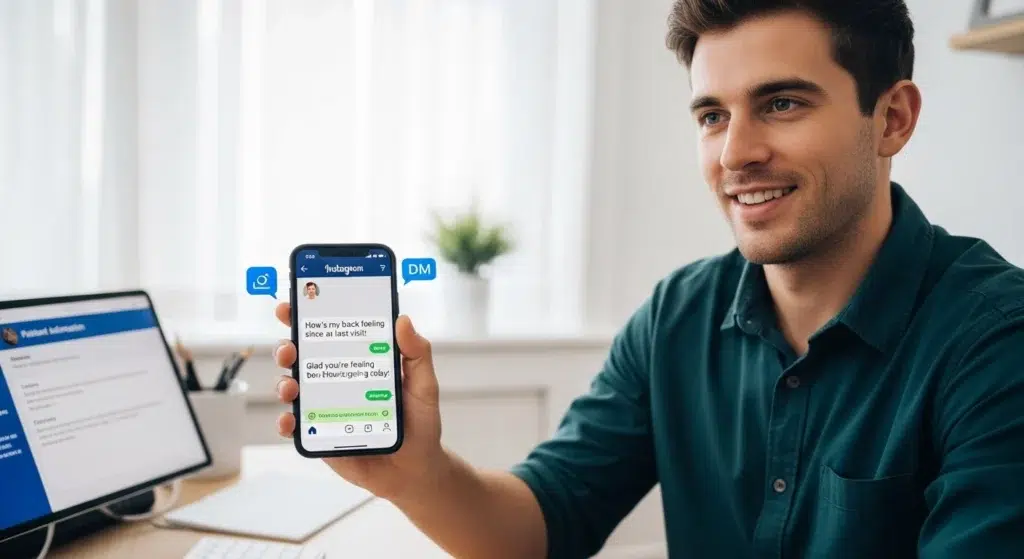
Patient retention in chiropractic is not simply about reminding people to book. The challenge is more specific than that. Improving chiropractic patient retention requires understanding why each patient type disengages in the first place.
Chiropractic patients typically fall into one of three retention patterns. The first group is consistent; they understand the value of maintenance care and book regularly without much prompting. The second group is reactive; they come in when something hurts and disappear when it does not. The third group is somewhere in between, interested in ongoing care but easily distracted by the friction of re-booking.
Most practices have a system for the first group because those patients manage themselves. They have almost nothing in place for the second and third groups, which together represent the majority of a typical chiropractic caseload.
The American Chiropractic Association notes that patient education and consistent communication are among the most effective tools for improving treatment plan completion rates. The problem is that consistent communication takes time, and most chiropractic front desk teams are already stretched across calls, walk-ins, and administrative work. Follow-up falls to the bottom of the priority list, not because it is unimportant, but because there are only so many hours in a day.
Where Instagram fits into the retention picture
Most chiropractic clinics already have an Instagram presence. Yet Instagram remains one of the most underused tools for chiropractic patient retention. Many post regularly and have built a following that includes a mix of active patients, lapsed patients, and potential new patients.
What very few clinics have is a system for turning that Instagram presence into a communication channel with existing patients between visits.
A patient who completed four sessions three months ago and then stopped booking is still following the clinic on Instagram. They are watching the reels. They are seeing the content about posture, lower back health, and the conditions the clinic treats. That passive engagement is a re-engagement opportunity that most clinics have no mechanism to act on.
AI Instagram follow-ups change this by creating automated touchpoints that reach patients where they already are, in a channel they are already using, without requiring any manual effort from the clinic team.
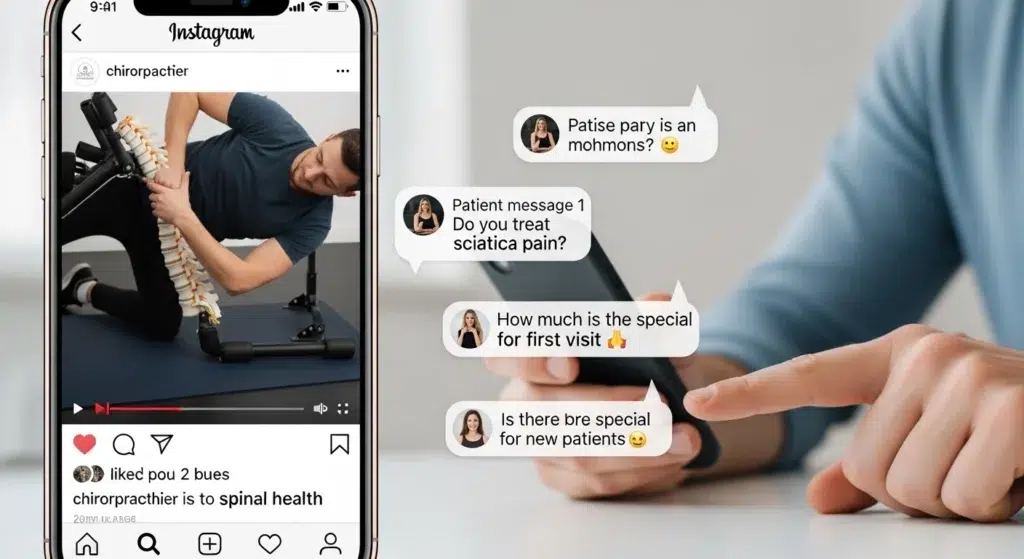
What AI Instagram follow-ups actually look like for chiropractic patients
The follow-up sequences that work best for chiropractic retention tend to fall into three categories.
Between-session check-ins
For patients who are mid-treatment plan, a short message a day or two after a session asking how they are feeling, whether the adjustment helped, and whether they have any questions before the next visit does two things. It reinforces the patient’s confidence in the treatment and keeps the clinic front of mind without being intrusive. Patients who receive these messages are more likely to complete their plan because the relationship feels active rather than transactional.
Re-engagement after inactivity
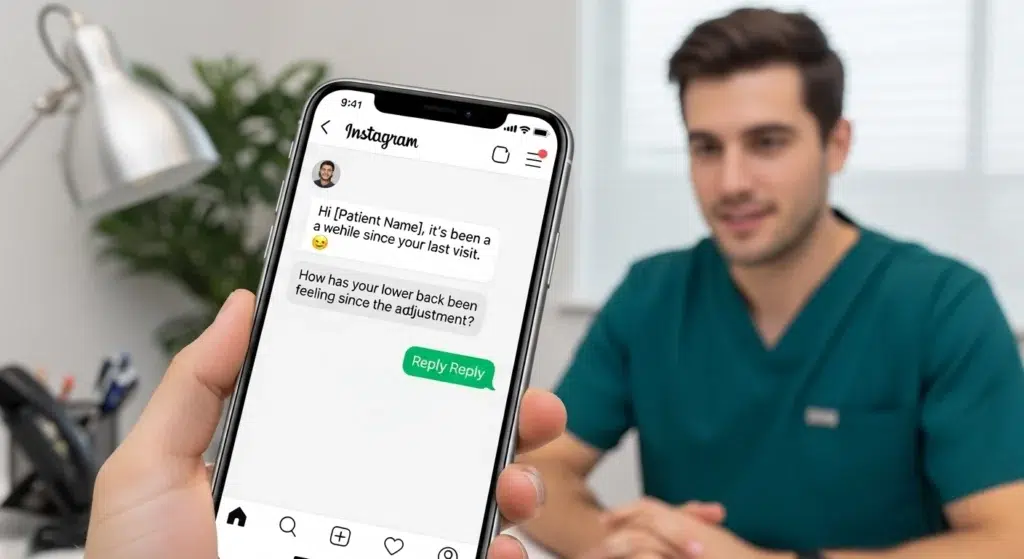
When a patient has not booked for a defined period, four weeks, six weeks, or eight weeks, depending on the clinic’s typical treatment cadence, the bot can send a re-engagement message. Not a promotional offer. Not a generic “we miss you” template. A contextual message that references the patient’s area of care and asks a relevant question. Something like: “It has been a while since your last visit. How has your lower back been feeling?” This kind of message has a significantly higher response rate than a blanket promotional DM because it feels personal rather than automated.
Seasonal and wellness prompts
Certain times of year are predictably high-demand for chiropractic, back to school, post-holiday, the start of a new year, when people are more receptive to health-related decisions. A patient who has been inactive for several months is more likely to re-engage during these windows than at a random point in the year. AI follow-ups can be configured to send contextually relevant messages during these periods, reaching lapsed patients at the moment they are most likely to respond.
The difference between a follow-up that works and one that does not
Not all automated follow-ups produce results. The clinics that see meaningful retention improvement from Instagram automation share a few common characteristics in how they approach it.
The follow-up sounds like the clinic, not like a marketing template. Patients can tell the difference between a message written for them and a message written for everyone. A bot that is trained on the clinic’s tone, the practitioner’s communication style, and the specific language the practice uses with patients will always outperform a generic sequence.
The timing is based on patient behaviour, not a fixed schedule. Sending a re-engagement message two days after a patient’s last visit makes no sense. Sending it at the point where the data suggests patients in that treatment category typically drop off makes considerably more sense. Effective Instagram AI follow-ups are triggered by patient behaviour, not by a calendar.
The message does not ask for anything immediately. The most effective re-engagement messages open a conversation rather than requesting a booking. Inactive patients respond better to a genuine check-in than to a direct call to book an appointment. The booking comes once the conversation has re-established the relationship.
For more on why patients disengage and what communication approaches are most effective at bringing them back, our piece on how effective patient follow-ups improve care and retention covers this in depth from a broader clinical communication perspective.
What this means for a chiropractic practice in practice
The chiropractic patient retention impact of consistent follow-up is not marginal. A patient who completes a full treatment plan rather than dropping off after two sessions represents more revenue per patient acquisition, meaningfully. A lapsed patient who re-engages after an automated check-in costs nothing to reactivate compared to acquiring a new patient from scratch.
For chiropractic practices where a significant portion of the caseload falls into the reactive patient category, coming in for acute issues and leaving when the pain subsides, building an automated follow-up system through Instagram creates a retention layer that runs in the background without adding workload to the front desk team.
The research on patient communication in allied health consistently shows that patients who receive regular contact between appointments report higher satisfaction, better treatment adherence, and stronger loyalty to their provider. Instagram is simply the channel through which that communication is now increasingly happening for chiropractic patients. For clinics serious about chiropractic patient retention, this is no longer a future consideration, it is a present-day competitive advantage.
MedLaunch’s Instagram AI bot for healthcare practices includes configurable follow-up sequences built specifically for the chiropractic retention pattern between-session check-ins, inactivity triggers, and seasonal re-engagement, all customised to match the clinic’s communication style.
Frequently Asked Questions
Why do chiropractic patients stop coming back after a few sessions?
The most common reason is that the acute pain or discomfort that brought them in has reduced enough that the urgency to continue disappears. Without regular communication between visits, there is nothing to maintain the momentum of the treatment plan or remind the patient of the longer-term benefits of continued care.
How do AI follow-ups help with chiropractic patient retention?
AI follow-ups automate the between-session communication that most clinic teams do not have time to do manually. They send contextual check-ins after sessions, re-engagement messages when patients go inactive, and seasonal prompts during windows when patients are more receptive. The result is consistent communication without additional workload on the front desk.
Is Instagram an appropriate channel for patient follow-up communication?
For the demographic that makes up a large portion of chiropractic caseloads, patients aged 25 to 45, Instagram is one of the most active daily communication channels. Reaching patients through a platform they already use regularly tends to generate higher response rates than email or SMS for re-engagement purposes.
What should a chiropractic patient’s follow-up message say?
The most effective follow-up messages are short, specific to the patient’s area of care, and ask a question rather than making a request. A message that asks how a patient’s lower back has been feeling since their last visit will generate more responses than one that asks them to book their next appointment.
How is an AI follow-up different from a bulk promotional DM?
A bulk promotional DM sends the same message to everyone at the same time. An AI follow-up is triggered by individual patient behaviour, specifically the point at which a patient becomes inactive, and is personalised to match the clinic’s tone and the patient’s treatment context. Patients experience it as a genuine check-in rather than a marketing message.
Does automated follow-up work for all types of chiropractic patients?
It works best for the reactive patient group, those who come in for acute issues and disengage once the pain subsides. Consistent patients manage themselves and rarely need prompting. For the reactive group, which represents the majority of most chiropractic caseloads, automated follow-up creates a retention layer that would otherwise not exist.
Is Patient Drop-Off Costing Your Chiropractic Clinic?
Book a call with us to see how MedLaunch helps chiropractic clinics keep patients engaged between sessions and coming back for care.