


Key Takeaways
-
1Follow-up drives retention: Patients leave due to lack of post-visit contact, not poor care. Silence signals the provider’s lack of interest in their health.
-
2Timing Matters: Follow-ups within 24-48 hours improve outcomes, reduce readmissions, and boost satisfaction compared to delayed follow-ups.
-
3Automation Ensures Consistency: Manual follow-ups fail with volume; automated multi-channel follow-ups guarantee every patient receives timely outreach, regardless of workload.
-
4Follow-up as a Clinical Tool: Structured follow-ups detect complications early, track chronic conditions, and adjust treatments before issues escalate.
-
5Define Roles and Documentation: Unassigned follow-up duties lead to inconsistent outreach; accountability and tracking turn intention into effective action.
Did you know? Most healthcare providers think patient loss happens because of price, competition, or marketing. In reality, patients often drift away for a much simpler reason, and that is no one followed up.
When patients don’t hear back after a visit, they assume their care ended the moment they walked out the door. This lack of communication doesn’t just affect satisfaction, it directly impacts long-term care outcomes and patient retention.
Effective patient follow-up is one of the most overlooked yet powerful elements of modern healthcare delivery. When done correctly, follow-ups lead to better patient care, improved clinical outcomes, and stronger long-term retention and loyalty.
According to data from the Agency for Healthcare Research and Quality (AHRQ), timely post-visit follow-ups can reduce hospital re-admissions by up to 20%, while improving patient adherence to treatment plans by nearly 30%.
Similarly, a survey by the Medical Group Management Association (MGMA) found that clinics with structured follow-up protocols reported higher patient satisfaction scores and loyalty rates, directly linking follow-up management to retention.
In this blog, you’ll learn what patient follow-up really means, why it plays a critical role in care quality and retention, and how healthcare organizations can leverage healthcare IT solutions to design scalable, effective follow-up systems with the right strategies, workflows, and technology.
Table of Contents
What Is Patient Follow-Up?

Patient follow-up refers to structured communication and engagement that takes place after a patient visit, procedure, or treatment. Its purpose is to check patient progress, monitor symptoms, clarify post-visit instructions, support recovery, and guide the next steps in care.
Patient follow-up care is a multi-layered process. Beyond a simple phone call, it can include digital patient follow-up, automated reminders, telehealth check-ins, and portal-based messaging, all made easier through patient flow solutions and other healthcare automation solutions. These interactions are crucial for patient monitoring, care coordination, and post-treatment care, especially during transitions between different providers or departments.
Rather than being a single action, patient follow-up management is an ongoing strategy designed to keep patients engaged and supported, reducing gaps in care and improving overall outcomes.
For example, a patient recovering from knee surgery might receive a post-visit follow-up call to assess mobility, a digital reminder to schedule physiotherapy using AI appointment setter, and a portal message to track pain levels and medication adherence.
Why Effective Follow-Ups Improve Patient Care
1. Enhances Clinical Outcomes
Timely patient follow-ups directly improve clinical outcomes. Many patients leave a clinic with instructions they only partially understand. For example, post-treatment follow-up calls or automated messages can remind patients about prescription refills, proper medication schedules, or lifestyle modifications.
Studies show that structured post-visit follow-ups significantly reduce complications. A research study published in the Journal of Patient Safety found that patients who received follow-up calls within 48 hours of discharge experienced fewer adverse events and a 15% reduction in readmissions.
Follow-ups also facilitate health tracking, such as monitoring blood pressure, blood sugar, or post-operative pain levels. Clinics using digital patient follow-up platforms report improved adherence to care plans, fewer emergency visits, and higher patient engagement. Early intervention through follow-ups ensures minor issues don’t become critical, reducing hospitalizations and improving patient safety.
2. Strengthens Continuity of Care

Without follow-ups, patients often fall out of the care system, which is particularly risky for those with chronic conditions. Clinical follow-up programs ensure patients remain within the care ecosystem, supporting long-term treatment adherence and smoother care transitions.
For example, patients with diabetes benefit from regular check-ins that track blood glucose readings, medication adherence, and lifestyle changes. Similarly, heart failure patients require monitoring for fluid retention or new symptoms.
Structured post-visit follow-up, enhanced with AI patient scheduling, allows clinicians to detect complications early, adjust treatment plans, and coordinate care across specialists. Strong continuity reduces fragmentation, making patients feel guided and supported.
Strong continuity also reduces fragmentation. Patients feel guided, supported, and less likely to skip follow-up appointments or switch providers unnecessarily.
3. Improves Patient Satisfaction and Trust
Patients want to feel heard and supported. Personalized follow-ups show that the provider cares beyond the visit, building trust and confidence. A study by Press Ganey found that patients receiving a follow-up call within 48 hours reported 22% higher satisfaction scores than those who received no follow-up.
Patients who feel valued are more likely to comply with care plans, engage in preventive health measures, and maintain long-term relationships with their providers. Follow-ups, whether through patient follow-up calls or digital messaging, serve as a critical touchpoint for demonstrating commitment to the patient’s well-being.
How Patient Follow-Ups Boost Retention
1. Builds Strong Provider-Patient Relationships
Effective patient follow-up management creates a bridge between visits. By showing consistent concern for the patient’s well-being, providers reinforce that care doesn’t end at checkout. This is especially important for patients undergoing multi-stage treatments, such as chemotherapy, physical therapy, or rehabilitation, where frequent engagement fosters confidence in the provider and care team.
For example, a cancer patient may receive weekly check-ins via portal messages or phone calls to track symptoms, medication side effects, and emotional support. This ongoing attention fosters loyalty and reinforces the patient’s trust in the clinic.
2. Reduces No-Shows and Keeps Patients Engaged
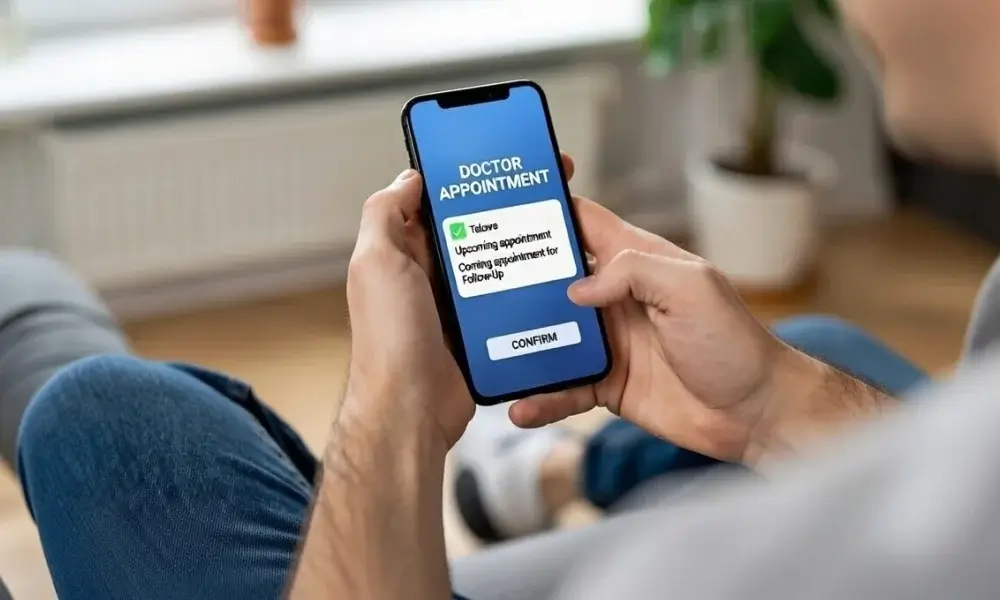
Missed appointments can cost clinics both financially and operationally. Patient follow-up reminders, particularly when automated through digital platforms, help reduce no-shows. According to MGMA, clinics using automated reminders saw up to 40% fewer missed appointments.
Structured reminders can include post-visit instructions, links to patient support services, or even health-tracking surveys. These proactive communications not only prevent missed appointments but also encourage patients to engage in post-treatment care and maintain scheduled check-ins.
3. Encourages Long-Term Loyalty and Advocacy
Satisfied patients are more likely to remain loyal and recommend providers to family and friends. Follow-ups demonstrate commitment, showing patients that the practice cares about outcomes and long-term well-being.
For instance, patients who receive timely patient follow-ups after surgical procedures or chronic disease management often report feeling more valued and engaged. Over time, this increases retention and turns patients into advocates, improving word-of-mouth referrals.
Key Components of an Effective Follow-Up Protocol
1. Define Clear Objectives

Determine which visits, procedures, or conditions require follow-up and why. Set goals for each interaction: is the follow-up for post-treatment care, symptom monitoring, patient education, or appointment scheduling? Clear objectives ensure that every patient follow-up adds value and avoids redundancy.
For example, post-surgical follow-ups may focus on wound healing and mobility, while chronic care follow-ups focus on medication adherence and lifestyle adjustments.
2. Choose the Right Communication Methods
Patients prefer different modes of communication. Some respond best to patient follow-up calls, while others prefer digital channels like emails, texts, or portal messages. Combining automated patient follow-up for routine reminders with personal calls for complex cases ensures effectiveness while maintaining a human touch.
Integrating digital patient follow-up systems allows staff to track responses, escalate urgent issues, and provide patient support services efficiently.
3. Schedule and Timing
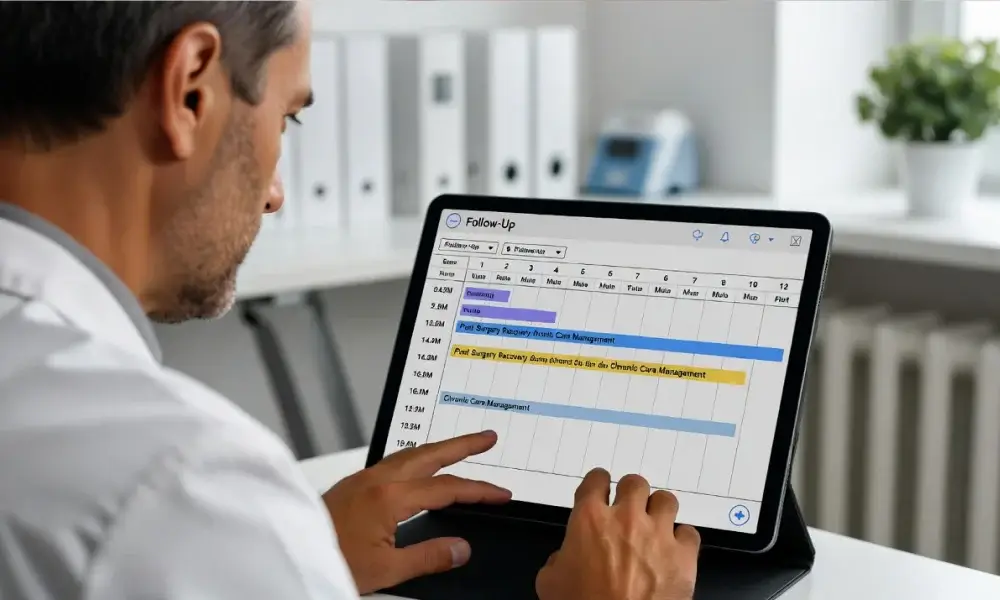
Timing is crucial. Research shows follow-ups within 24–48 hours post-visit maximize engagement and reduce complications. Subsequent follow-ups may be scheduled weekly, monthly, or at milestones of the care plan. Scheduling follow-ups before patients leave the clinic improves adherence and clarity.
For chronic patients, regular check-ins ensure that they stay aligned with their care plans and maintain engagement with care coordination efforts.
4. Assign Roles and Responsibilities
Administrative staff handle reminders and scheduling, while clinical staff manage symptom assessment, care instructions, or prescriptions. Clear delegation, supported by AI medical receptionist tools, reduces missed follow-ups.
Defining roles ensures accountability, reduces missed follow-ups, and improves patient experience.
5. Tracking & Documentation
Patient follow-up tracking is essential for continuity and quality. Follow-up interactions should be logged in EHRs or healthcare follow-up systems so that all team members have visibility.
Documentation supports coordinated care, prevents duplication, and provides data for patient follow-up optimization strategies. Clinics can analyze trends, adjust protocols, and improve outcomes over time.
Tools & Technology for Follow-Ups
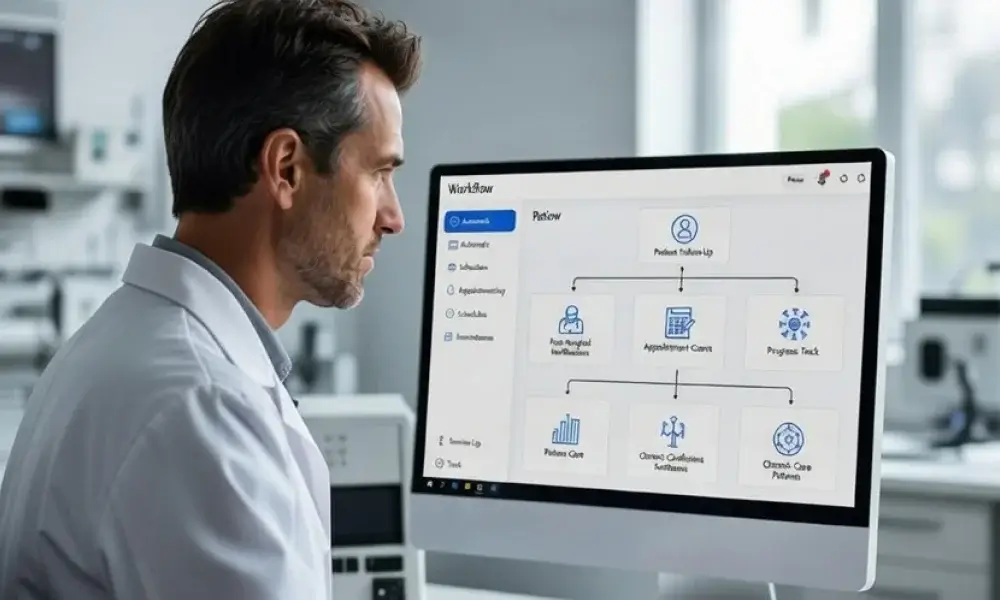
1. EHR-Integrated Workflows
EHR integration allows follow-ups to link directly to clinical data. Clinicians can quickly access visit history, lab results, and care instructions when performing follow-ups, improving personalized care.
2. Automated Communication Platforms
Automated systems, powered by AI patient scheduling, send appointment reminders, post-visit surveys, and wellness check-ins. Digital patient follow-up helps scale outreach efficiently while maintaining quality engagement.
3. Appointment Setting & Rescheduling Tools
Tools that automatically schedule follow-ups or reschedule missed appointments improve adherence and reduce administrative burden. These are central to patient follow-up automation, allowing staff to focus on direct patient care.
4. Telehealth & Virtual Check-Ins
Telehealth provides convenient post-treatment follow-ups. Virtual check-ins are especially valuable for care coordination, prescription adjustments, and chronic condition monitoring when patients cannot return in person.
5. Two-Way Communication Tools
Secure portals, messaging apps, and patient support platforms allow two-way communication. Patients can ask questions, engage with post-visit instructions, and track their progress digitally. This ensures a more connected and responsive care experience.
Best Practices & Real-World Strategies for Patient Follow-Ups
Knowing that follow-up matters is not enough. The practices that consistently deliver better outcomes, lower readmission rates, and stronger retention are the ones that have turned follow-up from a good intention into a structured operational system. Here is exactly how to do that.
1. Segment Follow-Ups by Visit Type and Clinical Need
Not every patient needs the same follow-up. Applying a single generic follow-up approach across all visit types wastes staff time on low-need patients while under-serving high-need ones. The first step in building an effective follow-up system is defining which patients need which type of follow-up and at what interval.
Follow-up framework by visit type:
| Visit Type | First Follow-Up Timing | Channel | Primary Purpose |
|---|---|---|---|
| Post-discharge from hospital | Within 24 hours | Phone call | Check symptoms, confirm medication understanding, schedule appointment |
| Post-surgical or procedure | Within 48 hours | Phone call + portal message | Wound or recovery assessment, pain management, mobility check |
| Chronic disease management | 1 to 2 weeks after visit | SMS or portal message | Medication adherence, symptom monitoring, lab result review |
| Acute care or urgent visit | Within 48 to 72 hours | SMS or email | Confirm recovery, check whether symptoms resolved or worsened |
| Preventive or wellness visit | 1 week after visit | Email or portal | Share follow-up resources, confirm any recommended screenings booked |
| Mental health appointment | Within 48 hours | Phone call or secure message | Check emotional state, confirm next appointment, address any concerns |
| New patient first visit | Within 24 to 48 hours | SMS or email | Welcome message, confirm care plan clarity, invite questions |
Use this framework as a starting point then adjust timing and channel based on your patient population’s preferences and your practice’s capacity.
2. Build a Multi-Touch Follow-Up Sequence
A single follow-up message is better than nothing. A structured multi-touch sequence is dramatically more effective. Patients process information at different rates, respond to different channels, and have varying levels of engagement with their care.
A sequence that reaches them multiple times through multiple channels captures a significantly higher percentage of patients than any single outreach attempt.
Standard post-visit follow-up sequence:
Touch 1 — Within 24 to 48 hours (SMS or phone call)
The highest-priority follow-up window. Patient recall of the visit is still strong and any confusion about instructions, medications, or next steps can be addressed before it causes a clinical problem or drives the patient to seek care elsewhere.
Touch 2 — Day 7 (email or portal message)
A check-in that reinforces the care plan, shares relevant educational content, and confirms whether the patient has scheduled any recommended follow-up appointments or referrals. This touch is particularly important for chronic disease patients and post-procedure recoveries.
Touch 3 — Day 14 to 30 (SMS or automated call)
A final outreach confirming care plan adherence and prompting the patient to book their next scheduled appointment if they have not already done so. For patients with no upcoming appointment, this message should include a direct booking link.
What to do if a patient does not respond:
- After Touch 1: Flag for manual phone call attempt within 24 hours
- After Touch 2: Assign to care coordinator for personal outreach
- After Touch 3 with no response: Add to reactivation workflow if clinically indicated
3. Use Personalization to Increase Engagement
Generic follow-up messages get ignored. Personalized messages get read, responded to, and acted on. Personalization does not require a staff member to manually write each message — it requires configuring your automated follow-up system to pull the right patient-specific variables into each message automatically.
Minimum personalization elements every follow-up should include:
- Patient first name
- Provider name they saw
- Specific visit type or reason for the visit
- One clinically relevant statement connecting the follow-up to their individual care plan
- A direct next step — booking link, response prompt, or phone number
The difference personalization makes:
The personalized version takes 30 additional seconds to configure in a template system and produces significantly higher response and engagement rates.
4. Ready-to-Use Follow-Up Message Templates
Post-visit SMS (within 24 hours):
Post-discharge phone call script:
Chronic disease check-in SMS (Day 7):
No-response follow-up SMS (Day 14):
Post-procedure recovery email (48 hours):
5. Automate Routine Follow-Ups — Reserve Human Calls for High-Need Patients
One of the most common reasons follow-up systems fail is staff burnout. When follow-up relies entirely on manual outreach, it works well when the practice is quiet and collapses when the practice is busy — which is exactly when consistent follow-up matters most.
The solution is a clear division between automated and human follow-up:
Automate these follow-ups:
- Post-visit satisfaction surveys
- Routine appointment reminders and confirmations
- Preventive care and wellness recalls
- Prescription refill reminders
- Chronic disease check-in messages at defined intervals
- No-show and missed appointment outreach
Reserve human outreach for:
- Post-discharge patients within 24 hours
- Patients who did not respond to two automated touches
- Patients with complex conditions or recent clinical changes
- Patients who flagged concern or distress in a survey or portal message
- High-risk patients identified by the care team as needing personal attention
Using an AI appointment setter to manage automated outreach frees care coordinators and clinical staff to focus their time on the patients who genuinely need a human conversation rather than spending it on routine reminders that a system can handle consistently at scale.
6. Integrate Follow-Up Into Daily Workflows — Not as an Add-On
The most common reason follow-up systems are abandoned is that they are treated as a separate task that competes with clinical priorities rather than a built-in part of the patient care workflow.
Sustainable follow-up happens when it is embedded into the daily rhythms of the practice — not when it depends on a staff member remembering to send a message between other tasks.
How to embed follow-up into daily operations:
- At check-out — schedule the follow-up appointment before the patient leaves and confirm their preferred communication channel for post-visit messages; a patient who leaves with a confirmed follow-up date is significantly more likely to engage with follow-up communication
- In the EHR — configure visit completion to automatically trigger the appropriate follow-up sequence based on visit type; automation that starts the moment a visit is marked complete ensures no patient falls through the gap between checkout and follow-up
- In daily huddles — spend two minutes at the start of each clinical day reviewing patients from the previous day who have not responded to follow-up outreach; this keeps the team aware of patients who may need escalation before clinical problems develop
- In care coordinator workflows — assign a defined daily block for care coordinators to review automated follow-up responses, flag concerning replies, and complete manual outreach for non-responders; follow-up that is assigned to a specific role at a specific time gets done; follow-up that is everyone’s responsibility becomes no one’s responsibility
7. Track Follow-Up Metrics and Use Them to Improve
A follow-up system that is never measured is never improved. Tracking a small set of follow-up metrics consistently reveals where the system is working, where patients are falling through, and which changes to protocol produce measurable improvements in outcomes and retention.
Core follow-up metrics to track monthly:
| Metric | How to Calculate | Target Benchmark |
|---|---|---|
| Follow-up completion rate | Follow-ups completed ÷ Follow-ups due × 100 | Above 85% |
| Response rate | Patient responses received ÷ Follow-up messages sent × 100 | Above 40% for SMS; above 25% for email |
| Time to first follow-up | Average hours between visit completion and first follow-up sent | Under 48 hours for all visit types |
| Readmission rate for followed-up patients | Readmissions among patients who received follow-up ÷ total followed-up patients × 100 | Benchmark against your baseline before implementing the system |
| No-show rate at follow-up appointment | No-shows at follow-up visits ÷ total follow-up appointments scheduled × 100 | Below 15% |
| Patient satisfaction score post follow-up | Average satisfaction rating from post-visit survey | Above 4.2 out of 5 |
Review these metrics monthly with the practice manager and quarterly with clinical leadership. When a metric falls below its target threshold investigate the specific follow-up touchpoint responsible before adjusting the entire protocol..
Challenges and Solutions
1. Time & Staff Constraints
Automation and delegation reduce workload while ensuring consistent follow-ups. Strategic scheduling and role assignment allow clinics to manage higher patient volumes efficiently.
2. Technology Gaps
Implementing integrated healthcare follow-up systems or digital portals addresses communication gaps and facilitates seamless patient engagement.
3. Patient Engagement Barriers
Messages should be culturally appropriate, in preferred languages, and clear. Incorporating patient support services and visit reminders enhances response rates.
Conclusion
Patient follow-up is essential for delivering high-quality care and ensuring patient retention. Structured, timely, and personalized follow-ups improve clinical outcomes, strengthen patient trust, and foster long-term loyalty. When patients feel supported after leaving the clinic, they are more likely to adhere to treatment plans, attend future appointments, and actively participate in their own health journey.
This continuity of care not only benefits patients but also enhances the overall efficiency and effectiveness of healthcare organizations.
By leveraging automated patient follow-up, digital communication, telehealth, and robust tracking systems, healthcare organizations can ensure care continues beyond the clinic visit. Patient follow-up management tools, such as reminder systems, secure messaging platforms, and portal-based follow-ups, enable staff to stay connected with patients while reducing administrative burdens.
For chronic conditions, post-treatment follow-up, or preventive care, these systems allow providers to monitor progress, adjust care plans, and provide timely interventions that can prevent complications.
Investing in follow-up management transforms post-visit care into a sustained, meaningful, and impactful patient experience. It empowers patients to take an active role in their health, strengthens provider-patient relationships, and improves patient satisfaction and loyalty.
In a competitive healthcare landscape, practices that prioritize timely patient follow-ups, structured communication, and patient-centered engagement will not only improve clinical outcomes but also build long-term trust, advocacy, and lasting success.
FAQs
When should a patient follow-up happen?
Within 24–48 hours after a visit, with additional follow-ups scheduled based on treatment type or chronic care needs.
Who should handle patient follow-ups in a clinic?
Clinical staff manage medical check-ins, while administrative staff handle reminders and scheduling; automation tools can support both.
How does appointment setting fit into patient follow-ups?
Scheduling ensures patients complete necessary visits, maintains continuity of care, and reduces missed appointments.
Can automated follow-ups replace human interaction?
Not entirely, automation handles reminders and routine check-ins, but personalized care and clinical assessments require human interaction.
What happens when clinics don’t follow up with patients?
Patients may feel neglected, skip appointments, experience poorer health outcomes, and switch providers, reducing retention.
What should a patient follow-up call include?
A patient follow-up call should include introducing yourself, reviewing the patient’s condition, addressing any concerns, providing next steps or reminders, and closing with support and gratitude.
How do you write a patient follow-up message?
A patient follow-up message should be brief, clear, and empathetic, confirming the purpose of the follow-up, providing any necessary instructions, and offering further assistance or contact information.
What is a patient follow-up protocol?
A patient follow-up protocol ensures timely and consistent follow-ups, clearly assigns roles, tracks interactions through EHRs, and includes escalation steps for urgent issues to ensure proper care continuity.