

In today’s rapidly evolving healthcare landscape, delivering an exceptional patient experience is not optional, it’s essential. At the heart of a positive healthcare experience are the touch-points in patient journey, which are the individual interactions patients have with a healthcare system, from first contact to long‑term follow‑up.
Understanding these patient journey touchpoints helps healthcare organizations see care through the patient’s eyes, optimize clinical processes, reduce friction, and meaningfully enhance satisfaction and outcomes.
This blog will provide a comprehensive exploration of healthcare patient journey touchpoints, explain why they matter, and show how mapping touchpoints can inform improvements across care delivery.
By the end of this post, you’ll have a clear understanding of how touchpoints influence the patient experience, how to categorize them across patient journey stages, and practical strategies to evaluate and improve them.
Table of Contents
What are Touch-points in the Patient Journey?

At its core, a touchpoint in the patient journey refers to any instance in which a patient interacts with a healthcare organization.
These interactions can be in person, online, by phone, or through automated digital systems — and each has the power to shape perception.
In a healthcare context, patient journey touchpoints include everything from seeing an online review, booking an appointment, speaking with staff, entering a clinic or hospital, receiving treatment, billing, and even ongoing follow‑up care.
Each contact matters because it contributes to how patients feel, what they remember, and how likely they are to remain engaged in their care.
Touchpoints vs. the Journey
It’s important to distinguish the patient journey from patient journey touchpoints:
- Patient journey = the full arc of experiences a patient goes through within the healthcare ecosystem, from initial awareness to long‑term care and loyalty.
- Touchpoints = the individual moments of interaction within that journey.
Think of the journey as the roadmap, and touchpoints as the milestones along the route.
Origins of the Touchpoint Concept in Healthcare
The idea of tracking touchpoints originated in customer experience management in sectors like retail and hospitality, where brands mapped every interaction to improve loyalty and satisfaction.
Gradually, healthcare adopted this thinking — recognizing that patients, too, are consumers with expectations shaped by digital experiences, responsiveness, and clear communication.
Today, patient journey mapping touchpoints is considered a best practice strategy for delivering person‑centered care and improving operational efficiency.
Why Do Touchpoints Matter in Healthcare?
Each point of contact between a patient and a healthcare provider — whether digital or human — carries the potential to either strengthen or weaken trust, confidence, and satisfaction. This section dives into why patient experience touchpoints matter so much.
Impact on Patient Experience
The cumulative effect of touchpoints determines whether a patient feels cared for, respected, and supported. When touchpoints are seamless and empathetic, patients are more likely to:
- Trust their providers
- Adhere to treatment plans
- Follow‑up as advised
- Recommend the practice to others
Conversely, negative touchpoints — confusing instructions, long wait times, administrative hassles — can erode confidence, cause anxiety, and increase the likelihood of churn.
Connection to Satisfaction and Outcomes

Research consistently shows that patient experience predicts clinical outcomes and financial performance. Patients who feel positively engaged are more likely to return for care, follow medical advice, manage chronic conditions well, and maintain long‑term relationships with providers.
A poor touchpoint at any stage — especially during scheduling or visitation — can lead to missed appointments, lower adherence, and worse health outcomes.
High vs. Low Impact Touchpoints
Not all touchpoints carry equal weight. Some examples:
High‑impact touchpoints
- First phone call with scheduling staff
- In‑person clinical encounter
- Follow‑up communication after treatment
- Billing and insurance explanations
Low‑impact touchpoints
- Automated reminders (when done poorly)
- Web browsing without clear navigation
- Transactions with no personalized response
While “low impact” touchpoints still matter, focusing on high‑impact areas can yield larger improvements in the patient experience with fewer resources.
Patient Journey Stages Explained
To strategically map and optimize healthcare patient journey touchpoints, it’s useful to break the journey into defined stages:
- Awareness & Acquisition
- Decision & Scheduling
- Visit / Encounter
- Follow‑Up & Long‑Term Care
Let’s explore each stage and the typical touchpoints associated with them.
Awareness & Acquisition (First Contact)
In the earliest phase, patients are becoming aware of a healthcare provider or service. They may be searching for care, researching clinicians, or seeking help with symptoms.
Typical touchpoints at this stage include:
- Website visits
- Online reviews
- Social media engagement
- Referrals from other providers
- Health content or blog posts
- First phone call or chatbot interaction
This stage sets the tone for the entire journey — first impressions matter enormously.
Decision & Scheduling
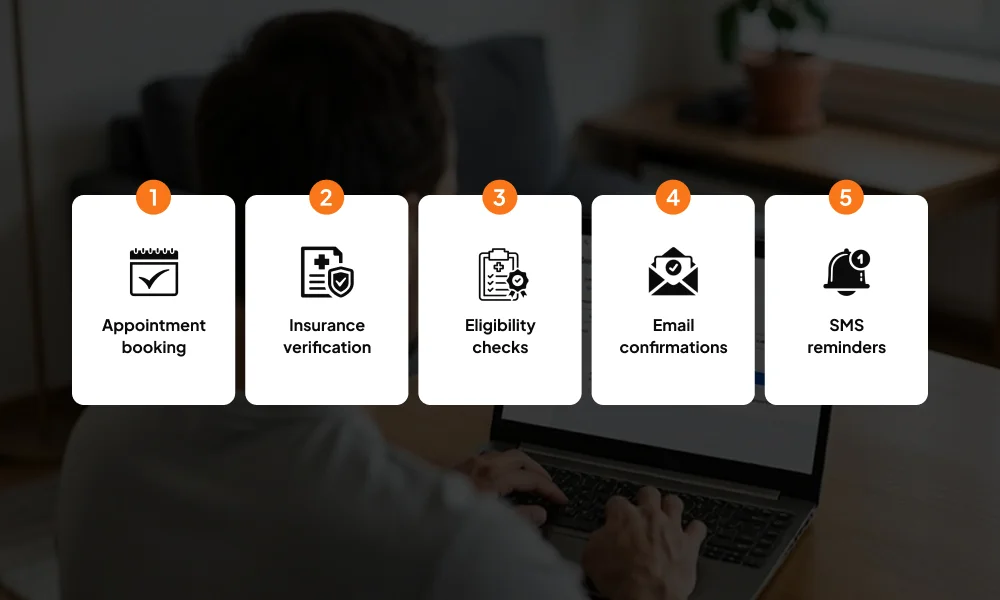
Once a patient decides to seek care, the decision and scheduling phase begins. Here, convenience, clarity, and responsiveness become paramount.
Key touchpoints include:
- Appointment booking (online or by phone)
- Insurance verification
- Eligibility checks
- Email confirmations
- SMS reminders
Errors or delays at this stage — such as unavailable appointment slots or confusing online forms — can result in patient frustration and even lost bookings.
Visit / Encounter
The visit itself remains the most emotionally charged phase of the patient journey. It’s where diagnosis, treatment, and human connection occur.
Common touchpoints here include:
- Reception or front desk check‑in
- Waiting room experience
- Interaction with medical assistants and nurses
- Physician consultation/exam
- Clinical communications
- Care instructions
This is where patient interaction touchpoints have the most direct impact on satisfaction and health outcomes.
Follow‑Up & Long‑Term Care
After the immediate encounter, patients enter the follow‑up and long‑term care phase, which is especially important for chronic conditions and continuity of care.
Touchpoints in this phase may include:
- Post‑visit phone calls
- Treatment reminders
- Prescription refill coordination
- Remote monitoring touchpoints
- Patient education materials
- Satisfaction surveys
Thoughtful follow‑up reinforces trust and keeps patients engaged in their care plan.
Typical Touchpoints at Each Stage
To better understand the full range of patient interaction touchpoints, here’s a more detailed breakdown by phase:
Before Visit
- Website Visits
- Searching for availability
- Viewing provider bios
- Reading FAQs
- Online Reviews
- Checking ratings on Google, Healthgrades, or Yelp
- Reading experiences from other patients
- Appointment Scheduling
- Online forms
- Phone calls
- Chatbot scheduling
- Insurance Verification
- Pre‑check of coverage
- Cost estimates
- Explanation of benefits
Each pre‑visit touchpoint offers an opportunity to clarify expectations and set a positive tone.
During Visit
- Reception / Front Desk Interaction
- Greeting demeanor
- Wait time communication
- Check‑in efficiency
- Clinical Encounter
- Nurse communication
- Provider engagement
- Explanation of diagnosis
- Communication Quality
- Language and clarity
- Empathy and respect
- Personalized attention
Touchpoints during actual care are inherently sensitive and deeply influence perception and satisfaction.
After Visit
- Follow‑Up Messaging
- Thank‑you or confirmation emails
- Test result communication
- Billing & Claims
- Explanation of charges
- Insurance coordination
- Payment plan support
- Feedback Collection
- Satisfaction surveys
- Follow‑up calls for outcomes
- Reviews or ratings requests
Well‑executed after‑visit touchpoints reinforce value and help close the loop on care delivery.
Patient Journey Touch-points Examples in Healthcare

Let’s explore how touchpoints take shape in real‑world care scenarios.
Telehealth Visit Touchpoints
In a virtual setting, digital touchpoints become front and center:
- Telehealth platform login
- Appointment reminders with video links
- Digital waiting rooms
- Post‑session summaries via email or portal
Strong digital design and clear communication are key here to avoid frustration and tech friction.
Emergency Care Interactions
Emergency situations are high‑stress and require rapid, responsive touchpoints:
- 911 or urgent call responses
- Triage immediacy
- Rapid care handoffs
- Communication during transitions
- Post‑discharge follow‑up
Every touchpoint in emergency care shapes perception under pressure — so clarity, compassion, and speed are imperative.
Chronic Care Management Touchpoints
Patients managing long‑term conditions need consistency and support:
- Regular check‑ins or remote monitoring
- Education materials
- Portal access for records
- Prescription coordination
In chronic care, pacing and personalization make a difference in adherence and outcomes.
Surgical Patient Journey Examples
Surgical pathways often encompass complex touchpoints:
- Pre‑surgical testing
- Anesthesia consults
- Pre‑op instructions
- Hospital admissions
- Recovery plans
- Rehabilitation follow‑up
Mapping each interaction ensures that patients and families feel informed and supported.
Patient Experience Improvements Examples
Improving patient experience touchpoints isn’t just theoretical — real gains are being made every day. Here are practical examples:
Compassionate Check‑In Process
Hospitals that train front‑desk staff in empathy and communication report higher satisfaction scores because patients feel acknowledged and valued from the start.
Clear Discharge Instructions
When patients receive written and digital instructions that are easy to understand, post‑visit compliance and recovery improve, and readmissions drop.
Digital Reminders Reducing No‑Shows
Automated SMS and email reminders — especially those allowing easy rescheduling — have been proven to lower no‑show rates and reduce operational waste.
The Role of Digital Touchpoints in the Patient Journey
Digitalization has dramatically expanded touchpoints in healthcare patient experience. Today’s patients expect frictionless digital access across their journey.
Website Forms
Well‑designed online forms that auto‑save and provide feedback reduce abandonment and improve scheduling rates.
Appointment Booking Apps
Mobile apps that allow patients to book, reschedule, and receive updates create seamless interactions and free up staff bandwidth.
SMS Reminders
Text reminders are highly effective because they reach patients instantly, are easy to interact with, and often integrate with calendar systems.
Patient Portals
Portals empower patients with direct access to their records, test results, care plans, and messaging — increasing engagement and transparency.
Automation and Communication Technology
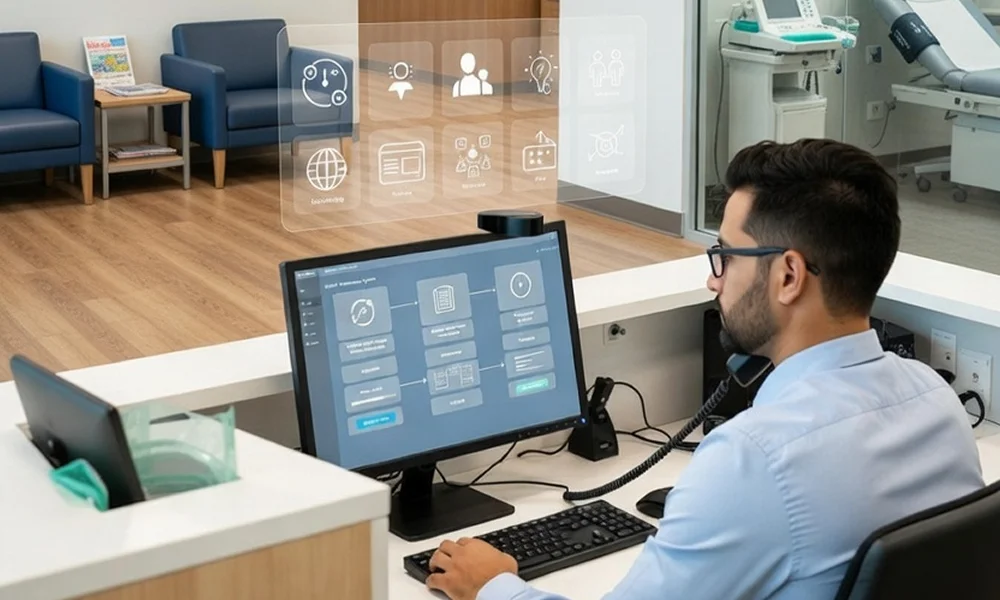
Modern care systems now leverage advanced tools that enhance patient journey touchpoints with speed and precision.
AI‑Powered Medical Receptionists
AI systems can support booking, answer FAQs, send reminders, and even triage basic needs 24/7 — reducing wait times and administrative burden.
Telemedicine Platforms
Integrated telehealth tools streamline virtual touchpoints and provide secure, convenient care access for patients anywhere.
Mobile Health Apps
Apps for tracking symptoms, medications, and appointments facilitate consistent engagement throughout care journeys.
Feedback Collection Systems
Digital surveys and automated feedback loops allow providers to capture insights at every stage and identify opportunities for improvement.
How to Evaluate Patient Journey Touchpoints
To strengthen touchpoints, you must measure them. Both quantitative and qualitative metrics play a role.
Patient Feedback Examples
- Post‑visit surveys asking about clarity of communication
- Open comments about scheduling experiences
- Ratings on friendliness and efficiency
Patient voice is a rich source of insight when used responsibly.
Quantitative Metrics
Common measurable indicators include:
- Net Promoter Score (NPS) — likelihood to recommend
- Patient Satisfaction Score (CSAT) — satisfaction with specific touchpoints
- Appointment No‑Show Rates
- Portal Engagement
- Time to Appointment
These metrics provide objective benchmarks for performance and improvement.
Qualitative Insights
In‑depth interviews, focus groups, and narrative feedback help explain why certain touchpoints succeed or fail.
Combining numerical data with real patient stories can reveal hidden bottlenecks and emotional pain points.
Conclusion
Mapping and optimizing touchpoints in the patient journey is one of the most impactful strategies healthcare organizations have for improving care experience, boosting satisfaction, and strengthening outcomes.
From the first website visit to follow‑up care, every interaction matters. By understanding where friction exists, where emotions run high, and where digital tools can help, care teams can build experience‑centric journeys that patients value.
Ready to audit your healthcare patient journey touchpoints and improve care experiences? Start by collecting real patient feedback, map the full journey across channels, and prioritize high‑impact touchpoints for improvement. Your patients — and your quality scores — will thank you.
FAQs
How many touchpoints are in a patient journey?
There can be dozens, spanning before, during, and after care, depending on the service and channel.
What’s the most important touchpoint in healthcare?
The clinical encounter with providers is typically the highest-impact touchpoint.
What are digital touchpoints in the patient journey?
Online interactions like websites, portals, apps, telehealth, and automated reminders.
How do you measure touchpoints in patient experience?
Through metrics like NPS, satisfaction scores, no-show rates, and patient feedback.
How can a healthcare provider improve touchpoints?
By auditing each interaction, streamlining processes, and enhancing communication and empathy.