


Did you know? Patient feedback is your clinic’s secret weapon. What if one simple system could reveal exactly what your patients love and what’s driving them away?
Implementing a smart patient feedback system can change your clinic’s care, boost satisfaction, and turn every visit into an opportunity for growth.
In the modern healthcare environment, patients expect more than competent clinical care. They want a seamless, personalized experience, from appointment booking to post-visit follow-up.
Increasingly, patients evaluate clinics not only on treatment outcomes but also on factors like staff communication, wait times, ease of scheduling, and the overall sense of care coordination.
Rising expectations, especially around digital engagement, transparency, and convenience, make understanding patient perspectives more important than ever.
A patient feedback system provides a structured, actionable framework for capturing patient insights, analyzing them, and making meaningful improvements.
Unlike one-off surveys, it establishes a continuous healthcare feedback loop, allowing clinics to identify recurring issues, optimize workflows, and strengthen the patient-provider relationship.
Implementing an effective feedback system does more than collect opinions, it transforms patient insights into strategies for enhancing care quality, operational efficiency, and patient satisfaction.
Clinics that embrace patient feedback systematically often see:
- Improved patient retention and loyalty.
- Reduced missed appointments and cancellations.
- Better staff performance through targeted training.
- Enhanced online reputation and community trust.
The goal is to go beyond simply gathering feedback, clinics must act on it. Listening to patients is important, but following through is what drives real improvements in patient care improvement and clinic operations.
Table of Contents
What a Patient Feedback System Really Is
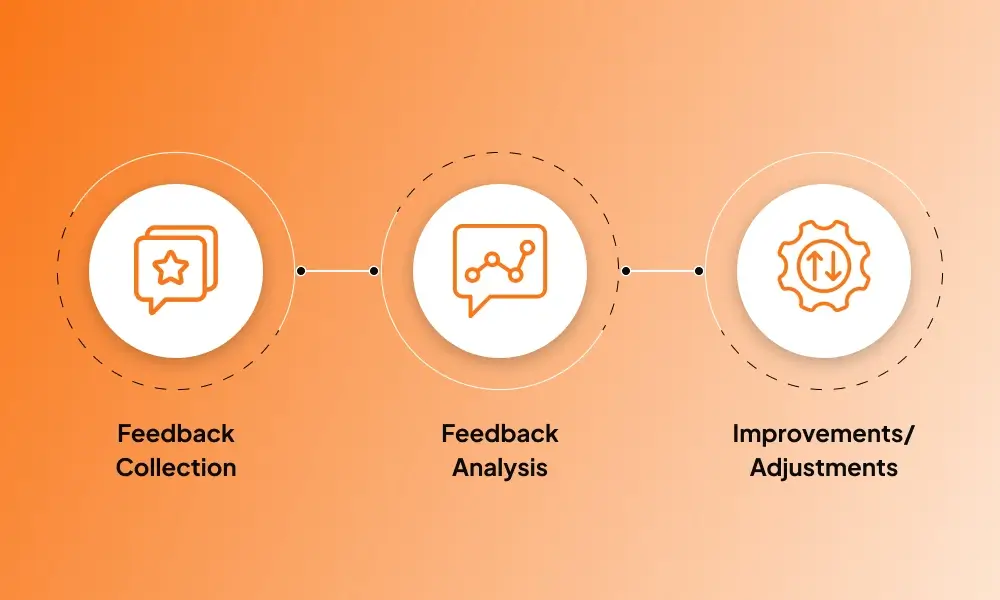
A patient feedback system is a structured process designed to capture, analyze, and apply patient insights consistently. It ensures that feedback is not just collected, but also translated into actionable steps that improve care delivery and operational performance.
For example: Consider a clinic noticing multiple patients reporting frustration with long wait times. Through a structured system, the clinic can not only identify this issue but also implement workflow adjustments, train staff to improve scheduling, and monitor outcomes over time. This demonstrates how feedback directly impacts care quality and operational efficiency.
Feedback can be gathered through various channels:
- Digital platforms: Patient portals, mobile apps, and post-visit emails allow real-time patient feedback. These platforms provide instant access to patient opinions, which can be aggregated and analyzed for trends.
- In-clinic methods: Kiosks, paper forms, or suggestion boxes capture input from patients who prefer traditional methods. Immediate feedback can help staff address concerns on the spot, improving patient satisfaction.
A key difference between a feedback system and a single survey is the continuous nature of the process. Clinics can monitor patterns over time, identify emerging issues, and evaluate the impact of changes.
By establishing a healthcare feedback loop, clinics ensure patient voices are integrated into ongoing improvements, enhancing both the patient experience and operational efficiency.
Why Patient Feedback Matters for Clinics

Patient feedback is critical for clinics seeking to improve service quality, patient experience, and operational efficiency. Here’s why:
- Identify areas for improvement: Feedback helps clinics spot problems before they escalate. For instance, recurring complaints about unclear instructions may indicate the need for improved patient communication protocols.
- Strengthen patient relationships: Patients who feel heard are more likely to stay with the clinic long-term, fostering loyalty and improving the patient-provider relationship.
- Reduce missed appointments: Dissatisfied patients are more likely to skip appointments. Feedback allows clinics to proactively address concerns, reducing cancellations and no-shows.
- Support operational efficiency: Insights from feedback can uncover bottlenecks in scheduling, staffing, or administrative workflows, allowing the clinic to allocate resources more effectively.
- Enhance reputation: Patients who see their feedback acted upon are more likely to leave positive reviews online, strengthening the clinic’s public image.
Example: A mid-sized clinic implemented a structured feedback system and discovered that patients frequently canceled appointments due to unclear pre-visit instructions.
By revising their pre-appointment communication and training staff to clarify processes, the clinic reduced cancellations by 18% within six months and improved overall patient satisfaction scores.
Statistics show that clinics that actively respond to feedback experience higher patient retention and improved clinical outcomes.
According to a 2022 survey, 78% of patients consider how well clinics act on their feedback when deciding whether to return. Ignoring feedback can therefore directly impact both patient loyalty and revenue.
Types of Patient Feedback You Can Collect
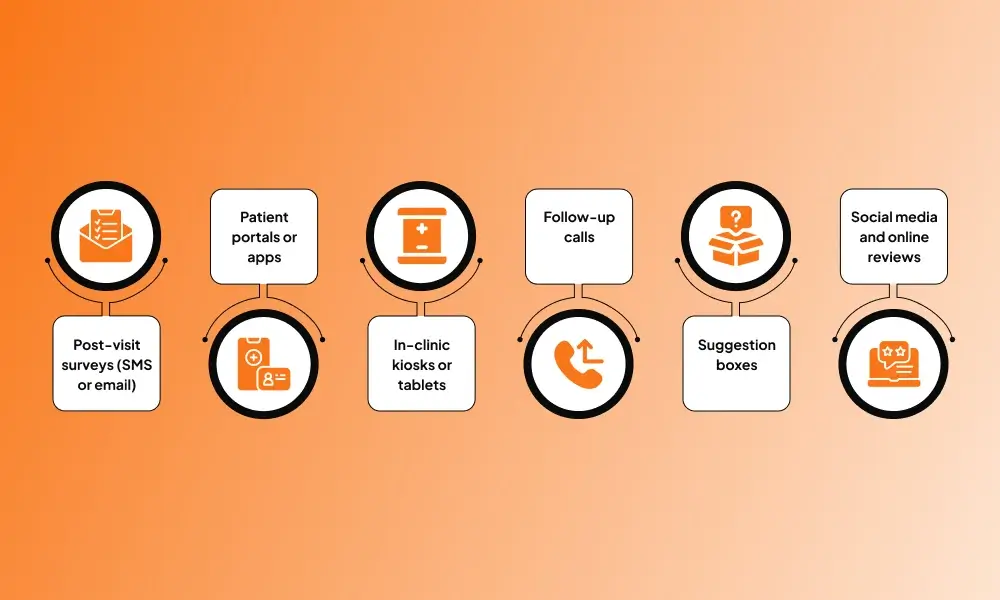
Feedback should be collected through multiple channels to provide a comprehensive understanding of patient experiences. Each method has advantages and challenges:
- Post-visit surveys (SMS or email): Ideal for quick feedback on a recent visit. Pros: easy to implement, immediate responses. Cons: low response rates if surveys are too long.
- Patient portals or apps: Digital platforms support ongoing feedback and patient sentiment analysis. Pros: convenient, integrated with clinic systems. Cons: requires tech adoption by patients.
- In-clinic kiosks or tablets: Capture immediate impressions during check-out. Pros: real-time data, high engagement. Cons: limited to in-person visits.
- Follow-up calls: Personalized conversations provide qualitative insights. Pros: detailed feedback, builds relationships. Cons: time-intensive for staff.
- Suggestion boxes: Capture unstructured ideas or concerns. Pros: freeform feedback, patient creativity. Cons: may require manual analysis.
- Social media and online reviews: Offer insights into public perception and overall reputation. Pros: wide reach, immediate visibility. Cons: not always actionable.
Combining multiple feedback channels ensures the data collected is representative and actionable. It also allows clinics to identify trends across different touchpoints, helping to improve overall patient satisfaction and clinic operations.
Step-by-Step Guide for an Effective Patient Feedback System
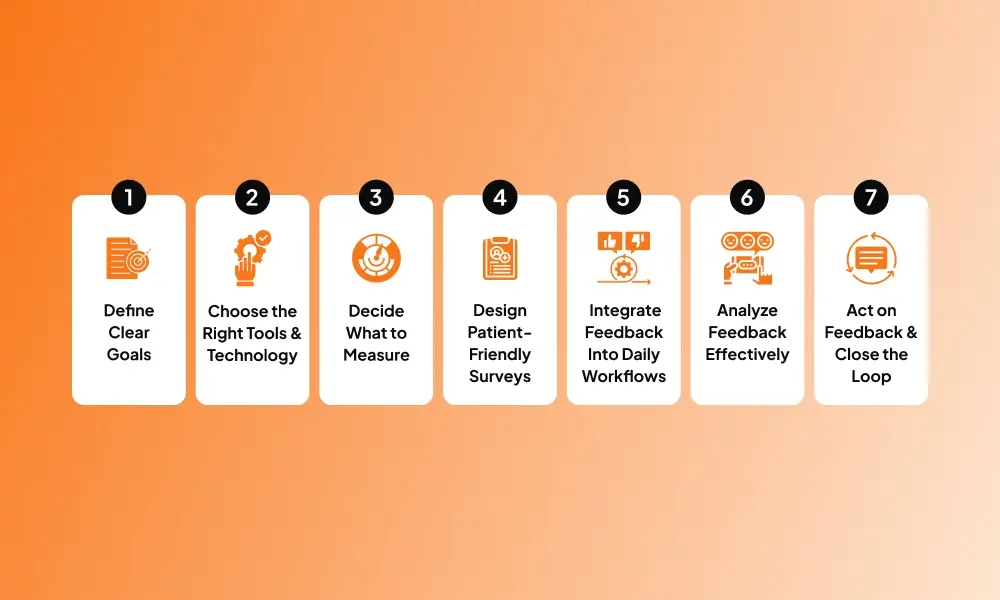
Step 1: Define Clear Goals
Clearly defined goals ensure feedback leads to meaningful improvements. Examples include:
- Reducing complaints about wait times.
- Increasing overall satisfaction scores.
- Evaluating provider communication and bedside manner.
Without clear goals, feedback becomes a collection of data points without actionable insights. Goals should align with both clinical outcomes and operational priorities.
Step 2: Choose the Right Tools & Technology
Select tools that make feedback collection and analysis seamless:
- Digital survey platforms integrated with EMRs.
- SMS and email survey tools.
- In-clinic tablets or kiosks.
- Analytics dashboards for monitoring trends.
Consider integration, scalability, ease of use, and staff workflow. The right tools reduce the burden on staff and ensure feedback can be analyzed efficiently for actionable insights.
Step 3: Decide What to Measure
Focus on metrics that are actionable and relevant:
- Patient satisfaction (CSAT)
- Wait times and scheduling efficiency
- Provider communication and bedside manner
- Post-visit experience
Tracking too many metrics can dilute focus. Concentrate on those that directly inform patient care improvement and operational efficiency.
Step 4: Design Patient-Friendly Surveys
Effective surveys are concise, clear, and engaging:
- Use simple, non-technical language.
- Mix multiple-choice and open-ended questions.
- Begin with simple questions, end with detailed feedback requests.
- Include a thank-you note and optional follow-up contact.
Well-designed surveys increase response rates and generate actionable data that clinics can use to improve care delivery.
Step 5: Integrate Feedback Into Daily Workflows
Embedding feedback into clinic routines ensures it’s sustainable:
- Collect feedback at check-out, post-telehealth visits, or 24–48 hours after an appointment.
- Train staff to prompt patients politely and explain the purpose of feedback.
- Monitor and track responses consistently.
Integrating feedback helps create a continuous healthcare feedback loop, improving patient satisfaction and operational efficiency.
Step 6: Analyze Feedback Effectively
Analysis converts feedback into actionable insights:
- Categorize feedback into areas like staff performance, scheduling, or facilities.
- Use dashboards or visualizations to identify patterns.
- Interpret qualitative responses to uncover nuanced concerns.
- Review data regularly to act proactively.
Step 7: Act on Feedback & Close the Loop
Action completes the cycle:
- Prioritize issues by impact and frequency.
- Implement improvements promptly.
- Communicate changes to staff and follow up with patients when appropriate.
Example: “Thank you for your feedback! We have improved our scheduling process to reduce wait times and enhance communication with staff.”
How to Train Your Staff for Feedback Collection

Staff training is critical for effective feedback collection:
- Teach active listening, empathy, and proper documentation.
- Train staff to recognize recurring patterns and escalate issues appropriately.
- Include front desk staff, nurses, clinicians, and quality improvement teams.
Proper training ensures feedback is consistently captured and applied to improve patient interactions and care coordination.
Reporting Feedback Results to Leadership
Structured reporting helps leadership make data-driven decisions:
- Use dashboards and scorecards to track trends and recurring issues.
- Highlight improvements over time and measure outcomes of actions taken.
- Use reports to prioritize resource allocation, staff training, and process improvements.
Regular reporting fosters accountability and ensures clinics continually enhance care delivery quality.
Conclusion
A patient feedback system is essential for modern clinics. It provides a structured approach to capturing, analyzing, and acting on patient insights, leading to higher satisfaction, stronger patient-provider relationships, and improved operational efficiency.
When implemented correctly, it transforms patient input into actionable improvements, enhancing both care delivery and patient experience.
Clinics that listen and act on feedback build trust, encourage loyalty, and create a foundation for long-term growth. Starting small and integrating patient feedback into daily operations ensures ongoing improvements and measurable outcomes.
By embracing a structured feedback system, clinics can turn patient opinions into a strategic advantage, driving patient care improvement and operational excellence.
FAQs
1. What is a patient feedback system?
A tool that collects patients’ opinions about their care to improve services and experiences.
2. Why should clinics collect patient feedback?
To improve patient experience, boost satisfaction, train staff, and make data-driven improvements.
3. How often should patient feedback be collected?
- After each visit (quick surveys)
- Monthly or quarterly (trend tracking)
- Annually (overall satisfaction review)
4. How do you increase survey response rates?
Keep surveys short, send promptly, personalize messages, use multiple channels, and explain the value.
5. What are the best ways to act on patient feedback?
Analyze trends, share insights with staff, implement changes, inform patients, and monitor improvements.