


Key Takeaways
-
1Know Your Patient First: Understanding who your ideal patients are and where they drop off in the booking journey produces better results than any marketing channel alone.
-
2Local Search Wins: Optimizing your Google Business Profile and managing reviews across every location is the highest return digital investment a group practice can make.
-
3First Impressions are Permanent: Patients decide whether they will return within the first ten minutes making pre-visit communication and post-visit follow-up as important as the clinical encounter itself.
-
4Community Beats Advertising: Consistent community presence generates compounding referrals over time that paid advertising cannot replicate and at a fraction of the ongoing cost.
-
5Measure or You Are Guessing: Tracking new patient sources and cost per acquisition by channel is the only way to know which attraction efforts are working and which are wasting budget.
Attracting new patients to your group practice is essential for sustainable growth, building trust in your community, and maintaining financial stability. In today’s healthcare landscape, patients have more choices than ever. They evaluate providers based on convenience, quality of care, accessibility, and the overall patient experience.
A practice that consistently meets patient expectations not only grows in volume but also strengthens its reputation and long-term success.
Learning how to attract new patients goes beyond marketing campaigns or advertising. It’s about creating meaningful connections, offering clear guidance, and making it easy for patients to choose your practice with confidence.
By prioritizing the patient journey at every touchpoint, your group practice can increase patient flow, boost clinic revenue, and enhance brand visibility.
Whether your practice focuses on primary care, dentistry, mental health, or specialized services, the strategies outlined below will help you implement effective outreach, retain existing patients, and attract new ones. Many of these strategies can be enhanced by leveraging modern healthcare IT solutions.
Table of Contents
1. Understanding How to Attract New Patients
Before investing in any patient attraction strategy, understanding who your ideal patients are and what drives their healthcare decisions is the essential first step.
Group practices serve diverse patient populations across multiple specialties and demographics, which means a single generic approach to patient attraction will consistently underperform compared to a targeted strategy built around specific patient profiles and behaviors.
Define Your Patient Profiles
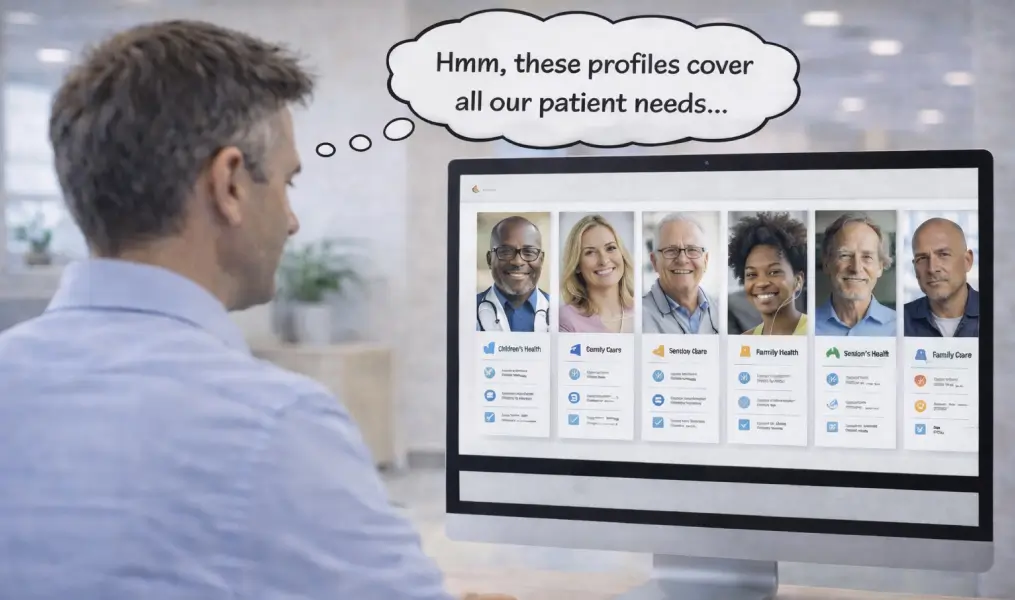
Creating clear patient profiles helps you understand the unique needs of different audience segments your group practice serves. Effective profiles go beyond basic demographics and capture the behavioral and motivational factors that actually drive healthcare decisions.
Consider the following dimensions for each patient profile your practice serves:
| Profile Dimension | Questions to Answer |
|---|---|
| Demographics | Age, family status, income level, employment type |
| Health needs | Preventive care, chronic condition management, specialist referrals |
| Search behavior | How they find providers, what keywords they use, which platforms they trust |
| Decision drivers | Convenience, cost, reputation, provider personality, wait times |
| Communication preferences | SMS, email, phone, portal, in-person |
| Barriers to booking | Insurance confusion, scheduling difficulty, distance, first visit anxiety |
For example a group practice serving a mix of young families and senior patients needs fundamentally different attraction strategies for each segment.
Young families prioritize flexible scheduling, pediatric expertise, and digital convenience. Senior patients prioritize experienced staff, easy physical access, familiar communication channels, and continuity of care across multiple conditions.
By identifying these factors, you can communicate more effectively and create services that resonate with potential patients. Understanding your audience is the foundation for every marketing for patient acquisition strategy you implement.
Tools like AI patient scheduling can also provide insights on patient preferences, helping your practice tailor services efficiently.
Understand the Patient Decision Journey
Most new patients go through a predictable decision journey before booking their first appointment. Understanding each stage allows your practice to place the right message in the right place at the right time.
The journey typically follows this sequence:
Awareness
The patient recognizes a health need or receives a recommendation and begins searching for options. At this stage your Google Business Profile, online reviews, and word of mouth reputation determine whether your practice is even considered.
Consideration
The patient visits your website, reads reviews, checks insurance compatibility, and evaluates the booking process. At this stage your website quality, provider profiles, and ease of scheduling determine whether they progress to booking or move to a competitor.
Decision
The patient attempts to book. At this stage appointment availability, phone responsiveness, and booking simplicity determine whether the inquiry converts to a confirmed appointment.
First Experience
The patient attends their first visit. At this stage the pre-visit communication, waiting room experience, provider interaction, and post-visit follow-up determine whether they become a long-term patient or a one-time visitor.
Understanding which stage is creating the most dropout in your specific practice is more valuable than implementing broad attraction strategies without knowing where patients are being lost.
Identify Your Competitive Position
Before choosing which attraction strategies to prioritize, assess how your group practice is currently perceived relative to alternatives in your local market. Search for your own practice the way a new patient would.
Read your reviews as a prospective patient would. Try to book an appointment as a new patient would. The gaps you identify in this exercise are the highest priority improvements you can make because they represent patients who found you but chose someone else.
2. Build a Professional and Patient-Friendly Website
Your website is often the first impression a potential patient will have of your practice. A well-designed, easy-to-navigate, and informative website helps you build trust, communicate your services clearly, and make the appointment process simple — all crucial for attracting new patients.
Clear and Detailed Service Pages
Each service you offer should have a dedicated page that explains:
- What the service involves
- Conditions treated
- Benefits for patients
- Any preparation required
- Contact information and booking options
These details help patients understand exactly what to expect, which builds confidence and reduces hesitation. For example, a dental practice could include information about routine cleanings, cosmetic procedures, and orthodontic services, along with step-by-step guides for first-time visitors. This level of transparency can help increase patient flow and enhance brand visibility.
User-Friendly Design
A website should be:
- Mobile-friendly: Most patients browse healthcare providers on smartphones
- Fast-loading: Slow websites can frustrate users and deter engagement
- Simple to navigate: Visitors should easily find information and booking options
A clean design with intuitive navigation ensures that patients can access the information they need quickly and easily. Incorporating healthcare IT solutions for online forms, patient portals, and secure messaging can make your website a central hub for new patient acquisition.
Online Appointment Scheduling
Making it easy to book appointments online improves patient acquisition. Integrating an AI appointment setter system allows patients to select available time slots instantly. Automated reminders reduce no-shows and improve efficiency. This also enhances patient flow solutions in your practice by ensuring staff and resources are optimized while maintaining a smooth experience for patients.
3. Attract New Patients Through Local Search
For group practices, local search is the single highest-return digital channel for attracting new patients. When someone searches “primary care doctor near me” or “specialist clinic in [city]” Google serves results based on proximity, relevance, and trustworthiness.
Practices that optimize for these three signals consistently attract more new patients from organic search than those investing in paid advertising alone.
Local SEO for a group practice is more complex than for a solo practitioner because you are managing visibility across multiple providers, multiple specialties, and in some cases multiple locations simultaneously. Each of these dimensions requires its own optimization approach.
Google Business Profile Optimization
Your Google Business Profile is the single most important local SEO asset your practice controls. For group practices, each physical location should have its own separate and fully optimized profile.
Each profile should include accurate name, address, and phone number information that matches exactly what appears on your website and across all online directories.
Choose the most specific and relevant primary category for each location and add secondary categories for every specialty offered at that site.
Upload real photos of your waiting area, clinical staff, and exterior of the building. Profiles with photos consistently receive significantly more clicks than those without.
Post updates at least twice per month covering new services, health awareness campaigns, or operational changes to signal to Google that the profile is actively managed.
Managing Reviews Across Multiple Locations
For group practices, review management is both more important and more complex than for single-provider clinics. Each location needs its own review strategy because Google ranks each profile independently.
Establish a process for requesting reviews from patients at every location consistently, whether through post-visit SMS links, email follow-ups, or front desk QR codes.
Respond to every review across every location professionally and promptly. Practices that respond to reviews signal active engagement to Google and consistently rank higher in local search results than practices that do not respond.
Negative reviews that receive thoughtful responses often build more trust with prospective patients than an exclusively positive but unresponded review profile.
Local Citation Consistency
Citations are mentions of your practice name, address, and phone number across healthcare directories, general business directories, and local websites. For group practices, citation inconsistency across locations is one of the most common and damaging local SEO problems.
A practice listed as “MedGroup Clinic” in one directory and “Med Group Clinic LLC” in another sends conflicting signals to Google that suppress local rankings.
Audit your citations across the major healthcare directories including Healthgrades, Zocdoc, WebMD, and Vitals as well as general directories like Yelp and Yellow Pages. Ensure name, address, and phone number are identical across every listing for every location before investing in any other local SEO activity.
Provider-Level Local SEO
In a group practice, individual providers also rank in local search independently of the practice brand. Each physician, specialist, or clinician should have their own optimized profiles on healthcare-specific directories. Provider profiles with complete bios, specialty information, languages spoken, insurance accepted, and patient reviews consistently appear in local search results for condition-specific and provider-specific searches that the practice brand profile may not capture.
4. Encourage and Showcase Patient Reviews

Online reviews and testimonials are one of the most influential factors in a patient’s decision-making process. Positive reviews reflect credibility and quality care, while the way you handle feedback can also leave a strong impression, a key part of utilizing patient referrals and attracting new patients.
Ask for Reviews
Encourage satisfied patients to leave reviews on platforms like Google, Healthgrades, and social media. Simplify the process with email or SMS links, or QR codes in the office. For example, after a routine checkup, a text message asking, “How was your visit today? Share your experience with us here!” can yield more responses.
Highlight Testimonials
Feature real patient stories on your website and social channels. Testimonials about positive experiences, compassionate staff, or successful treatments help potential patients connect with your practice on a personal level. Visual testimonials or short video clips can be particularly compelling for marketing for patient acquisition.
Respond to Feedback
Engage with both positive and negative reviews professionally. Thank patients for compliments and address concerns thoughtfully. A well-handled negative review can sometimes attract more patients than a positive one, showing accountability and care. Using healthcare automation solutions to streamline review requests and responses can help maintain consistent engagement with patients.
5. Engage Patients Through Communication
Consistent communication demonstrates care and keeps your practice top-of-mind. It also ensures patients feel informed and confident about their care, a vital component of effective patient outreach.
Email and SMS Outreach
Reach patients with:
- Appointment confirmations and reminders
- Notifications about upcoming health screenings or vaccinations
- Announcements of new services or special events
Automation can make these communications seamless while reducing administrative workload. Personalized messages such as “Dr. Smith is now accepting new pediatric patients – schedule your child’s appointment today!” can increase engagement and bookings, supporting patient engagement strategies.
Personalized Follow-Ups
Following up after appointments reinforces care and builds trust. Examples include:
- Reminding patients of follow-up visits
- Providing tips or guidance related to treatment
- Checking in after procedures or consultations
An AI medical receptionist can handle routine follow-ups and reminders, improving patient satisfaction and retention while freeing staff to focus on in-person care. This personalized approach makes patients feel valued and cared for, which increases retention and encourages referrals through a structured referral program for new patients.
6. Enhance the Patient Experience

Attracting new patients is not just about marketing; it’s about delivering an outstanding experience from the first interaction to follow-up care. Exceptional experiences also boost clinic revenue over time.
Knowledgeable Staff
Your team plays a critical role in shaping patient perceptions. Training staff to be empathetic, professional, and attentive leaves a lasting positive impression. A friendly receptionist who greets patients warmly can set the tone for their entire visit.
Comfortable Environment
Patients notice the environment of your practice. A clean, organized, and welcoming space contributes to patient satisfaction. Small touches like warm décor, comfortable seating, and clear signage enhance the overall experience.
Efficient Processes
Reduce wait times and simplify administrative processes. Efficient check-in, billing, and appointment procedures show respect for patients’ time and create a positive impression that encourages referrals. For example, digital forms that patients can fill out before their appointment can save time and reduce stress.
7. Turning First-Time Visitors Into Long-Term Patients
Attracting a new patient to book an appointment is only half the challenge. Converting that first visit into a long-term patient relationship is where sustainable practice growth actually happens.
A group practice that attracts 50 new patients per month but retains only 30 percent of them long-term is working far harder than necessary to maintain its patient base. Improving first visit conversion is often more impactful than increasing new patient attraction volume.
The Pre-Visit Experience
The patient experience begins before they walk through the door. The confirmation message they receive after booking, the pre-visit instructions they are given, and the ease of completing intake forms all shape the patient’s first impression of the practice.
A confirmation that simply states the appointment time does nothing to build anticipation or reduce first-visit anxiety. A confirmation that includes the provider’s name and photo, directions to the specific location, what to bring, how long to expect the visit to take, and a direct contact number for questions sets a completely different tone.
Digital pre-registration that allows patients to complete all intake forms before arrival signals operational efficiency and respect for the patient’s time. Practices that use digital pre-registration consistently report higher first-visit satisfaction scores than those that hand patients a clipboard in the waiting room.
The First Appointment Experience
First appointments carry disproportionate weight in a patient’s decision to return. Research consistently shows that patients decide whether they will return to a practice within the first 10 minutes of their first visit.
The reception experience, the physical environment, the wait time, and the initial interaction with clinical staff all contribute to this rapid and often unconscious assessment.
Train front desk staff to greet new patients by name, acknowledge that it is their first visit, and proactively provide any guidance they might need about the process. This simple practice removes uncertainty and signals that the patient is known and expected rather than just a name on a schedule.
Booking the Next Appointment Before They Leave
The most effective and underutilized first visit conversion practice is scheduling the next appointment before the patient checks out. A patient who leaves with their next appointment already booked has a rebooking rate dramatically higher than one who is told to call when they need to come back.
Build this step into your standard checkout workflow for every new patient regardless of visit type and track the percentage of new patients who leave with a future appointment as a key performance indicator.
The Post-Visit Follow-Up
A follow-up message sent within 24 to 48 hours of the first visit is one of the highest-impact touchpoints in the new patient journey. It signals that the practice noticed the patient as an individual rather than processing them as a transaction.
The message should be brief, personal in tone, reference the specific visit or provider, and include a clear path to contact the practice with any questions or concerns.
This single touchpoint has been shown to significantly improve new patient retention rates, online review generation, and referral likelihood. Yet most practices skip it entirely because the workflow to support it is never established.
Automating this follow-up through the EHR or patient communication platform removes the staffing dependency and ensures it happens consistently for every new patient.
8. Build Relationships in Your Community
Being visible and involved in your local community can help attract new patients and strengthen your practice’s reputation, while also enhancing brand visibility.
Partner With Local Organizations
Collaborate with schools, gyms, community centers, and wellness programs. Partnering with these organizations for workshops, screenings, or educational sessions introduces your practice to potential patients and positions your team as trusted healthcare providers.
Host Health Events
Organize free screenings, wellness seminars, or family health days. Events provide opportunities for potential patients to meet your staff, experience your care firsthand, and build trust in your practice. Highlight success stories and outcomes from these events to attract even more patients and increase patient flow.
9. Implement Referral Programs

Referral programs can encourage current patients to recommend your practice to friends, family, and colleagues.
- Offer incentives such as discounts on services, wellness products, or small tokens of appreciation
- Publicly acknowledge referrals when appropriate (with consent)
- Create a culture of sharing and community within your patient base
Automation tools within healthcare automation solutions can help track and reward referrals, making the process seamless for both staff and patients.
10. Focus on Transparency and Trust
Patients choose practices they can trust. Transparency in communication and operations builds confidence and encourages people to schedule their first appointment.
Transparent Policies
Clearly communicate:
- Pricing and payment options
- Insurance plans accepted
- Billing procedures
Reducing uncertainty and confusion helps patients feel informed and secure.
Honest and Clear Communication
Explain procedures, treatments, and expected outcomes. Setting realistic expectations ensures patients feel comfortable and respected.
Demonstrate Credibility
Highlight the qualifications, experience, and achievements of your medical team. Share certifications, awards, or community recognition to reinforce trust and authority.
11. Utilize Technology to Improve Access and Convenience
Modern patients value convenience. Integrating technology such as an AI appointment setter into your practice can enhance the patient experience and attract new patients.
- Telehealth Services: Offering virtual consultations appeals to patients who may prefer remote care due to mobility, schedule constraints, or personal preference. Telehealth extends your reach and provides more flexibility.
- Patient Portals: Portals for appointment management, test results, and communication streamline interactions and improve patient satisfaction.
- Appointment Reminders and Follow-Ups: Automated reminders help patients stay on schedule, reducing missed appointments and reinforcing engagement.
12. Track, Analyze, and Refine Your Strategies

To continually attract new patients, it’s important to measure and refine your efforts.
- Track Patient Sources: Ask new patients how they found your practice. This helps you focus resources on the most effective channels.
- Monitor Engagement: Track website visits, calls, appointment requests, and other interactions.
- Adjust and Improve: Use insights to refine communication, service offerings, and patient experience, helping maximize marketing ROI.
13. Focus on Long-Term Relationships
Attracting new patients is only the beginning. Retaining them and building loyalty ensures your practice continues to thrive.
- Consistent High-Quality Care: Deliver excellent care at every visit.
- Personalized Experiences: Remember patient preferences, milestones, and health history.
- Ongoing Engagement: Stay in touch through newsletters, reminders, seasonal tips, or invitations to community events.
Maintaining this balance supports both patient retention and acquisition balance.
14. Create a Strong, Recognizable Brand
Your practice’s brand communicates what patients can expect. A strong, recognizable brand attracts patients by building trust and credibility.
- Visual Identity: Use consistent logos, colors, and design across your office, website, and communications.
- Messaging and Voice: Ensure that your messaging is patient-focused, approachable, and professional.
- Reputation and Recognition: Highlight community involvement, awards, and patient success stories.
15. Monitor Patient Feedback and Act On It
Patient feedback is invaluable for attracting new patients and improving retention.
- Surveys and Reviews: Regularly gather feedback through surveys, suggestion boxes, or follow-up calls. Ask about overall experience, wait times, staff friendliness, and treatment satisfaction.
- Implement Changes: Show patients that their feedback matters by making improvements.
- Communicate Improvements: Share updates to demonstrate that opinions shape the practice.
Conclusion
Attracting new patients to a group practice is not a single initiative with a defined end point. It is an ongoing operational discipline that requires consistent attention across digital presence, patient experience, community engagement, referral relationships, and reputation management simultaneously.
The practices that attract and retain the most new patients share one characteristic above all others. They make it easy for patients to find them, easy to choose them, easy to book with them, and easy to return to them.
Every barrier removed from this journey converts more of the patients already looking for care in your market into booked appointments.
Group practices have a structural advantage over solo practitioners in patient attraction that is frequently underutilized. The breadth of specialties, the depth of provider expertise, and the continuity of care that comes from integrated multi-provider teams are genuinely compelling reasons for patients to choose a group practice.
Making these advantages visible and accessible at every touchpoint in the patient decision journey is what transforms them from features into growth drivers.
Start by auditing your current new patient journey from the perspective of someone who has never heard of your practice. Search for yourself on Google the way a new patient would.
Try to book an appointment as a new patient would. Visit your waiting room as a patient would for the first time. The gaps you find in that exercise are the highest priority improvements you can make, and most of them cost nothing to fix beyond the organizational will to address them.
FAQs
How long does it take to attract new patients?
It depends on your strategy. Paid ads can bring patients almost immediately, while organic methods like SEO and social media usually take 3–6 months to show results.
What marketing channels work best for healthcare practices?
Top channels include: website & SEO, social media, online reviews, email newsletters, paid ads, and local outreach. A mix of these usually works best.
Do online reviews really matter?
Yes. Positive reviews build trust, influence patient decisions, and improve your online visibility. Always respond professionally to feedback.
How can I measure the success of attracting new patients?
Track metrics like new patient count, source of referral, appointment conversions, patient retention, and ROI of marketing efforts.
Should I invest in paid ads or organic growth first?
Use paid ads for immediate results and organic strategies for long-term growth. Combining both gives the best patient acquisition results.