
Key Takeaways: Chiropractic Losing Patients on Instagram
-
1Instagram has become a primary first-contact channel for chiropractic patients:
Patients increasingly research providers on Instagram and reach out via DM or comment before calling. Most clinics have no system for handling this consistently. -
2The response gap is structural, not a staffing failure:
Clinic teams are not built to monitor social media in real time. The gap exists because Instagram was never integrated into the patient communication workflow. -
3There are three specific points where patients are lost:
Unanswered direct messages, ignored comments on posts and reels, and missed story replies are where the majority of Instagram enquiries disappear. -
4Response time is a deciding factor for patients:
Most patients expect a reply within an hour. A clinic that responds six hours later has almost certainly lost that patient to whoever replied first. -
5The aggregate cost is significant:
A fifty percent response failure rate on ten to fifteen weekly Instagram enquiries represents a substantial number of lost patient relationships over the course of a year. -
6Closing the gap requires treating Instagram as a communication channel, not just a content channel:
Whether through a manual workflow or automated response system, the fix is structural. It requires the same intentional approach that clinics already apply to phone and email communication.
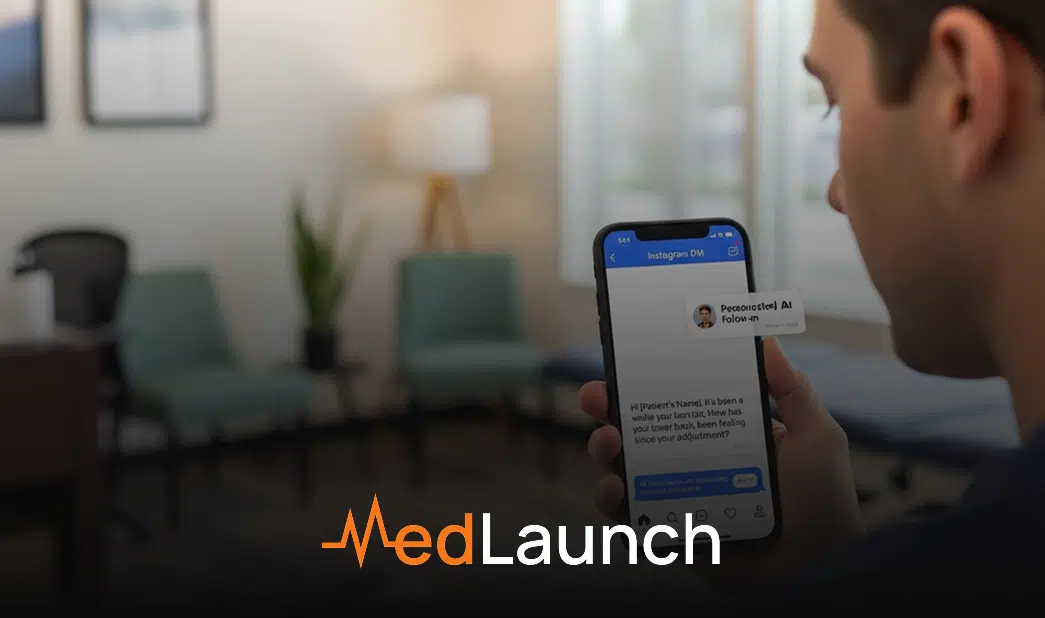
A new patient finds your clinic on Instagram. They have been dealing with shoulder pain for weeks, watched three of your adjustment videos, read through your comments, and decided they trust you enough to reach out. They tap the DM button and type: “Hi, do you treat rotator cuff issues? What does an initial consultation involve?”
They send it on a Thursday evening.
Your team sees it on Friday afternoon. By then, the patient has already booked elsewhere.
If your chiropractic clinic is losing patients on Instagram, this is almost certainly how it is happening. Not through a single dramatic failure, but through a quiet, repeating gap that exists in nearly every practice that uses the platform and most owners do not know it is there until they start looking.
Table of Contents
The gap between your Instagram presence and your patient pipeline
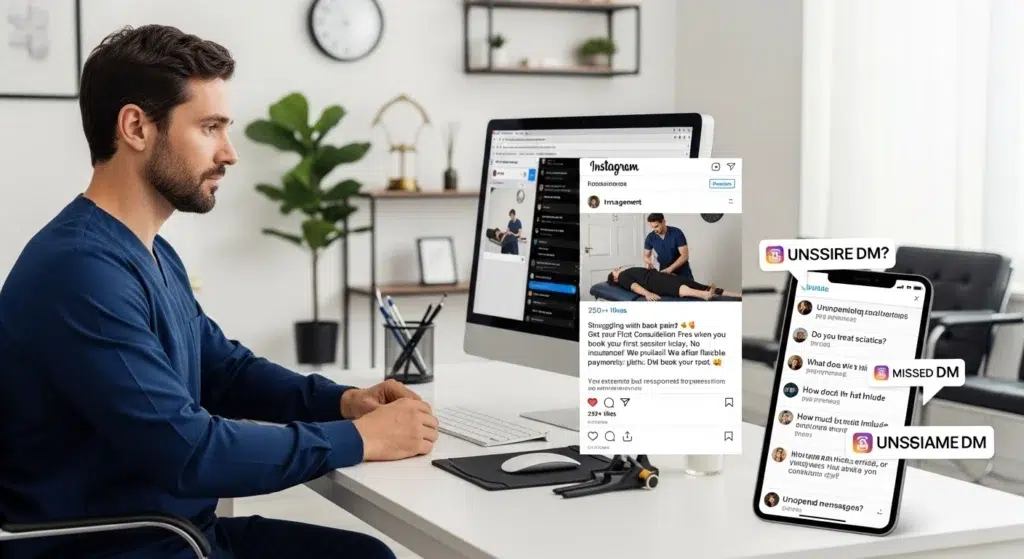
Most chiropractic clinics invest real time into their Instagram content. The reels get made, the posts go up, the follower count grows. And it works in the sense that people engage, watch, and become familiar with the practice.
Where it breaks down is what happens after that engagement.
Instagram is not just a content channel for chiropractic clinics. It has become a primary point of first contact for patients who are researching providers. They watch the content, build a sense of trust, and then reach out directly through a DM, a comment, or a reply to a story. For many patients, particularly those in the 25 to 45 age group that makes up a large portion of chiropractic caseloads, this is now the preferred way to make initial contact with a healthcare provider.
The problem is that most clinics have a content strategy for Instagram but no response strategy. The two things are treated as separate; posting is managed, replying is not. That disconnect is where patients are being lost.
Why the response gap is bigger than most clinics realise
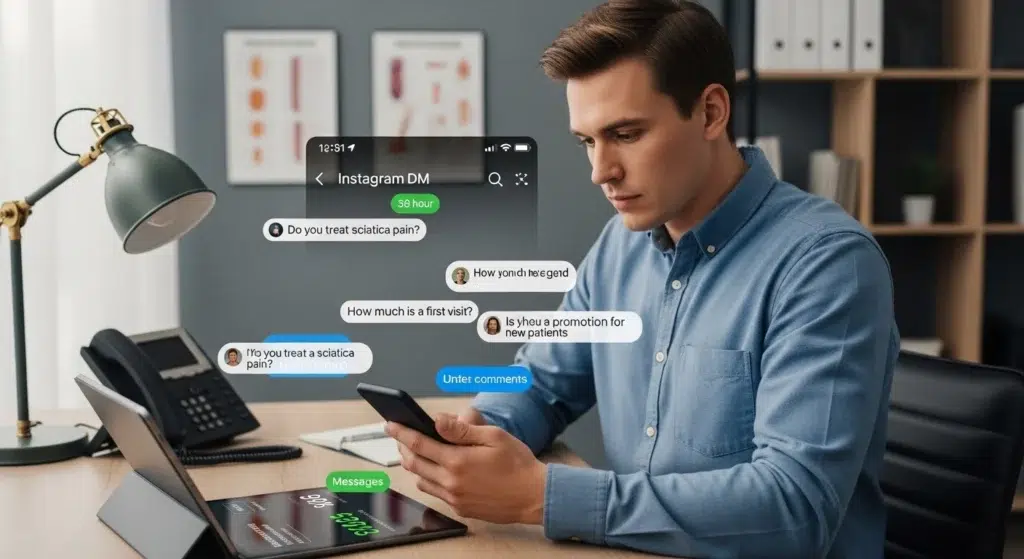
It is easy to assume that a missed DM here or there is a minor inconvenience. In practice the cumulative effect is significant.
Consider the typical pattern. A clinic posts four to five times a week. Each post generates some level of engagement: comments, saves, DM replies, and story responses. Some of that engagement is passive. Some of it is active patient enquiries from people who are genuinely considering booking. The active enquiries are the ones that matter, and they are the ones most likely to go unanswered because there is no system for identifying and prioritising them.
A front desk team that is managing incoming calls, checking in walk-in patients, and handling administrative work is not in a position to monitor Instagram in real time. That is not a staffing failure. It is a structural one. The clinic’s patient acquisition system was built around the phone and the website, not around social media DMs. Instagram arrived later and was never fully integrated into the patient communication workflow.
According to research on consumer response expectations, the majority of customers expect a response to an online enquiry within one hour. In healthcare, where patients are often dealing with pain or discomfort, that expectation is even more pronounced. A clinic that replies to a DM six hours later is not just late, it has likely already lost that patient to whoever replied first.
The three ways patients are slipping through
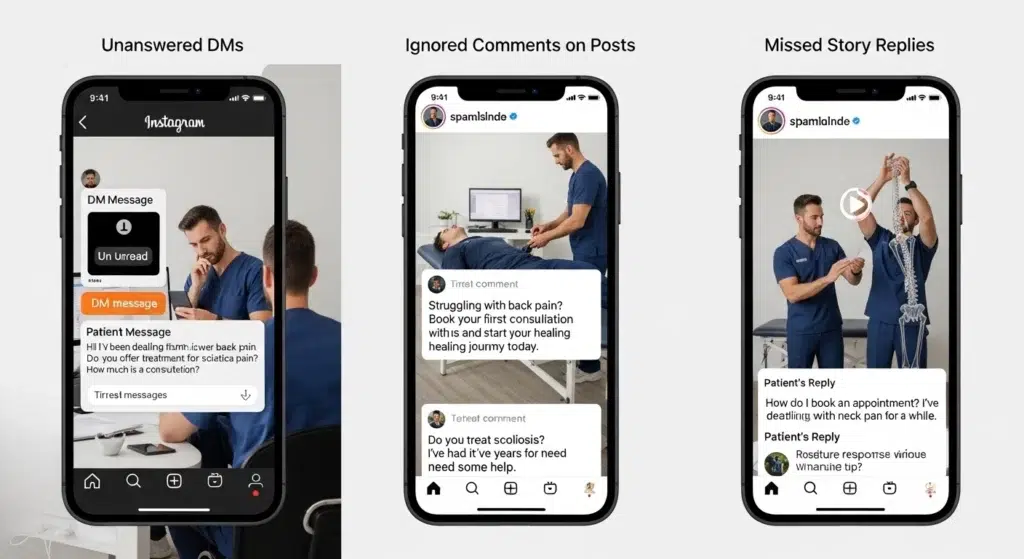
Understanding where the drop-off happens makes it easier to address. For most chiropractic clinics, the loss points tend to cluster around three specific behaviours.
Unanswered direct messages
The most obvious gap. A patient sends a DM outside clinic hours, during a busy period, or on a weekend, and it does not get seen until it is too late. By the time the clinic replies, the patient has moved on. This is particularly common for clinics that have grown their Instagram following through consistent content. More followers mean more inbound messages, and more messages mean more that fall through the cracks.
Ignored comments on posts and reels
Comments are a less obvious but equally important source of lost patients. When someone comments, “Do you treat scoliosis?” or “How much does a first visit cost?” on a reel, they are not just engaging with content; they are raising their hand as a potential patient. A comment that goes unanswered for 24 hours signals to the person who wrote it that the clinic is not particularly responsive. They move on without the clinic ever knowing they were there.
Story replies that never convert
Instagram story replies sit in the DM inbox alongside regular messages, but are easy to miss in a busy thread. A patient who replies to a story about a specific condition or service with a question is showing strong intent. Missing that message means missing a warm lead at exactly the moment they were most engaged.
For context on how this fits into the broader picture of why patients disengage, our piece on why patients miss appointments and how clinics can prevent it covers the disengagement pattern in more depth.
What does this cost a chiropractic clinic over time
The individual cost of a missed DM is easy to dismiss. One patient, one message, one lost booking. It does not feel like a crisis.
The aggregate cost is a different calculation entirely.
A chiropractic patient who completes a full treatment plan and transitions to maintenance care represents meaningful long-term revenue. A patient who enquired through Instagram, never received a reply, and booked with a competitor represents not just a lost first appointment but the entire lifetime value of that patient relationship.
For a clinic that generates ten to fifteen Instagram enquiries per week, a conservative estimate for a practice with an active social presence, even a fifty percent response failure rate means five to seven potential patients lost every week. Over a month, that is twenty to thirty patients. Over a year, the number becomes difficult to ignore.
The research on patient acquisition costs in healthcare consistently shows that retaining or converting a warm lead costs a fraction of what it takes to generate a new one from scratch. An Instagram enquiry that comes in organically, without any paid advertising, is about as warm a lead as a chiropractic practice can generate. Letting those leads go unanswered is one of the more expensive inefficiencies a clinic can have.
How clinics are closing the gap
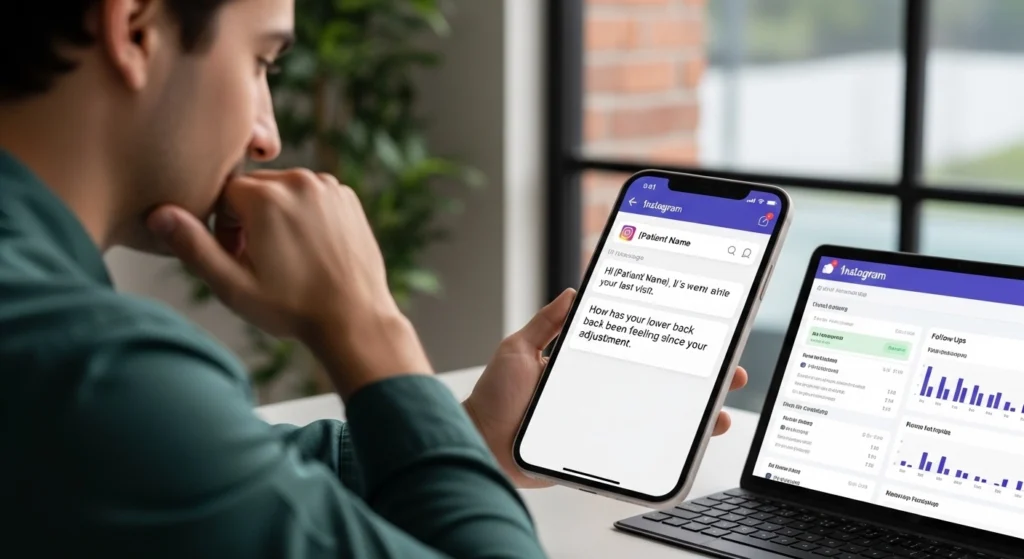
The clinics that have addressed this problem effectively have done so by treating Instagram as a patient communication channel that needs the same structure as any other communication channel — not as an afterthought to the content strategy.
In practical terms, this means having a system that monitors DMs, comment activity, and story replies in real time and responds to patient enquiries at the point they come in, not at the point someone on the team happens to check the app.
For clinics that have the staff capacity to manage this manually, building a dedicated social media response workflow with clear ownership, defined response time targets, and a triage process for identifying genuine patient enquiries versus general engagement can close a significant portion of the gap.
For clinics that do not have that capacity, which is the majority of small to mid-size chiropractic practices, automation handles the response layer without adding to the team’s workload. The front desk does not need to monitor Instagram. The system does it for them, responds to enquiries immediately, and flags conversations that need a human to step in.
Understanding how AI bots for chiropractors work is a useful starting point for any clinic evaluating whether automation is the right fit for their Instagram communication workflow.
Frequently Asked Questions
Why are chiropractic clinics losing patients through Instagram DMs?
Most chiropractic clinics have a content strategy for Instagram but no structured response strategy. Patient enquiries arrive through DMs, comments, and story replies at all hours, and without a dedicated system for monitoring and responding to them, a significant portion go unanswered until it is too late.
How quickly do chiropractic patients expect a reply to an Instagram DM?
Consumer research suggests the majority of people making an online enquiry expect a response within one hour. For patients dealing with pain or discomfort, that expectation tends to be even higher. A clinic that replies several hours later, or the following day, has typically already lost that patient to a competitor who responded faster.
Are Instagram comments as important as direct messages for patient enquiries?
Yes. Comments on posts and reels are often overlooked as a source of genuine patient enquiries, but a patient who asks a specific question in the comments of a chiropractic reel is showing clear intent. An unanswered comment signals poor responsiveness and can discourage not just the person who asked but anyone else who reads the thread.
How many Instagram enquiries does a typical chiropractic clinic receive per week?
This varies depending on follower count, posting frequency, and content type. A practice with an active Instagram presence and a few thousand followers generating regular engagement can expect anywhere from five to twenty genuine patient enquiries per week through DMs, comments, and story replies combined.
What is the difference between a patient enquiry and general Instagram engagement?
General engagement includes likes, shares, saves, and non-specific comments. A patient enquiry is any message or comment that asks a specific question about services, pricing, availability, or conditions treated. These are the interactions that require a timely, personalised response and represent genuine patient acquisition opportunities.
Can a chiropractic clinic manage Instagram patient enquiries without automation?
Yes, but it requires a dedicated workflow with clear ownership and defined response time targets. For clinics with available staff capacity, this is a viable approach. For the majority of small to mid-size practices where the front desk team is already stretched, a manual approach tends to produce inconsistent results because Instagram monitoring falls to the bottom of the priority list during busy periods.
Stop Losing Patients to the Instagram Response Gap
Book a call to see how MedLaunch’s Instagram AI bot handles DMs, comments, and story replies around the clock so no patient enquiry goes unanswered.