


Key Takeaways
-
1Flow is a Process: Patient flow improvement begins by mapping steps, roles, and handoffs across the care journey before introducing tools or technology.
-
2Bottlenecks in Transitions: Most flow problems occur at handoffs between departments or stages, making clear communication more impactful than speeding up individual steps.
-
3Scheduling Controls Flow: Aligning appointment lengths with visit types and reserving capacity for urgent visits helps prevent demand–capacity mismatches that create delays.
-
4Track Key Metrics: Monitoring metrics like arrival-to-triage time, waiting room time, and discharge timing helps reveal where the process actually breaks down.
-
5Early Discharge Planning: Starting discharge coordination early avoids late decisions that often cause bed and room shortages for incoming patients.
The patient flow process is the backbone of how a clinic or hospital operates day to day, covering every step a person takes from arrival and registration through triage, consultation, treatment, and follow‑up.
It looks at how clinical and administrative activities are connected as a sequence of tasks, rather than focusing on any particular technology or product.
When this process is designed well, patients move through care with fewer delays, staff workloads are more balanced, and spaces like exam rooms or procedure areas are used more consistently.
A clear, predictable flow also makes it easier for teams to coordinate, communicate, and respond to changes in demand without constant firefighting.
If the process is poorly managed, problems tend to surface quickly in the form of long waits, bottlenecks at check‑in or before consultations, and frequent rescheduling or last‑minute adjustments.
Over time, this can frustrate patients, strain staff, and make the overall experience feel disorganized, even when individual clinicians are doing their best.
These operational issues can have clinical and organizational consequences. Delays in assessment or treatment may worsen certain conditions or extend recovery, while dissatisfaction with waiting and communication can lower patient confidence and feedback scores.
At the same time, uneven workloads and constant pressure increase the risk of burnout among staff, which can affect consistency and attention to detail.
From a performance perspective, gaps in patient movements often show up as missed visits, idle rooms, and underused capacity during parts of the day, even when demand is high.
Viewing patient flow as an end‑to‑end process helps leaders spot these patterns and address root causes rather than applying quick fixes to just one step, such as check‑in or scheduling.
In this blog, we will focus on the patient flow process itself: why it matters, where it commonly breaks down, which metrics help you understand it, and practical, step‑by‑step strategies to make the journey smoother.
The aim is to provide healthcare administrators and clinic managers with a clear, process‑oriented roadmap to improve everyday workflow efficiency and support both patients and staff over time.
What Is the Patient Flow Process?
The patient flow process is the step‑by‑step journey a patient takes through your facility, from the moment they arrive (or book an appointment) until they are discharged and any follow‑up is arranged.
It includes both clinical activities (triage, examinations, diagnostics, treatment) and administrative activities (registration, documentation, billing, and scheduling).
When we talk about patient flow here, we are describing how these steps are organized, sequenced, and coordinated as a process, not any particular software, device, or product.
The focus is on how information, people, and tasks move through the system so that patients experience timely, safe, and efficient care, and staff can work in a predictable, less chaotic environment.
According to a study, longer waiting times show a significant negative correlation with patient satisfaction, meaning satisfaction consistently drops as waits increase.
Key Stages in the Patient Flow Process
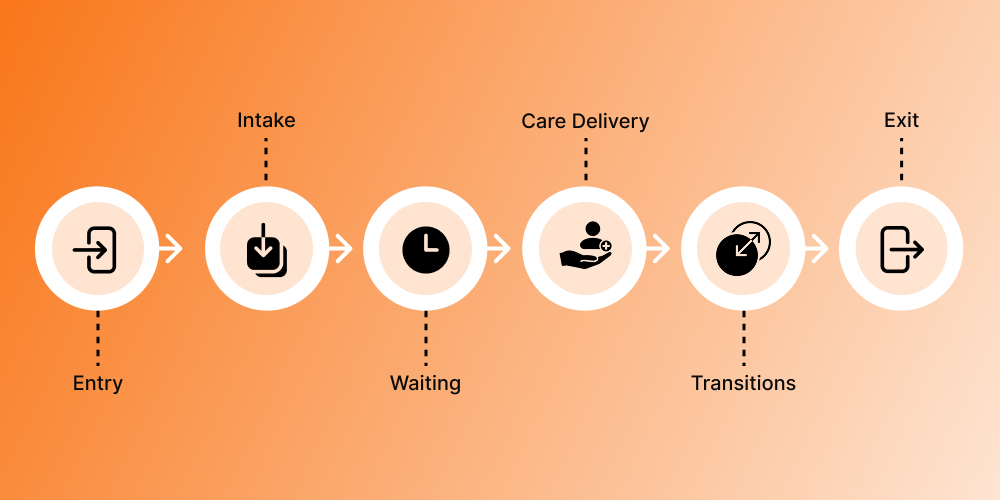
1. Arrival or admission
This is the first stage where patients enter the system, either as walk‑ins, scheduled visits, or emergency admissions. At this point, the main focus is on capturing basic intent (why they are here) and directing them to the appropriate next step in the sequence.
2. Registration and check‑in
In this phase, patient identities, demographics, and administrative details are confirmed or collected. Accurate and complete information at this stage lays the groundwork for smooth movement through the remaining stages.
3. Triage and initial assessment
Here, clinical urgency and priority are determined based on presenting symptoms and history. This stage helps ensure that the sequence of care reflects medical need rather than simply order of arrival.
4. Waiting and queueing
Between key stages, patients often move into a waiting phase, whether in a physical waiting area or a virtual queue. How these queues are organized and communicated has a major impact on perceived fairness, transparency, and overall experience.
5. Diagnostics and treatment
In this stage, patients undergo examinations, tests, procedures, and therapeutic interventions. The way these activities are scheduled and sequenced relative to each other influences both total time in the system and the pace of clinical decision‑making.
6. Transfers between departments or units
As patients move from one area to another (for example, from triage to imaging or from a ward to a procedure area), they pass through transition phases. Clear handoffs and consistent information flow during these stages are essential to maintain continuity and avoid repeated steps.
7. Discharge and transition to follow‑up
The final stage covers completing clinical documentation, giving instructions, and arranging any necessary follow‑up or referrals. A well‑structured discharge phase closes the loop on the current visit while setting up the next phase of the patient’s ongoing care journey.
Why the Patient Flow Process Matters
When the patient flow process is long, fragmented, or poorly coordinated, it often results in longer waits, crowded waiting areas, frequent bottlenecks, and delays in receiving care.
Multiple outpatient studies confirm a clear inverse relationship between waiting time and satisfaction: as actual or perceived waits increase, overall satisfaction and willingness to return drop significantly.
In one large outpatient study, actual waiting times ranged from about 40 minutes to over 2.5 hours, and longer waits were significantly associated with lower satisfaction across multiple dimensions of care.
When flow breaks down and waits grow, more patients leave before being seen; emergency‑department data show left‑without‑being‑seen rates climbing as waits and crowding increase, with nearly one in five of these patients returning to the ED within 7 days.
Each extra step, repeated question, or unclear handoff adds friction to the sequence and can make the entire journey feel slow and unpredictable for both patients and staff.
In contrast, a smooth, well‑structured process helps patients move more steadily from one stage to the next, improving access to care and reducing unnecessary idle time.
Staff experience less stress when the sequence of work is clear, workloads are more balanced, and they can anticipate what is coming next instead of constantly reacting to last‑minute issues.
The effects of process quality can be seen in measurable indicators such as patient wait time, overall throughput (how many patients can be seen in a given period), length of stay for visits or admissions, and how consistently rooms and other key resources are utilized.
Monitoring and improving these metrics over time supports a safer, more reliable care environment without needing to focus on any specific product or tool.
Common Bottlenecks in the Patient Flow Process
- Slow or fragmented registration
When registration involves duplicate data entry or multiple unaligned forms, queues build up at the front desk and delay every subsequent stage of the process. - Inefficient triage or unclear prioritization
If triage criteria are inconsistent or not well defined, patients may be seen in the order they arrive rather than by clinical need, creating hidden risk and longer waits for urgent cases. - Limited visibility into room or bed availability
When staff cannot easily see which spaces are occupied, being cleaned, or ready, patients can remain in waiting areas or transition zones longer than necessary, even when capacity exists. - Delayed or last‑minute discharge decisions
If discharge planning starts late or key approvals and instructions are handled at the last moment, patients stay in beds or rooms longer than needed, reducing availability for new arrivals. - Communication gaps between stages or departments
Breakdowns in information transfer can lead to repeated questions, missing details, or teams waiting for clarification, all of which extend the overall sequence of care. - Unbalanced workloads and ad‑hoc task allocation
When some staff are overloaded while others are underutilized, progress through the stages becomes uneven, and bottlenecks appear at specific points in the process.
Practical Ways to Improve the Patient Flow Process
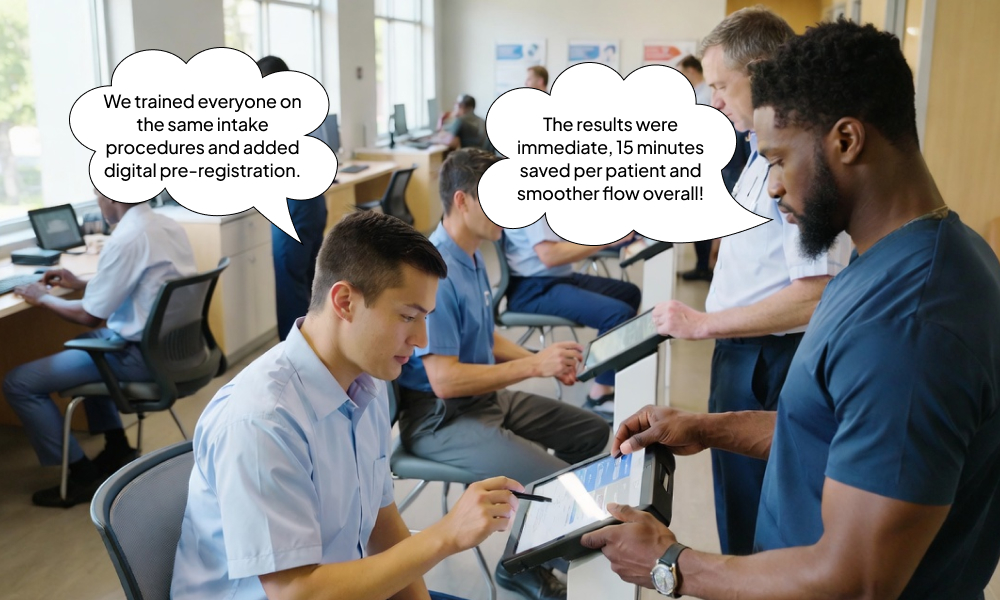
Strategy 1: Standardize the Patient Intake Process
The intake process is often the first source of delays, so having a consistent, structured approach is essential. An AI medical receptionist can guide patients through a standard set of questions, verify insurance and demographics, and ensure all key information is collected accurately before moving to the next stage.
This reduces errors, eliminates duplicate data entry, shortens registration time, and sets a steady, predictable pace for the rest of the visit, improving both patient experience and staff efficiency.
Strategy 2: Optimize Appointment Scheduling Workflows
A well‑designed scheduling approach balances demand with available time and staff. Using AI patient scheduling to match appointment lengths to different visit types, group similar visits, and reserve capacity for urgent or same‑day needs can optimize efficiency.
When one specialty clinic restructured its scheduling rules in this way, it was able to see more patients per day without overloading its team.
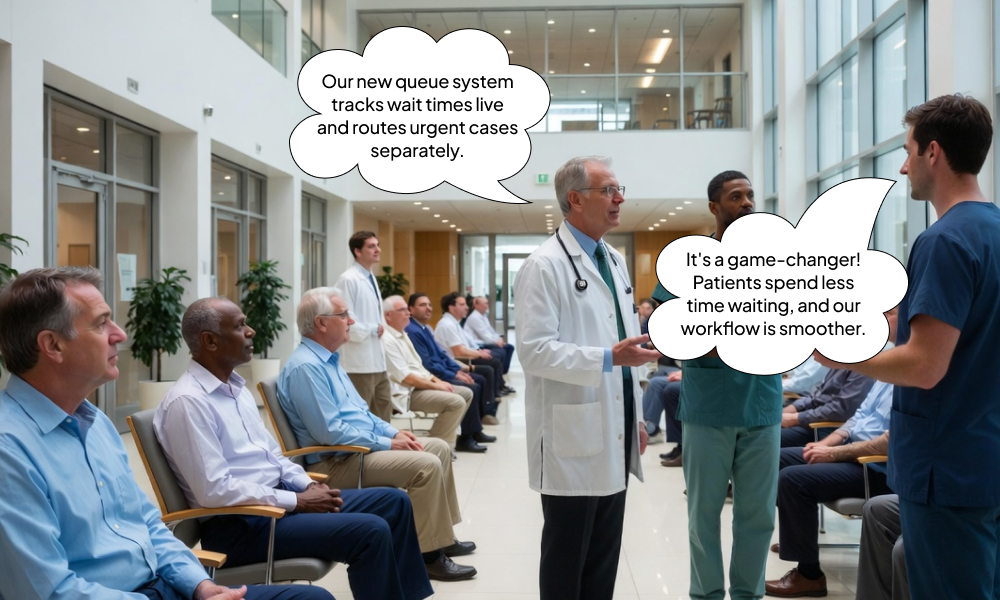
Strategy 3: Reduce Patient Wait Times Through Queue Management
Wait times strongly influence how patients perceive their experience. Clear queue rules and communication can reduce both actual and perceived waiting.
Examples include separating urgent and routine patients into different streams, explaining expected waits, and adjusting staff assignments during predictable peak periods so queues do not build up unnecessarily.
Strategy 4: Improve Exam Room Utilization
Empty exam rooms while patients are waiting indicate a mismatch between capacity and flow.
Establish simple rules for assigning rooms, coordinate cleaning and preparation so rooms can be turned over promptly, and periodically review when and where rooms sit idle.
These habits help ensure rooms are in active use more of the day, which supports higher throughput
Strategy 5: Streamline Clinical Workflows
Clinical workflow management focuses on how tasks are sequenced once patients are in the care phase.
Standardized care pathways, concise documentation templates, and clearly defined roles reduce variation and duplication.
Coordinating when labs, imaging, and treatments are ordered and reviewed helps minimize idle time between steps.

Strategy 6: Strengthen Care Coordination and Handoffs
Transitions between staff or departments are frequent sources of delay and confusion.
Using a simple, standard handoff structure (for example, a brief checklist of what must always be communicated) helps keep information consistent.
Regularly reviewing common handoff points can highlight where details are often missed or repeated, so those steps can be refined.
Strategy 7: Balance Capacity and Demand
When demand patterns and available resources are misaligned, bottlenecks appear even if overall capacity is adequate.
Reviewing historical visit volumes, adjusting staffing during predictable busy times, and cross‑training staff so they can cover more than one role all help keep the system flexible.
These measures make the daily flow more resilient to fluctuations.
Strategy 8: Identify and Remove Flow Bottlenecks
A process‑mapping exercise that traces the patient journey from entry to exit can uncover stages where delays and inefficiencies consistently occur.
Using patient flow solutions allows practices to collect detailed data on where patients wait the longest, where tasks pile up, and which handoffs are most prone to errors. This information makes it easier to target specific bottlenecks and implement changes that improve overall efficiency.
After adjustments are made, teams can continue to monitor these areas to ensure delays are genuinely reduced and not simply shifted to another part of the process, supporting smoother, more predictable patient care.
Strategy 9: Improve Discharge and Visit Closure Processes
TThe final stage of a visit or stay often determines how quickly capacity becomes available for the next patient.
Standard checklists for discharge instructions, coordination with pharmacy or follow‑up booking, and starting discharge planning earlier in the stay all help avoid last‑minute delays.
When the closure phase runs smoothly, beds and rooms turn over more predictably.
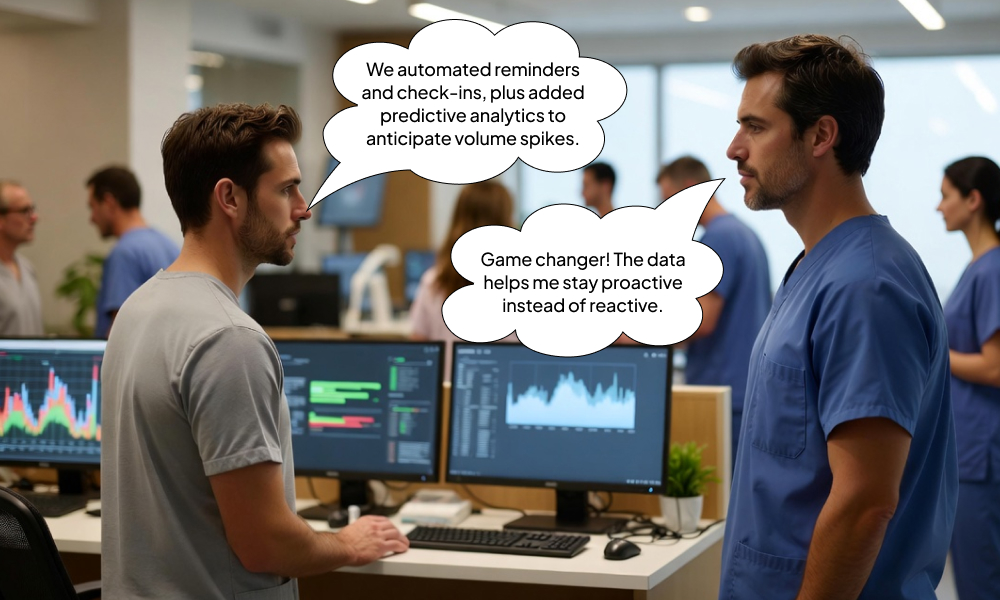
Strategy 10: Use Data and Automation to Monitor Patient Flow
Ongoing improvement depends on regularly reviewing a few key measures of flow, such as wait times, throughput, and length of stay.
Teams can look at these metrics during brief huddles or scheduled reviews, compare them with past performance, and decide on small adjustments to specific stages.
Over time, this routine builds a culture of continuous refinement without relying on any particular technology.
How to Measure the Patient Flow Process
Measuring the patient flow process starts with deciding which parts of the journey you want to understand and improve, then tracking them in a consistent way over time.
The goal is not to collect as much data as possible, but to focus on a small set of meaningful indicators that show where delays, bottlenecks, or unnecessary steps occur.
Common metrics include time from arrival to triage, which reflects how quickly patients receive an initial clinical assessment.
Waiting room time shows how long patients remain in queue before moving into an exam or treatment space, while time spent in the exam room can indicate how efficiently consultations and immediate follow‑up tasks are handled.
Length of stay, whether for a visit or an admission, captures the total time a patient spends in the system from entry to discharge.
The number of handoffs between staff or departments helps highlight where information might be lost or repeated, and discharge time of day can reveal patterns such as late clustering of discharges that limit bed or room availability earlier.
Teams can review these metrics regularly in brief huddles or periodic reviews, compare them against internal benchmarks, and use trends to guide small, targeted changes in specific stages of the process.
Conclusion
At its core, improving patient flow is about understanding how the process works today, identifying where it slows down, and making deliberate adjustments to the sequence of steps, roles, and handoffs. A clear view of stages, bottlenecks, and metrics gives healthcare teams a practical foundation for ongoing refinement, regardless of the specific tools they use.
Once this process perspective is in place, more advanced capabilities can be layered on to support and sustain those changes, such as better coordination, tracking, and communication. If you’re looking for patient flow solutions to support these process changes, see our patient flow solutions page.
FAQs
Why is patient flow important in healthcare settings?
It ensures timely care, reduces wait times, optimizes staff workload, and improves patient satisfaction and resource use.
What are the main stages of the patient flow process?
The patient flow process typically consists of the following stages:
- Entry: Patient arrival, check-in, or triage.
- Intake: Collection of patient information, medical history, and insurance details.
- Waiting: Time spent waiting for consultation, tests, or procedures.
- Care Delivery: Interaction with healthcare providers, diagnostic tests, and treatment.
- Transitions: Movement between departments or handoffs between staff.
- Exit: Discharge, checkout, or post-visit instructions.
Optimizing each stage ensures smooth progression, reduces delays, and enhances patient experience.
What is patient throughput in healthcare?
Patient throughput is the number of patients treated and discharged within a specific time, measuring efficiency of care and resource use.
How do bottlenecks impact the patient flow process?
Bottlenecks cause delays, lower patient throughput, increase wait times, and strain staff.
What is the difference between patient flow and clinical workflow?
Patient flow is the patient’s journey through the facility, while clinical workflow is how staff deliver care efficiently.
How does scheduling affect patient flow?
Scheduling directly shapes patient flow by determining how demand enters the system throughout the day. When appointment lengths match visit types and capacity is reserved for urgent cases, clinics reduce bottlenecks, waiting times, and downstream delays.
How do you measure patient flow efficiency?
Patient flow efficiency is measured by tracking time-based metrics across the care journey, such as arrival-to-triage time, waiting room time, provider time, and discharge time. These metrics reveal where delays occur and how smoothly patients move through each stage of care.