


What’s the secret behind clinics that never have empty appointment slots? Yet despite all that activity, patient volume often remains flat, unpredictable, or inconsistent month over month. This disconnect leaves clinic leaders frustrated, unsure why effort does not translate into sustainable growth.
The reality is that patient volume is rarely a demand problem. In most cases, people are already seeking care. The challenge lies in how effectively a practice converts that demand into completed visits. When access is limited, workflows are inefficient, or continuity breaks down, patient volume stalls even when interest is high.
Rather than viewing patient volume as a marketing outcome, it is more accurate to see it as an operational result. Volume reflects how well a practice manages access, utilization, experience, and follow-through across the entire care journey. Improving patient volume is less about attracting attention and more about removing friction inside the system.
This blog focuses on how practices can increase patient volume by improving operational efficiency, access, patient attendance, and continuity of care.
The strategies outlined here are designed to help practices stabilize daily census, optimize capacity, and support long-term patient volume growth without relying on short-term tactics. So, it’s time to stop guessing and start using strategies that consistently increase patient volume and streamline your clinic operations.
Table of Contents
What Patient Volume Really Means

Patient volume is often misunderstood as simply the number of new patients a practice brings in, but in reality it represents the total number of completed visits delivered over time.
It reflects how many patients are seen each day, how frequently existing patients return for care, and how effectively scheduled appointments convert into actual visits rather than missed ones.
Average no‑show rates often range from 23% to 33%, meaning a significant share of scheduled demand never converts into completed visits and real patient volume.
From an operational viewpoint, patient volume is a system-level outcome influenced by capacity management, resource allocation, patient attendance, and visit turnover throughout the day.
Two practices may attract similar demand, yet experience very different results depending on how efficiently they manage access, scheduling, and care delivery.
Understanding patient volume this way shifts the focus away from marketing alone and toward operational efficiency, continuity of care, and the systems that support consistent, sustainable patient volume improvement.
Patient Volume vs New Patient Acquisition
Patient volume is often confused with new patient acquisition, but the two are not the same. Acquiring new patients brings people into the system, while patient volume reflects how many visits are actually completed over time. A practice can attract new patients and still struggle with patient volume improvement if those patients fail to return or face barriers to care.
Patient Volume vs Visit Frequency
Another common misunderstanding is equating patient volume solely with the number of unique patients. In reality, patient visit frequency plays a critical role. Follow-up visits, preventive care, and ongoing treatment plans often account for a significant share of daily patient load. Improving visit frequency among existing patients can increase patient volume faster than acquiring new ones.
Why Volume Is a System-Level Outcome
Patient volume is the result of how multiple systems work together. Scheduling, staffing, care coordination, capacity management, and patient experience all influence whether visits are completed or lost. When these elements align, patient volume optimization happens naturally. When they do not, missed visits and idle capacity become the norm.
Why Clinics Struggle to Increase Patient Volume
1. Operational Limitations Clinics Underestimate
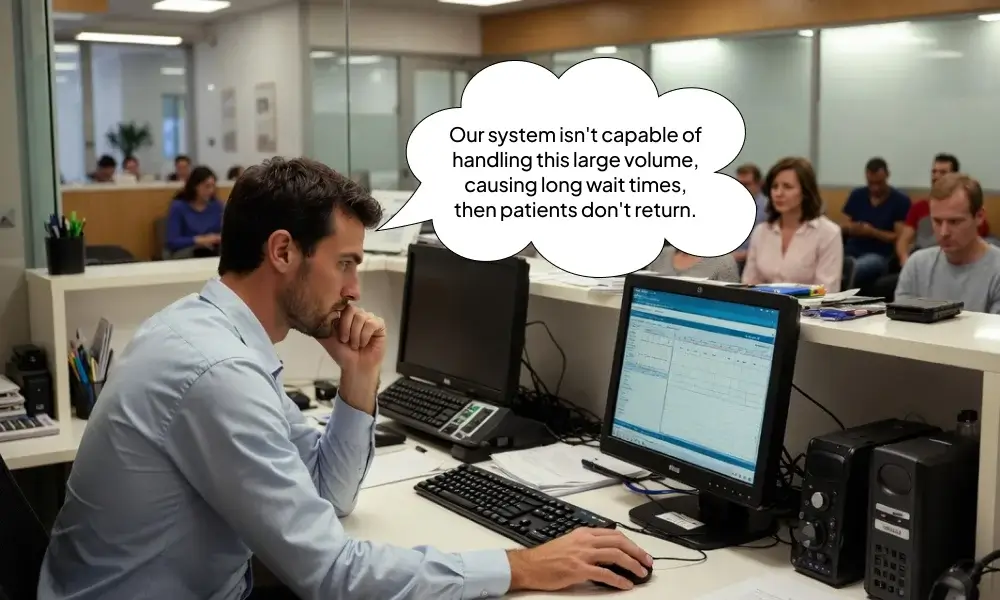
Most clinics underestimate how small operational constraints affect volume. Limited appointment availability, rigid scheduling rules, or unclear workflows create bottlenecks that restrict patient flow. Over time, these constraints suppress patient volume even when demand remains strong.
2. Scheduling, Staffing, and Workflow Friction
Scheduling friction is one of the biggest barriers to improving appointment volume. If patients struggle to find suitable time slots or experience long delays, AI patient scheduling can streamline the process, reducing abandonment and improving appointment flow.
Staffing imbalances and inefficient workflows further compound the problem, reducing visit turnover and limiting daily census.
3. The Compounding Effect of Small Inefficiencies
Small inefficiencies rarely appear critical on their own. However, when combined, they significantly impact patient attendance and completed visits. A few missed calls, delayed follow-ups, or unfilled cancellations can quickly reduce patient volume improvement over weeks and months.
Strategies for Improving Patient Volume in Your Clinics

Strategy 1: Improve Patient Access to Appointments
Access is the first gatekeeper of patient volume. If patients cannot easily book appointments, volume is lost before care even begins.
Online booking and self-scheduling allow patients to secure appointments without waiting on hold or navigating complex processes. Clear appointment pathways help patients understand where to start and what to expect. Reducing friction at the first point of contact ensures that interest converts into scheduled visits.
Limited access suppresses volume even when demand exists. Improving access directly supports patient volume growth by increasing the likelihood that patients move from intent to action.
Strategy 2: Expand Appointment Availability Without Hiring More Staff
Many clinics assume that increasing patient traffic requires hiring more staff. In reality, smarter capacity management often delivers better results.
Extended hours, staggered shifts, and same-day appointment slots allow practices to serve more patients without increasing headcount. Walk-in availability and virtual visits further expand access while protecting staff workload.
Telehealth options improve flexibility and reduce barriers for patients who struggle with travel or scheduling conflicts. By rethinking availability, clinics can improve daily patient volume using existing resources.
Strategy 3: Increase Utilization of Existing Capacity
Most practices operate below true capacity without realizing it. Appointment slots may exist on paper, but gaps, idle time, and mismatched visit types reduce actual utilization.
Optimizing appointment slot utilization requires aligning visit types with appropriate time blocks. Short visits should not consume long slots, and complex visits need adequate time to prevent overruns. Reducing idle time between appointments improves visit turnover and stabilizes patient load.
Increasing utilization is one of the most effective ways to drive patient volume optimization without increasing operational strain.
Strategy 4: Reduce No-Shows and Appointment Leakage

No-shows and late cancellations represent lost volume that cannot be recovered easily. Each missed visit directly impacts daily census and revenue.
Effective reminder and confirmation strategies improve patient attendance by reinforcing commitment. Clear rescheduling logic ensures patients have an easy path to adjust appointments rather than abandoning them. Filling canceled slots with short-notice bookings helps recover lost capacity.
When quantified, missed visits often reveal a significant opportunity for patient volume improvement hiding in plain sight.
Strategy 5: Make It Easier for Patients to Return
Repeat visits are the fastest lever to increase patient volume. Yet many practices leave return visits to chance.
Scheduling follow-ups before patients leave the clinic reduces drop-off between visits. Removing friction between appointments, such as unclear instructions or complex booking steps, supports continuity of care.
When returning is easy, patient visit frequency increases naturally, leading to steady patient volume growth with minimal additional effort.
Strategy 6: Improve the In-Clinic Experience
Patient experience directly affects whether visits are completed or cut short. Long waits, unclear processes, or inefficient handoffs create frustration that discourages future visits.
Wait time transparency helps manage expectations and reduces perceived delays. Front-desk efficiency sets the tone for the visit, while smooth transitions between care stages prevent bottlenecks.
A well-managed in-clinic experience improves patient attendance and supports consistent completed visits throughout the day.
Strategy 7: Increase Trust, Visibility, and Confidence

Trust is what converts interest into visits. Patients are more likely to attend appointments when expectations are clear and communication is consistent.
Online reviews, reputation management, and clear messaging reinforce confidence in care quality. Transparent communication reduces anxiety and uncertainty, making patients more likely to show up and follow through.
Trust strengthens patient volume improvement by reducing cancellations and improving visit completion rates.
Strategy 8: Broaden Services to Capture More Visit Types
Limiting services can unintentionally cap patient volume. Offering complementary services allows practices to meet more patient needs within the same care ecosystem.
Preventive care, follow-ups, and related services increase visit frequency while improving outcomes. Keeping patients within your system improves care coordination and stabilizes patient load.
A broader service mix supports sustainable patient volume growth without increasing patient acquisition costs.
Strategy 9: Reactivate Inactive and Missed Patients
Inactive patients represent dormant demand. Many have unmet needs but lack a clear reason or reminder to return.
Identifying inactive patients through visit history allows targeted outreach. Prioritizing those with missed visits or incomplete care plans can quickly improve appointment volume.
Reactivating existing patients is often more efficient than attracting new ones and plays a key role in patient volume optimization.
Strategy 10: Systemize Patient Volume Management
Patient volume should be managed as an operational system, not a one-time initiative.
Monitoring volume-related metrics such as daily census, patient attendance, visit turnover, and completed visits helps identify bottlenecks early. Understanding how resource allocation affects patient flow allows leaders to make informed adjustments.
When patient volume is treated as a system, improvement becomes predictable and sustainable.
Common Mistakes That Limit Patient Volume

Many practices attempt to increase patient volume without addressing root causes. Overbooking without improving access leads to burnout and poor experience. Adding services without fixing scheduling creates chaos rather than growth.
Focusing only on marketing ignores operational constraints that limit throughput. Ignoring no-show patterns allows missed visits to quietly erode patient volume over time.
Avoiding these mistakes is essential for meaningful patient volume improvement.
Sustainable Patient Volume vs Short-Term Growth
Short-term tactics may temporarily increase patient traffic, but they often come at a cost. Overloading staff increases burnout and reduces care quality. Patient experience suffers when volume exceeds operational capacity.
Sustainable patient volume growth balances demand with operational efficiency. Practices that prioritize capacity management, care coordination, and experience build volume that lasts.
Long-term success comes from systems that support consistent patient load without compromising care.
Conclusion
Increasing patient volume is not about working harder or spending more. It is about working smarter within the systems that shape access, utilization, and continuity of care.
By viewing patient volume as an operational outcome, practices can identify where visits are lost and where capacity is underused. Small improvements in access, scheduling, experience, and follow-up compound into meaningful patient volume growth over time.
When patient volume is managed intentionally, clinics achieve more completed visits, stronger patient relationships, and sustainable operational performance. This approach not only improves daily patient volume but also positions practices for long-term stability and success.
FAQs
How is patient volume different from patient acquisition?
Patient volume measures the total number of patients seen, while patient acquisition tracks how many new patients are brought in.
How does patient experience impact volume growth?
Positive experiences drive repeat visits and referrals, directly increasing patient volume.
Which marketing tactics are working best now to grow volume?
Digital ads, social media engagement, email campaigns, and targeted referral programs are most effective.
What operational changes help see more patients without burnout?
Streamlining workflows, automating scheduling, and optimizing staff allocation reduce strain while increasing capacity.
What are the risks of pushing for higher volume?
Overloading staff can reduce care quality, harm patient experience, and increase burnout.