

Key Takeaways
-
1Ask for reviews: Unprompted feedback often skews negative, so actively requesting reviews helps manage your online reputation.
-
2Timing is key: Ask for reviews after positive experiences or resolved issues, but avoid asking during complaints or sensitive moments.
-
3Stay HIPAA-compliant: Never confirm patient status or offer incentives for reviews, as it violates regulations. Encourage honest feedback instead.
-
4Use multiple channels: Request reviews through in-person, email, and SMS, using short links or QR codes to make it easier for patients.
-
5Respond to reviews: Engage with both positive and negative reviews to build trust. For negative reviews, acknowledge concerns and invite further contact.
Patient reviews are now a core growth channel for medical practices. They influence patient trust, local search visibility, and new-patient acquisition. Yet many clinicians feel awkward asking for reviews, worried about compliance or seeming pushy.
This guide shows exactly how to ask patients for reviews the right way, including timing, scripts, channels (in-person, email, SMS, portal), HIPAA-safe practices, staff workflows, and how to respond to reviews effectively.
By following these steps, your clinic can build a strong reputation, attract new patients, and use reviews as actionable feedback for improvement.
Table of Contents
Why Patient Reviews Matter So Much in Healthcare
How Reviews Influence Patient Choice and Trust
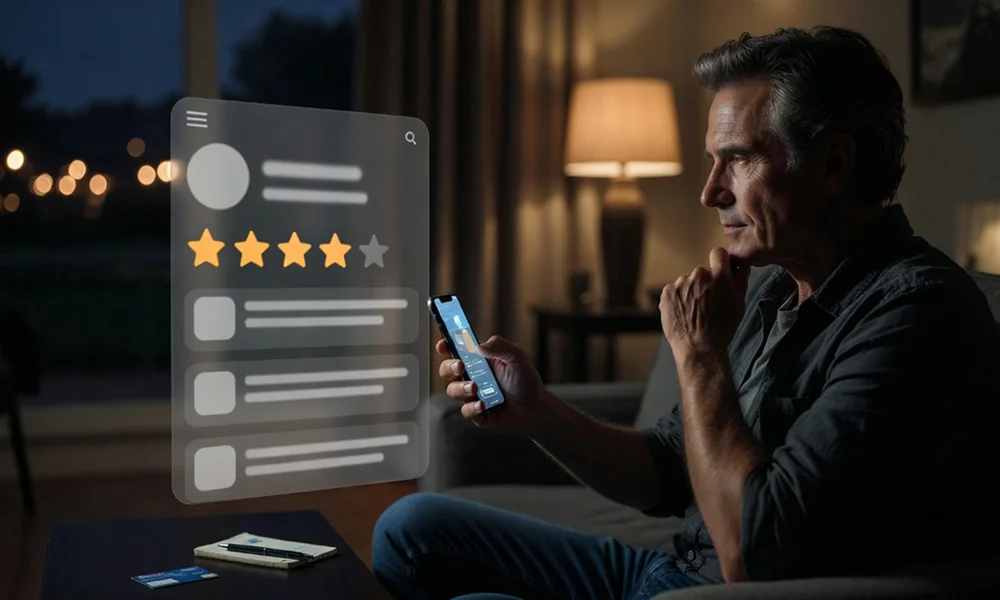
Healthcare is deeply personal and involves significant risk. Patients often read online reviews as part of their decision-making process, treating them almost as if they were personal recommendations.
Studies show that 85% of patients read reviews before choosing a healthcare provider, and 72% trust them as much as advice from friends or family. Positive reviews reassure prospective patients about the quality of care, professionalism, and trustworthiness of a clinic.
Negative reviews or a lack of reviews can create hesitation, even if the clinician has excellent outcomes. In healthcare, unlike other local businesses, trust is paramount because the stakes involve both emotional and physical well-being.
The Hidden Impact on SEO and Local Visibility
Online reviews also significantly affect local SEO. Google prioritizes practices with a high volume of reviews, recent activity, and strong rating distributions.
Clinics with consistent reviews are more likely to appear in the local pack, which drives calls, website visits, and online bookings.
The recency of reviews signals that the clinic is active and engaged, while a strong rating mix shows credibility. Neglecting reviews can mean missing out on new-patient opportunities, even if your website is optimized.
What Happens If You Don’t Ask
If you do not actively request reviews, the feedback your clinic receives will often be skewed. Unprompted reviews tend to be negative, as dissatisfied patients are more motivated to share their experiences.
This can lead to a few unhappy patients defining your online reputation, which may result in patient loss and reduced growth. Actively asking patients for reviews ensures that your online presence accurately reflects the experiences of the majority of satisfied patients.
How to Ask Patients for Reviews without Violating HIPAA

HIPAA Basics for Online Reviews
HIPAA rules govern all patient health information (PHI), including online reviews. Clinics must never confirm someone as a patient publicly or reference treatments in reviews or responses. Staff should be trained to recognize what constitutes PHI and maintain privacy across all communication channels.
What You Can and Cannot Do Legally
It is illegal to offer incentives, gifts, or rewards for reviews, as these practices violate FTC and anti-kickback regulations. Similarly, review gating, where only happy patients are directed to public review platforms, is risky and often prohibited.
The goal should be to create an ethical culture of feedback. Encourage honest reviews from all patients and treat reviews as a tool to improve care rather than solely for marketing purposes.
Building an Ethical Review Culture
Clinics should focus on asking for honest feedback, not just five-star reviews. Encourage patients to share their experiences freely, and position reviews as opportunities for quality improvement. Training staff to ask in a natural, respectful manner ensures patients feel valued rather than pressured. This approach strengthens patient trust and fosters a positive review culture.
Asking Patients for Reviews (Timing Is Everything)

Best Moments to Request a Review
Timing plays a crucial role in patient engagement. The most effective moments to request a review are immediately after positive experiences, such as resolved issues, successful procedures, or completion of a treatment plan. Follow-up visits are also ideal, especially when patients express satisfaction or gratitude.
Times You Should Avoid Asking
Certain moments are inappropriate for review requests. Avoid asking immediately after a complaint, during complex or emotionally charged conversations, billing disputes, or when patients are under stress or discomfort. Asking during these moments can feel intrusive or insensitive.
How to Train Staff to “Read the Room”
Staff can be trained to pick up simple cues, such as verbal appreciation, smiles, or positive body language, to determine if a patient is ready to leave a review. When uncertain, staff can flag patients for automated follow-up via email or SMS. This ensures that review requests are both timely and considerate.
Where to Send Patients: Choosing the Right Review Platforms

High-Impact Platforms for Healthcare
The most important platform for visibility is Google Business Profile. Healthcare-specific sites like Healthgrades, WebMD, Vitals, Zocdoc, and RateMDs are also influential, as they attract patients actively seeking providers. Focusing on a few high-impact platforms rather than scattering requests widely is most effective.
Balancing General vs Healthcare-Specific Sites
Prioritize two or three key platforms that align with your specialty and patient base. While general platforms increase visibility, healthcare-specific sites add credibility, particularly for new patients researching treatment options or procedures.
Creating a Frictionless Path to Each Platform
Make leaving a review easy. Use short links, QR codes, printed cards, or embedded buttons in emails and patient portals. Automating review requests and providing multiple channels reduces friction and increases completion rates.
Exactly How to Ask for Reviews (Scripts for Every Channel)
In-Person Scripts for Clinicians and Staff
A natural approach works best. Clinicians can say: “We value your feedback. If you’re happy with your visit, would you consider leaving a review online? It helps other patients make informed choices.” At check-out, staff can say: “Before you go, please share your experience on Google or Healthgrades. It only takes a minute and helps us improve our care.”
Other variations include:
- “Your feedback helps us improve care and guide other patients in making treatment decisions.”
- “If you felt cared for today, a quick online review helps others choose the right provider.”
Email Review Request Templates That Work
Email requests allow slightly longer messaging and can be automated post-visit. Examples include:
- “Thank you for visiting [Clinic Name]. Your feedback helps us improve and guides other patients. Please leave a quick review here: [link].”
- “We’re glad your procedure went well. Sharing your experience helps others make confident healthcare choices: [link].”
- “Your opinion matters! Tell us about your visit at [Clinic Name] in a quick review: [link].”
Segmenting emails based on visit type or procedure increases engagement.
SMS Text Templates for Mobile-Savvy Patients
SMS messages should be concise. Examples:
- “Hi [First Name], thanks for visiting [Clinic Name]! We’d love your feedback. Leave a quick review here: [link]. Reply STOP to opt out.”
- “We hope your visit went well! Please take a minute to share your experience online: [link].”
Send same-day or next-day messages for best results.
Using Your Website, Patient Portal, and Kiosks
Websites and patient portals can display “Share Your Feedback” buttons. Post-visit kiosks or screens provide passive prompts for patients to leave reviews while still in the clinic. These subtle reminders integrate review collection naturally into the patient experience.
Social Media and Other Touchpoints
While PHI must never be mentioned, social media, newsletters, printed materials, or post-op instructions can encourage general feedback and link to review platforms. These channels support a culture of transparency and engagement without violating privacy.
Building a Repeatable Review Request Workflow
Mapping review requests into the patient journey ensures consistency. Staff can ask in person at check-out, flag patients for automated post-visit emails or SMS, and monitor responses. Using PMS, EHR, or reputation management platforms allows automatic triggers after appointments, procedures, or follow-ups.
Assign clear roles: who asks, who monitors, and who escalates reviews. Role-playing and script playbooks train staff for various scenarios. Regular updates based on patient feedback and platform changes keep workflows efficient. A structured workflow increases review volume, ensures compliance, and enhances patient satisfaction.
How to Respond to Patient Reviews the Right Way

Responding to reviews builds trust and encourages further engagement. For positive reviews, a simple response could be: “Thank you for sharing your experience! We’re thrilled you felt well cared for at [Clinic Name].” It is personal, professional, and HIPAA-safe.
Negative reviews must be handled carefully. Avoid confirming patient status or revealing PHI. A professional response might read: “We’re sorry your experience didn’t meet expectations.
Please contact us at [phone/email] so we can address your concerns.” Escalate serious cases to leadership or legal. Consistently responding demonstrates care and enhances credibility.
Metrics to Track and Benchmarks for “Healthy” Review Performance
Monitoring reviews allows clinics to measure impact and spot trends. Small practices may aim for 10–20 reviews per month, while multi-location groups target 50 or more. Maintaining a mix of mostly positive ratings with occasional constructive feedback appears authentic.
Track online bookings, website clicks, and call volume to understand how review volume impacts new-patient acquisition. Review content also offers operational insights into wait times, staff interactions, or billing challenges.
Common Mistakes Practices Make When Asking for Reviews
Some common mistakes hurt trust or reduce results. Offering incentives, gating only happy patients, or ignoring negative reviews can backfire. Operational issues like asking too frequently or making submission complicated also reduce response rates. Proper staff training, clear scripts, and a frictionless workflow help avoid these pitfalls.
Case Examples: What “Doing It Right” Looks Like
A solo practice doubled its online reviews in three months by implementing automated post-visit emails and SMS combined with natural in-person scripts. Patients responded positively because the process was seamless and respectful.
A multi-location group standardized scripts, focused on two to three platforms, and used automation across all sites. This led to stronger local SEO, consistent patient trust, and a reliable reputation, demonstrating that repeatable strategies scale effectively.
Quick Start Checklist: Ask for Reviews the Right Way in 30 Days
To implement a review strategy quickly: choose two to three key platforms, assign staff roles for “ask moments,” customize one in-person, one email, and one SMS template, activate automation in your PMS/EHR or reputation tool, and schedule monthly review of metrics and sample responses. This ensures review collection becomes a natural part of patient care.
Conclusion
Getting more patient reviews doesn’t require a complete overhaul of your practice — it requires a consistent, repeatable system that fits naturally into your existing workflow.
Start small. Pick two platforms — Google Business Profile and one healthcare-specific site like Healthgrades. Train your front desk staff to ask at checkout using a simple, natural script.
Set up one automated SMS or email to go out within 24 hours of every visit. Respond to every review within 48 hours, positive or negative.
Do that consistently for 90 days and you will see a measurable difference — in review volume, in local search visibility, and in new patient inquiries.
The practices that win at reputation management are not the ones with the best doctors or the fanciest websites. They are the ones that ask every patient, every time, through a system that runs without manual effort.
That is exactly what MedLaunch is built to do. Our AI-powered patient communication tools automate review requests across SMS, email, and patient portals — so your team can focus on delivering great care while your online reputation builds itself in the background.
If your clinic is losing patients to competitors with stronger online reputations, it’s not because they provide better care. It’s because they have a better system.
FAQs
Is it okay to ask patients for reviews?
Yes, as long as requests are respectful, HIPAA-compliant, and focused on honest feedback.
How do you ask a patient for a review without sounding pushy?
Use natural language like, “We value your feedback, would you consider leaving a review online?” Keep it optional and brief.
When is the best time to ask patients for reviews?
Immediately after positive experiences, resolved issues, or follow-up visits when patients express satisfaction.
Can medical practices offer incentives for patient reviews?
No, incentives or rewards violate FTC and anti-kickback rules. Always encourage honest feedback without compensation.
How can we ask for reviews and still stay HIPAA compliant?
Never confirm a patient’s identity or reference their treatment. Keep requests general and focused on the experience, not PHI.
Should we ask every patient for a review?
Ideally yes, but avoid asking during complaints, billing disputes, or stressful moments. Use staff judgment or automated follow-ups.
What’s better for review requests: email or text messages?
Both work. Email allows longer messages, while SMS is quick and convenient. Use the channel your patient prefers for higher response rates.