
Key Takeaways
-
1AI extends, not replaces: AI automates administrative tasks but cannot replicate human judgment or emotional sensitivity, making it a tool, not a full staff replacement.
-
2Vague goals fail deployments: Without clear, measurable goals, AI configurations become reactive, leading to unclear scripts, poor escalation paths, and misguided performance reviews.
-
3Emergency handling needs precision: AI must recognize critical terms like chest pain or breathing trouble and trigger immediate actions to prevent liability.
-
4Generic scripts harm trust: Scripts should be tailored to the clinic’s specialty and patient needs to ensure trust and proper communication.
-
5Ongoing monitoring is crucial: Regular performance reviews are needed to catch issues like booking errors, missed escalations, or tone inconsistencies in AI interactions.
Across the United States, outpatient clinics, specialty practices, and multi-location healthcare groups are facing sustained operational pressure.
Call volumes remain high, staffing shortages persist, and patient expectations continue to rise. Patients expect quick scheduling, immediate answers, shorter wait times, and seamless communication across phone, web, and text channels.
Meanwhile, front-desk teams are balancing appointment scheduling, insurance verification, cancellation management, referral coordination, prescription routing, billing questions, and urgent call handling, all within limited staffing capacity.
The result is operational strain. Long hold times frustrate patients. Missed calls translate into lost appointments. Administrative teams experience burnout. Access gaps widen, particularly after hours.
To address these challenges, many clinics are turning to AI medical receptionists. These systems promise 24/7 availability, automated scheduling, multilingual communication, reduced call abandonment, and improved operational efficiency. On the surface, the solution appears straightforward: automate repetitive tasks and free human staff for higher-value work.
However, many clinics quickly encounter unexpected outcomes. Instead of seamless operations, they experience patient confusion, booking inaccuracies, escalation failures, or staff dissatisfaction. These issues often lead leadership to question whether AI was the right decision.
In reality, most mistakes when deploying AI receptionists are not caused by the technology itself. They stem from configuration decisions, poorly designed workflows, vague goals, weak governance structures, and insufficient oversight. Many so-called failed AI receptionist implementations are operational failures disguised as technical ones.
AI systems do not independently create success or failure. They reflect the clarity of the processes, scripts, escalation logic, and governance frameworks they are built upon. When these foundations are strong, AI enhances performance. When they are weak, automation amplifies existing flaws.
This article examines the most common AI receptionist deployment mistakes clinics make, clarifies why these errors occur, and explains how safer operational design can prevent them.
The focus is not on criticizing AI technology, but on addressing the design, oversight, and workflow decisions that determine whether implementation strengthens or weakens patient access.
Table of Contents
Common Mistakes Clinics Make When Deploying AI Receptionists

The majority of common AI receptionist deployment mistakes are not technical malfunctions. They are operational design issues.
When clinics encounter errors when deploying AI receptionists, those errors often trace back to unclear role definitions, incomplete workflow mapping, weak escalation logic, or inadequate monitoring structures.
These AI receptionist implementation mistakes are common across independent practices, specialty clinics, and larger healthcare networks. Each mistake described below reflects real-world operational patterns observed in healthcare environments.
Understanding these risks allows clinics to approach deployment more strategically and avoid repeating the same preventable failures.
Mistake 1 – Treating AI as a Drop-In Replacement for Front-Desk Staff
One of the most significant mistakes clinics make with AI receptionists is assuming the system can function as a full replacement for experienced front-desk staff. This assumption often emerges from cost-reduction pressure or staffing shortages.
While AI can automate structured administrative tasks, it cannot replicate human judgment, contextual reasoning, or emotional sensitivity in complex healthcare interactions.
AI performs well when managing repetitive, clearly defined processes such as scheduling standard appointments, confirming visit times, providing office hours, or directing calls to appropriate departments.
However, it should not independently handle clinical triage decisions, emotionally sensitive conversations, or ambiguous medical concerns.
For example, a patient reporting chest discomfort following a cardiac procedure requires immediate human evaluation. A parent describing unusual symptoms in an infant cannot be managed through automated responses alone.
A caller expressing emotional distress or suicidal thoughts must be escalated immediately. When clinics fail to define these boundaries, poorly defined AI receptionist call flows create safety risks.
This type of AI receptionist setup mistake typically results from unclear role definitions. Without explicitly documenting what the AI is responsible for and what must remain human-controlled, clinics blur operational lines. Unclear AI receptionist role definitions increase liability exposure and compromise patient safety.
Safer implementation requires recognizing that AI should extend front-desk capacity, not replace human clinical oversight. Clearly defining administrative scope and embedding mandatory escalation triggers preserves safety while allowing automation to improve efficiency.
Mistake 2 – Deploying with Vague Goals and No Success Criteria

Another frequent AI receptionist implementation mistake involves launching without defined goals. Clinics often move forward with deployment because automation feels necessary, not because measurable outcomes have been identified. Statements such as “we need fewer missed calls” or “we want to reduce workload” lack specificity and make evaluation impossible.
When goals are vague, configuration becomes reactive. Scripts may prioritize speed over clarity. Escalation pathways may be underdeveloped. Performance reviews lack direction. These conditions contribute directly to common AI receptionist deployment mistakes.
Clear goals should be operational and measurable. A clinic might aim to reduce call abandonment by a defined percentage, increase after-hours booking capacity, improve appointment confirmation rates, or expand multilingual access. Each objective influences script design, call routing logic, and escalation thresholds.
For instance, if reducing no-shows is a priority, confirmation scripts must emphasize clarity and next steps. If improving access is the goal, scheduling workflows must minimize friction. Without written objectives, AI receptionist onboarding mistakes occur because configuration decisions are made without strategic alignment.
Writing goals before system setup reduces risk. It ensures deployment is intentional rather than experimental.
Mistake 3 – Using Generic Scripts That Don’t Match Your Clinic’s Voice
Generic scripts are one of the most underestimated AI receptionist setup mistakes. Many clinics adopt default language provided by vendors without tailoring it to their specialty, patient demographics, or communication style. While technically functional, generic scripts weaken patient trust and diminish perceived professionalism.
Healthcare communication is context-sensitive. A pediatric clinic requires warmth and reassurance. An oncology center requires empathy and clarity. A surgical practice must emphasize post-operative guidance and urgency recognition. When scripting fails to align with specialty nuance, patients perceive the interaction as robotic.
For example, a simple greeting such as “How may I assist you?” may suffice in retail, but healthcare interactions benefit from specificity. A customized greeting that identifies the clinic and clarifies available services signals competence and structure.
Similarly, rescheduling language should include reassurance and clear instructions rather than transactional phrasing. Effective scripting reflects brevity, empathy, and natural tone.
Weak scripting often correlates with poorly defined AI receptionist call flows. When scripts are overly rigid or impersonal, they reduce patient confidence. Over time, this contributes to complaints and erodes trust.
Aligning scripts with clinic voice and patient population reduces these risks significantly.
Mistake 4 – Poor Handling of Urgent and Emergency Situations
Emergency handling represents the highest-risk domain in AI deployments. AI must never provide medical advice or attempt to independently assess clinical severity. Its role in urgent situations is recognition and redirection—not diagnosis.
Missing escalation rules in AI receptionists create significant liability exposure. Emergency keyword recognition must be comprehensive and carefully tested. Terms such as chest pain, trouble breathing, severe bleeding, unconsciousness, suicidal ideation, seizure activity, or stroke symptoms require immediate action.
Proper configuration requires instructing the caller to dial emergency services without delay and avoiding follow-up questioning that could slow response time. Additionally, internal documentation of such events supports governance and compliance oversight.
Many errors when deploying AI receptionists occur because emergency logic is insufficiently stress-tested. Scenarios involving ambiguous phrasing or indirect symptom descriptions must be evaluated during implementation.
Strong governance ensures that urgent interactions are reviewed regularly and that emergency recognition remains accurate over time.
Mistake 5 – Not Training AI on Clinic-Specific Policies and Workflows

A lack of AI receptionist training on internal policies frequently results in misinformation. AI systems rely on structured knowledge bases. When clinic-specific details are incomplete or outdated, incorrect responses follow.
Insurance participation rules, referral requirements, cancellation windows, telehealth eligibility, prior authorization processes, and prescription refill timelines vary widely across clinics. If these policies are not incorporated into the AI system, patients receive inaccurate information.
AI receptionist onboarding mistakes often stem from rushing deployment before fully documenting workflows. This leads to confusion, rework, and frustrated callers.
A structured knowledge base should clearly define office hours, appointment types, scheduling restrictions, insurance participation, cancellation policies, emergency instructions, and escalation triggers. Regular review is essential, particularly when policies change.
Without this discipline, clinics risk poorly informed interactions that compromise patient trust and increase operational friction.
Mistake 6 – Ignoring Language, Accent, and Accessibility Needs
Accessibility is central to patient experience. Ignoring language diversity and communication preferences is a significant oversight.
A single English-only voice experience may unintentionally exclude portions of the patient population. Multilingual options, particularly Spanish-language support in many U.S. regions, significantly improve access.
Additionally, elderly patients may require slower pacing and clearer articulation. Hearing-impaired individuals benefit from easy human fallback options. Accessibility considerations extend beyond language to usability.
Common AI receptionist deployment mistakes in this area often present as subtle patient dissatisfaction rather than explicit complaints. When patients struggle to navigate automation, they may simply abandon the call.
Designing inclusive voice experiences protects equitable access and strengthens satisfaction metrics.
Mistake 7 – No Clear Human Handoff Path
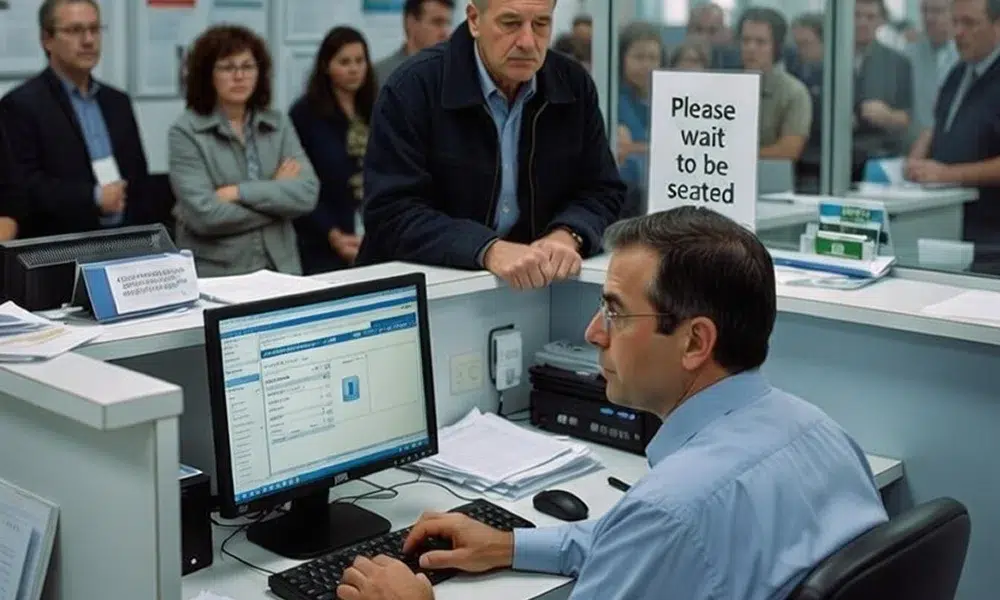
Automation without a clear human handoff path generates frustration. Patients must feel confident they can reach a person when needed.
Absence of human-in-the-loop design creates operational gaps. Escalation should occur when intent is unclear, repeated confusion arises, emotional distress is detected, or complex issues exceed AI scope.
Equally important is context transfer. When calls are escalated, human staff should receive summarized information, reducing repetition and improving continuity.
Poor handoff experiences contribute to negative perception and reduced trust. Stress-testing escalation scenarios before launch significantly reduces these risks.
Mistake 8 – Treating Implementation as One-and-Done
AI deployment is not a single event. It requires continuous monitoring.
Inadequate monitoring of AI receptionist performance allows small issues to compound. Booking inaccuracies, missed escalations, tone inconsistencies, or data capture errors may go unnoticed without structured review.
Regular transcript audits and performance reviews help identify patterns. Early-phase monitoring should be frequent, gradually transitioning to ongoing monthly governance checks.
Weak AI receptionist governance often correlates with lack of review cadence. Ongoing oversight ensures sustained quality.
Mistake 9 – Failing to Align Staff and Workflow Around the AI
Even well-designed systems fail if staff alignment is missing. Internal resistance, confusion about AI scope, and unclear task ownership create inefficiencies.
Staff must understand what the AI handles, when escalation occurs, and who manages follow-up tasks. Ownership of system oversight should be clearly assigned.
When teams contribute feedback, performance improves. When they are excluded, failed AI receptionist implementations become more likely.
Operational alignment ensures automation complements human workflows rather than disrupting them.
Mistake 10 – Measuring the Wrong Things

Focusing exclusively on cost reduction is a narrow performance lens. While operational savings matter, they do not capture the full value of automation.
Clinics should evaluate call abandonment rates, appointment conversion rates, escalation accuracy, after-hours booking growth, no-show reduction, and patient complaint frequency.
Measuring access improvement and patient satisfaction provides a more accurate picture of performance. Overemphasis on payroll reduction alone may mask service quality declines.
Balanced metrics ensure AI contributes positively to both efficiency and patient experience.
Practical Tips for Safer AI Receptionist Deployments
Safer deployments begin with written goals, clearly defined AI scope, explicit escalation rules, and structured governance ownership. Clinics should conduct staged rollouts rather than full launches, stress-test emergency and escalation pathways, and review transcripts consistently during early implementation phases.
Staff involvement in scripting and workflow refinement strengthens adoption and reduces resistance. Continuous updates to clinic-specific policies ensure accuracy over time. Above all, patient safety and clarity should guide every configuration decision.
Conclusion
Most Mistakes When Deploying AI Receptionists are not failures of artificial intelligence. They are failures of planning, clarity, monitoring, and governance.
AI can significantly reduce administrative burden, expand access, and support overwhelmed staff. But success depends on intentional configuration, comprehensive training, ongoing oversight, and strong human-in-the-loop design.
Deploying AI in healthcare is not merely an efficiency initiative. It is a patient-safety and trust decision. Every automated interaction reflects the clinic’s commitment to clarity, responsiveness, and professionalism.
When implemented thoughtfully, AI receptionists strengthen operations and protect access. When rushed or poorly governed, they create avoidable risk.
In healthcare, trust is foundational. Automation should reinforce it, not compromise it.
FAQs
What are the most common mistakes when deploying AI receptionists?
Common Mistakes When Deploying AI Receptionists include unclear role definitions, generic scripts, missing escalation rules, poor training data, and lack of performance monitoring.
Why do AI receptionist implementations fail?
Most failed AI receptionist implementations happen due to weak workflows, vague goals, and poor governance—not because of the AI technology itself.
How can clinics avoid AI receptionist setup mistakes?
Define clear goals, limit AI to administrative tasks, build strong escalation rules, and monitor performance regularly.
Should AI receptionists handle medical emergencies?
No. AI must never give medical advice and should immediately escalate emergencies or direct patients to call 911.
What causes AI receptionist onboarding mistakes?
Incomplete training on clinic-specific policies like insurance, cancellations, and referrals often leads to inaccurate responses.