

Missed appointments are a common, yet often underestimated challenge in healthcare. Also referred to as “no-shows” or late cancellations, missed appointments occur when patients fail to attend a scheduled clinic visit without providing adequate notice.
These missed visits in healthcare are not random events; instead, they often follow predictable patterns influenced by behavioral, logistical, and systemic factors.
Understanding why patients miss appointments and implementing strategies to prevent them is critical for clinics seeking to improve operational efficiency, financial stability, and patient outcomes.
Missed appointments in healthcare carry substantial financial, clinical, and operational consequences. Clinics face unused appointment slots, lost revenue, rescheduling challenges, and increased staff workload. Patients, in turn, may experience delays in care, worsening of chronic conditions, and missed preventive opportunities.
This blog explores the root causes of missed appointments, patterns observed in patient behavior, and evidence-based strategies for preventing them.
The Real Cost of Missed Appointments in Healthcare
Missed appointments in healthcare are far more than minor inconveniences. They create ripple effects across clinic operations, impacting revenue, patient care, and staff efficiency. Understanding the real cost is essential for any clinic aiming to optimize both performance and patient satisfaction.
Financial Impact
Financial losses from missed clinic appointments are significant. Consider a primary care clinic with an average visit cost of $150 and 20 daily appointments. If the no-show rate is 10%, that translates to 2 missed appointments per day, or $300 in lost revenue daily. Over a month, this sums up to approximately $6,000 in lost income.
Unused appointment slots not only reduce revenue but also represent wasted operational capacity. When patients fail to show up, staff often scramble to fill gaps, resulting in overtime pay, last-minute rescheduling, and administrative strain. For clinics relying on high patient throughput, these inefficiencies can directly affect profitability.
Missed appointments in healthcare also amplify financial pressures indirectly. Administrative staff spend extra hours contacting patients, rescheduling appointments, and managing billing confusion. Even when appointments are eventually rescheduled, the clinic bears added costs associated with underutilized time and resources.
Clinical Impact
The clinical impact of missed appointments is equally significant. Patients who miss appointments risk delayed diagnosis, worsening chronic disease management, and missed preventive care opportunities. For example:
- A diabetic patient missing a routine follow-up may experience uncontrolled blood sugar levels, leading to complications.
- A patient who skips preventive screenings may receive a late-stage diagnosis, increasing treatment complexity and cost.
In addition, chronic disease worsening due to missed appointments can create long-term patient health consequences and increase overall healthcare costs. Poor preventive compliance resulting from missed clinic appointments can reduce the effectiveness of population health strategies and compromise care quality.
Operational Impact
Operationally, missed appoinments disrupt schedules, increase staff idle time, and contribute to burnout. Front-desk staff face higher phone volumes attempting to manage no-shows and reschedule patients. Clinicians often have idle time that could have been allocated to other patients, resulting in inefficient resource use.
Appointment attendance issues not only slow clinic workflow but also compromise team morale. Over time, repeated disruptions due to missed appointments can create a stressful work environment, negatively affecting staff satisfaction and patient care.
Why Patients Miss Appointments
Missed appointments in healthcare are driven by a variety of factors, ranging from individual patient behaviors to systemic barriers. Identifying these causes is key to developing effective preventive strategies.
1. Forgetfulness and Competing Priorities
Behavioral research consistently shows that forgetfulness is a major contributor to missed appointments. Busy schedules, work demands, and family responsibilities often take precedence, causing patients to miss or forget clinic visits. Lack of reminders or inefficient communication channels exacerbates this issue.
Addressing these causes of missed appointments requires clinics to implement consistent reminder systems and patient engagement strategies, which can significantly reduce no-show rates.
2. Long Booking Lead Times
Data indicates that the longer the interval between scheduling and the actual appointment, the higher the risk of missed visits in healthcare. Patients often forget appointments scheduled weeks in advance or face scheduling conflicts arising during the waiting period.
Clinics can mitigate this risk by offering same-week scheduling or redesigning appointment templates to reduce long-term lead times.
3. Transportation and Access Barriers
Transportation and access barriers are common reasons for missed clinic appointments. Patients may struggle with:
- Distance to the clinic
- Limited parking availability
- Childcare responsibilities
- Work schedule conflicts
These obstacles disproportionately affect certain demographics, emphasizing the need for clinics to consider accessibility in their scheduling and outreach strategies.
4. Fear, Anxiety, or Low Perceived Value
Emotional factors such as fear of diagnosis, anxiety about procedures, or underestimating the importance of a visit can lead patients to skip appointments. Some patients may feel “better” and assume their appointment is unnecessary, while others may not fully understand the long-term value of preventive care.
Addressing this requires clear patient education and reassurance from clinical staff about the importance of adherence to scheduled visits.
5. Financial Confusion or Billing Concerns
Unexpected copays, insurance misunderstandings, and cost anxiety can deter patients from attending appointments. Financial confusion not only contributes to missed appointments but can also create negative perceptions of the clinic, reducing patient satisfaction.
Transparent communication regarding billing, insurance coverage, and out-of-pocket costs is essential to prevent financial barriers from impacting attendance.
6. Poor Clinic Communication
Communication breakdowns, including vague instructions, hard-to-reach front desk staff, or cumbersome rescheduling processes, are significant contributors to missed appointments. Patients are less likely to attend if they perceive scheduling and communication as difficult or inconvenient.
Enhancing clarity, accessibility, and responsiveness can directly reduce appointment attendance issues and improve overall patient experience.
Data Patterns Behind Missed Appointments
Analyzing measurable patterns can help clinics predict and prevent missed appointments. Several factors influence no-show risk:
- Day-of-week trends: Certain weekdays may consistently have higher no-show rates.
- Time-of-day patterns: Early morning or late afternoon slots may correlate with higher absenteeism.
- Appointment type risk: Routine checkups vs. specialty visits may experience differing attendance rates.
- Patient demographics: Age, socioeconomic status, and location can influence likelihood of missing appointments.
- Lead-time impact: Longer gaps between scheduling and the visit increase the risk of no-shows.
Segmentation allows clinics to identify high-risk cohorts and target interventions effectively.
Steps to Prevent Missed Appointments
Reducing missed appointments requires systematic interventions, combining measurement, communication, and operational adjustments.
Step 1 – Measure Your Baseline
Before implementing solutions, clinics must measure their current no-show rates. The no-show rate formula is:
No-show rate=Missed appointments
No‑show rate is calculated as:
No-show rate = Missed appointments / Total scheduled appointments × 100
Where:
- Missed appointments = number of patients who did not attend.
- Total scheduled appointments = all booked appointments in the period.
Segmenting by provider, visit type, payer, and lead time helps identify patterns and high-risk areas, laying the foundation for targeted prevention.
Step 2 – Reduce Booking Lead Time
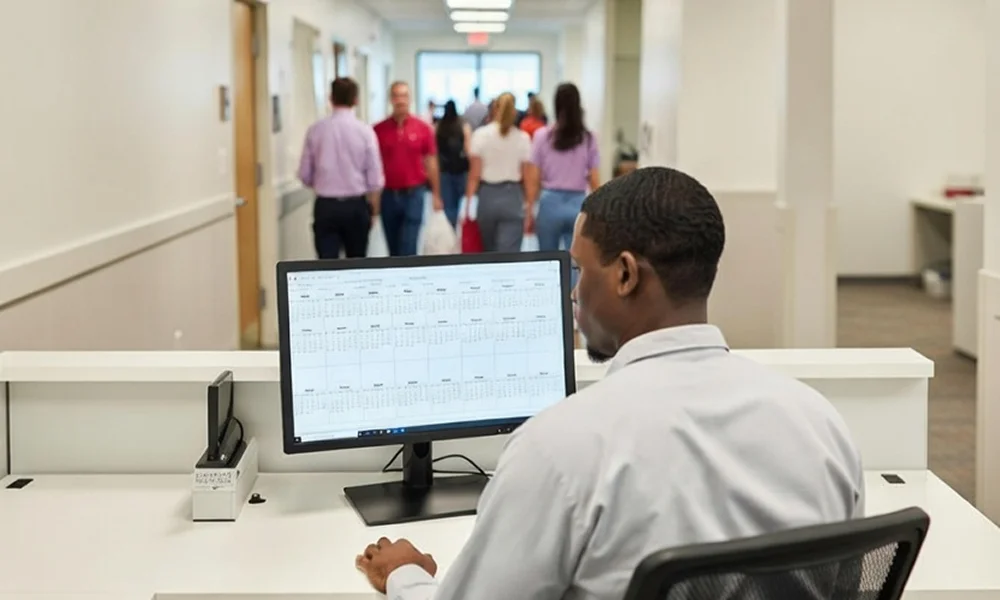
Reducing booking lead times can significantly decrease missed visits in healthcare. Strategies include:
- Offering same-week scheduling
- Redesigning templates to minimize long-term hold slots
- Prioritizing urgent or high-risk appointments for early scheduling
Shorter lead times reduce the likelihood of forgetfulness and conflicting commitments.
Step 3 – Use Multi-Channel Reminder Systems
Multi-channel reminders have been shown to improve attendance significantly. Recommended approaches include:
- Immediate confirmation at booking
- 48-hour pre-visit reminder via SMS, email, or call
- Same-day reminder to reinforce commitment
Layering communication channels ensures patients are reminded through their preferred medium, reducing missed appointments in healthcare.
Step 4 – Make Rescheduling Easy
Simplifying rescheduling improves patient compliance and satisfaction. Clinics can offer:
- Self-service rescheduling links
- Direct buttons in reminder communications
- Quick telehealth alternatives when in-person visits are not feasible
Easy rescheduling minimizes idle slots and ensures patients maintain continuity of care.
Step 5 – Address High-Risk Cohorts
Identifying patients with repeat missed appointments allows for personalized interventions. High-risk patients may benefit from:
- Targeted outreach by care coordinators
- Personalized reminders and engagement
- Assistance with transportation, childcare, or financial concerns
Proactively addressing these barriers reduces repeat no-shows and strengthens patient relationships.
Step 6 – Embed Prevention into Workflow
Integrating appointment adherence into routine clinic operations ensures consistency. Best practices include:
- Confirming the next appointment at checkout
- Educating patients on the importance of visits
- Providing clear financial and insurance communication
Embedding prevention into workflow reinforces accountability and increases patient engagement.
Policy Considerations for Handling Missed Appointments

Clear policies ensure both patients and staff understand expectations and responsibilities.
Clear No-Show Policy
A transparent, fair no-show policy sets expectations and encourages compliance while maintaining flexibility for emergencies. Policies should be clearly communicated at the time of booking and reinforced in reminders.
Documentation and Risk Management
Documenting outreach attempts and managing repeated no-shows protects continuity of care and reduces liability. Clinics should have escalation protocols for chronic no-shows to ensure patient safety and operational efficiency.
Technology and Automation in Missed Appointment Prevention
Modern technology can significantly reduce missed appointments without adding administrative burden.
Predictive No-Show Risk Models
Using predictive analytics, clinics can identify high-risk appointments in advance, allowing targeted outreach to patients most likely to miss visits.
Automated Waitlists
Automated waitlists fill cancellations quickly, maximizing utilization of unused appointment slots and reducing financial losses.
Common Mistakes in Missed Appointment Prevention
- Over-reliance on penalties instead of proactive engagement
- Lack of data segmentation
- Ignoring multi-channel reminder layering
- Overlooking access barriers
- Failing to review performance regularly
Avoiding these mistakes ensures a sustainable and patient-friendly approach to missed appointment prevention.
Conclusion
Missed appointments are not random mishaps, they are predictable patterns with real consequences for clinics and patients alike. Every unused slot represents lost revenue, delayed care, and added stress for staff. But clinics that take a proactive approach turn this challenge into an opportunity for improvement.
By measuring no-show rates, analyzing patient behavior, and addressing barriers, from forgetfulness and long lead times to financial or transportation hurdles, clinics can reduce missed visits significantly.
Embedding multi-channel reminders, easy rescheduling, and targeted outreach into daily workflows ensures that patients stay engaged and appointments are kept.
Modern technology, including predictive analytics and automated waitlists, allows clinics to anticipate risks and fill gaps efficiently, minimizing disruptions while maintaining a patient-friendly experience.
FAQs
Why do patients miss appointments in healthcare?
Patients miss appointments due to forgetfulness, long lead times, access barriers, fear, financial concerns, or poor clinic communication.
What is the average no-show rate?
The average no-show rate in healthcare ranges from 15% to 30%, depending on specialty and patient population.
How can clinics reduce missed appointments?
Clinics can reduce missed appointments with reminders, easy rescheduling, shorter booking lead times, targeted outreach, and predictive tools.
Should clinics charge extra for missed appointments?
Charging can deter no-shows but is most effective when combined with clear communication, flexible policies, and patient engagement strategies.