
Key Takeaways
-
1Engagement shifts to collaboration: Modern engagement focuses on providing the right tools and respect, helping patients succeed instead of labeling them as “non-compliant.”
-
2Omnichannel communication drives engagement: Integrating all communication channels ensures consistent, coordinated experiences, with two-way messaging fostering real dialogue.
-
3Personalized education improves outcomes: Linking educational content to diagnoses or care plans makes it more relevant, with videos and interactive tools engaging patients better than written documents.
-
4Proactive outreach prevents complications: Analytics identify care gaps, allowing targeted outreach for screenings and management, with follow-up to ensure measurable impact.
-
5AI scales engagement responsibly: AI tools can handle scheduling and education, but clear escalation and transparency ensure they enhance, not replace, human connections.
Healthcare is entering a new era where outcomes are no longer determined solely by clinical expertise, but by how effectively patients participate in their own care. In 2026, patient engagement strategies have become one of the most important drivers of performance for hospitals, health systems, and clinics alike.
Patients today compare healthcare experiences to the digital services they use every day. They expect convenience, personalization, and responsiveness. At the same time, chronic diseases such as diabetes, cardiovascular conditions, and respiratory illnesses continue to rise globally.
These conditions require long-term behavioral change, ongoing monitoring, and consistent communication. Add to that increasing cost pressures, workforce shortages, and value-based reimbursement models, and it becomes clear why 2026 is a tipping point.
In simple terms, patient engagement means helping people become active participants in their healthcare instead of passive recipients. It means ensuring they understand their conditions, follow treatment plans, attend appointments, ask questions, and feel supported throughout their journey.
This guide explores 10 practical, technology-enabled and human-supported patient engagement strategies in healthcare that are proven to work in real-world settings. These strategies combine digital patient engagement strategies with thoughtful human interaction, creating sustainable and measurable impact.
Table of Contents
What Is Patient Engagement?

Patient engagement refers to the structured efforts healthcare organizations use to involve patients in decisions, behaviors, and actions that influence their health outcomes. It encompasses communication, education, digital engagement, shared decision-making, proactive outreach, and ongoing support.
It is not just about sending reminders or offering a patient portal. It is about designing a healthcare experience that encourages participation, accountability, and collaboration at every touchpoint.
From “Compliance” to Collaboration
Historically, healthcare focused on compliance. Providers prescribed treatments, and patients were expected to follow instructions. If they did not, they were labeled “non-compliant.” This approach placed responsibility on patients without necessarily providing clarity, support, or partnership.
Modern patient engagement approaches shift this mindset. Instead of asking whether a patient followed instructions, organizations ask whether they provided the right tools, education, and motivation to help patients succeed.
Collaboration means discussing treatment options openly. It means explaining risks and benefits clearly. It means understanding personal circumstances such as work schedules, transportation barriers, family support, or financial limitations. When patients feel heard and respected, they are more likely to engage meaningfully.
This evolution from compliance to collaboration is central to patient engagement best practices in 2026.
Why Engagement Now Drives Outcomes, Cost, and Retention
Engagement is no longer just a patient satisfaction initiative. It directly influences clinical, operational, and financial outcomes.
Engaged patients are more likely to adhere to medications, complete preventive screenings, and attend follow-up appointments. This reduces complications and improves disease control. When chronic conditions are better managed, emergency visits and hospitalizations decrease, lowering overall cost of care.
From a business perspective, engaged patients are also more loyal. They are more likely to return for future care and recommend providers to others. In competitive healthcare markets, patient communication and digital engagement are now key differentiators.
For these reasons, patient engagement strategies in healthcare are no longer optional enhancements—they are strategic priorities.
10 Key Patient Engagement Strategies
Strategy 1 – Build a Truly Omnichannel Communication Experience
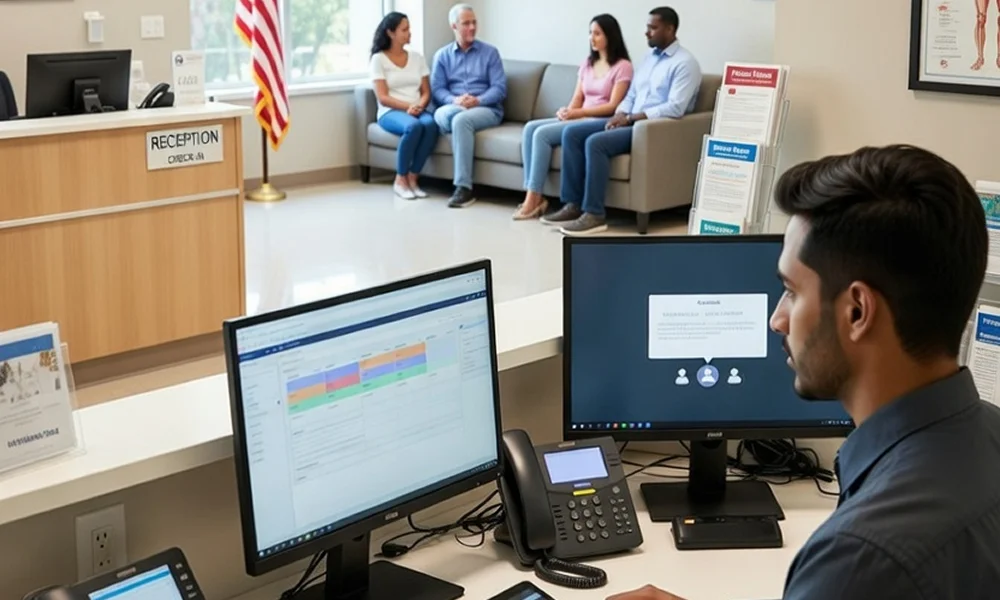
Communication is the foundation of engagement. Yet many healthcare organizations still rely on fragmented systems—one platform for calls, another for text messages, another for portals, and another for email. This disjointed approach creates confusion and missed opportunities.
An omnichannel communication model integrates all channels into a coordinated experience. Instead of sending disconnected messages, organizations deliver consistent communication across phone, SMS, email, mobile apps, portals, and even mail when needed.
Meet Patients Where They Are
Different populations prefer different channels. Younger patients may prefer text messages or app notifications. Older populations may still value phone calls. Busy professionals may respond best to email reminders during work hours.
Effective patient engagement techniques allow patients to choose their preferred channel. This personalization significantly improves response rates and satisfaction.
Examples That Work in 2026
Forward-thinking organizations unify outreach for appointment reminders, recall campaigns, preventive screenings, billing notifications, and educational content. Messages are coordinated so that if a patient does not respond via one channel, follow-up occurs through another automatically.
This layered communication reduces no-shows, increases preventive care completion, and strengthens continuity.
Practical Steps
Centralizing contact data is critical. Organizations must standardize templates, establish channel preference rules, and enable two-way communication. Two-way messaging is particularly important because engagement requires dialogue, not just broadcasting information.
Omnichannel patient communication remains one of the most impactful patient engagement initiatives for 2026.
Strategy 2 – Make Self-Service Access Effortless
Convenience plays a major role in engagement. If access to care is complicated, patients disengage before clinical care even begins.
Online Scheduling and the Digital Front Door
The digital front door is often a patient’s first impression. Offering 24/7 self-scheduling allows patients to book appointments without waiting on hold or calling during business hours. Rescheduling and waitlist options further improve flexibility.
Self-service scheduling is now considered a core digital patient engagement strategy rather than a premium feature.
Self-Service for Routine Tasks
Beyond scheduling, self-service tools can support digital check-in, insurance updates, payments, prescription refill requests, and form completion. When routine administrative tasks move online, staff can focus on more complex patient needs.
Patients benefit from faster service and greater autonomy.
Reducing Friction Across the Journey
Every additional click, unclear instruction, or technical barrier reduces engagement. Designing patient engagement methods that mirror consumer apps, simple interfaces, mobile-first layouts, and clear next steps encourages completion.
Reducing friction increases both satisfaction and operational efficiency.
Strategy 3 – Use Personalized, Condition-Specific Education

Education is most effective when it is timely and relevant. Generic brochures or long PDFs rarely change behavior.
Contextual Education Tied to Diagnosis and Stage
When educational content is linked to diagnosis codes, risk scores, or care plans within the EHR, it becomes significantly more relevant. For example, a newly diagnosed diabetic patient should receive foundational education, while a long-term patient might receive advanced management tips.
Personalization is a defining characteristic of modern patient engagement approaches.
Formats That Drive Engagement
Short videos, interactive tools, brief text messages, and culturally adapted materials are far more engaging than dense written documents. Bite-sized content respects patient time while reinforcing key messages.
Multilingual content also ensures inclusivity and broader reach.
Measuring Impact
Tracking click-through rates, content completion, and follow-up appointment adherence helps organizations assess effectiveness. Over time, education engagement can be correlated with improved health indicators.
Personalized education strengthens digital engagement while improving clinical outcomes.
Strategy 4 – Implement Shared Decision-Making at Scale
Shared decision-making (SDM) is one of the most evidence-backed engagement strategies in existence, yet it remains one of the most inconsistently practiced. The gap is not a lack of clinical will — it is a lack of structure. Without embedded tools and repeatable workflows, SDM depends entirely on individual provider habits, and those habits vary enormously between clinicians, appointment types, and patient populations.
What Shared Decision-Making Actually Means in Practice
SDM is not simply explaining a diagnosis or asking “do you have any questions?” at the end of a visit. It is a structured conversation in which the clinician presents the clinical options, explains the evidence and tradeoffs in plain language, and then explicitly explores what matters most to the patient — their values, daily life, risk tolerance, and personal circumstances — before arriving at a decision together.
For a patient with early-stage hypertension, SDM means not just prescribing a first-line medication, but discussing the choice between lifestyle modification alone versus pharmacotherapy, explaining what the evidence shows about each path, and asking whether the patient has concerns about daily medication, side effects, or cost that should influence the approach. The decision reached after that conversation is more likely to be followed because the patient helped make it.
Why Low-SDM Practices Lose Patients and Revenue
When patients feel that decisions were made for them rather than with them, two things happen. First, adherence drops — research consistently shows that patients who participate in treatment decisions are significantly more likely to follow through. Second, trust erodes. In competitive markets, that trust gap translates directly into attrition, negative reviews, and care-seeking elsewhere.
A 2023 analysis published in JAMA Network Open found that patients who reported poor shared decision-making experiences were nearly twice as likely to seek care from a different provider within 12 months. For a clinic running on thin margins and high patient acquisition costs, that is a retention problem with a financial consequence.
How to Embed SDM into Clinical Workflows Without Extending Visit Times
The most common objection to SDM is time. Clinicians operating under 15-minute appointment constraints worry that structured shared decision-making adds friction to already compressed visits. The evidence does not support this concern when SDM is properly designed — but it does require infrastructure.
Step 1: Deploying Pre-Visit Decision Aids:
Decision aids are brief, evidence-based tools — typically a 2–3 page document, short video, or interactive web module — that explain a clinical condition, the available options, and the relevant tradeoffs in plain language. Patients who review a decision aid before the appointment arrive already oriented to the choices. The clinical conversation can then focus on preference elicitation rather than basic explanation, which actually shortens the visit rather than lengthening it.
The Ottawa Patient Decision Aids Library and the Agency for Healthcare Research and Quality both offer free, vetted decision aids for over 500 clinical topics. These can be delivered via the patient portal, embedded in appointment confirmation emails, or sent as a text link 24–48 hours before the visit.
Step 2: Add SDM Prompt to the EHR Visit Template:
A simple structured field — “Patient preferences discussed: Y/N | Key concern identified:” — prompts clinicians to document the conversation and creates accountability. Organizations using Epic, Cerner, or Athena can add this as a SmartPhrase or visit template element in a single afternoon.
Step 3: Brief Communication Skills Training:
The core SDM technique requires three questions, originally developed by researchers at Dartmouth: “What matters most to you?”, “What are you most concerned about?”, and “What are you willing to try?” Training a care team to integrate these three questions takes less than two hours and can be delivered as a lunch-and-learn. Organizations that have standardized this report clinician adoption rates above 70% within three months.
Strategy 5 – Leverage Telehealth and Remote Monitoring Thoughtfully
Telehealth adoption accelerated sharply during 2020–2022, but many organizations deployed it reactively — as an emergency substitution for in-person care rather than as a deliberate access strategy.
The result is that a significant portion of practices now have telehealth infrastructure that is underutilized, poorly integrated with clinical workflows, or positioned as a second-tier option rather than a designed care pathway.
In 2026, the practices deriving the most value from telehealth are those that have made two strategic decisions: which appointment types are genuinely appropriate for virtual delivery, and how to connect the technology to human clinical oversight in a way that patients actually experience as supportive rather than impersonal.
Identifying the Right Appointment Types for Virtual Delivery
Not all care translates well to video. The most effective telehealth deployments start with explicit clinical criteria for what can and cannot be done virtually. As a general framework:
Appropriate for telehealth: follow-up visits for stable chronic conditions, medication management check-ins, behavioral health sessions, post-discharge follow-ups, care plan reviews, lab result discussions, and low-acuity urgent care (rashes, sinus symptoms, UTIs with typical presentation).
Require in-person: new patient physical exams, procedures, visits requiring diagnostic equipment (auscultation, palpation, imaging), and any presentation where a physical exam finding would change the clinical decision.
Practices that define these criteria explicitly and reflect them in their scheduling templates see higher virtual visit completion rates because patients are matched to the right modality from the start.
Trying to conduct a visit virtually when it requires an in-person component frustrates both patients and clinicians and erodes trust in the channel.
Remote Patient Monitoring: What Works and What Stalls
Remote patient monitoring (RPM) generates real clinical value when two conditions are met: the data being captured is actionable, and there is a human being designated to act on it.
The most validated RPM use cases are blood pressure monitoring in hypertension, continuous glucose monitoring in diabetes, weight monitoring in heart failure, and oxygen saturation monitoring in COPD.
Devices in these categories transmit data that directly correlates with deterioration risk and that has established clinical thresholds for intervention.
Where RPM programs fail is when data is collected but no one has a defined responsibility to review it and respond. Patients who submit blood pressure readings into a portal and never receive feedback quickly stop submitting. The device becomes shelf ware and the program loses its value within 90 days.
The standard that works is a tiered alert protocol embedded in a care coordinator’s workflow. Normal readings are acknowledged with an automated weekly summary sent to the patient. Readings outside the target range generate a care coordinator notification within 24 hours and trigger a check-in call.
Critically abnormal readings generate a same-day clinical alert. This structure makes the data loop feel closed from the patient’s perspective — they see that someone is watching, which is the primary behavioral driver of continued engagement.
Designing Telehealth for the Populations That Need It Most
The groups who benefit most from telehealth are often the groups with the greatest structural barriers to adoption: elderly patients with limited digital literacy, patients without reliable broadband access, and patients managing multiple conditions who face significant transportation burdens.
Meeting these populations with telehealth requires deliberate onboarding, not an assumption that video visit instructions sent via email are sufficient. Effective programs include: a scheduled technology orientation before the first virtual visit (conducted by phone, which requires no technology), plain-language written instructions mailed to patients without portal access, and a phone-visit option for patients who cannot reliably access video.
For rural populations, partnering with local libraries, community health workers, or senior centers to provide access points for video visits has demonstrated measurable improvements in visit completion rates. The technology is not the barrier — access to a device and a connection often is.
Strategy 6 – Design Proactive, Data-Driven Outreach Campaigns

Reactive care increases cost and risk. Proactive outreach prevents complications.
Using analytics to identify gaps in care allows organizations to target patients who need preventive screenings, vaccinations, or chronic disease management visits. Segmenting populations by risk level or behavioral patterns improves efficiency.
For example, patients overdue for colorectal screening can receive automated reminders with direct scheduling links. Those who do not respond may receive follow-up calls from staff.
Closing the loop by tracking appointments booked and care gaps resolved ensures campaigns drive measurable impact.
Proactive patient engagement plans convert data insights into tangible results.
Strategy 7 – Turn Patient Feedback into Continuous Improvement
Engagement requires listening. Always-on feedback systems capture insights from post-visit surveys, quick digital polls, and unsolicited comments.
Analyzing feedback identifies recurring friction points such as long wait times, unclear instructions, or technical barriers in digital tools.
When organizations communicate changes through “You said, we did” messaging, patients see that their voices matter. This transparency builds trust and encourages ongoing participation.
Feedback-driven improvement is one of the most sustainable patient engagement best practices.
Strategy 8 – Support Medication Adherence with Smart Reminders and Coaching
Medication non-adherence is the most quantified engagement failure in healthcare. Estimates consistently place the cost of non-adherence in the United States above $500 billion annually in avoidable hospitalizations, emergency visits, and disease progression. Across chronic disease categories — hypertension, diabetes, asthma, HIV, depression — adherence rates hover between 50–60% at the 12-month mark. Half of patients on long-term medications are not taking them as prescribed.
The response most clinics deploy is a reminder. Reminders help, but they address only one of several distinct reasons why patients do not adhere. A strategy that treats non-adherence as a forgetfulness problem will miss the majority of the patients who need help.
The Five Drivers of Non-Adherence (and Why Each Needs a Different Response)
Before designing an adherence support program, it is essential to understand why patients stop or never start taking their medications. The World Health Organization’s adherence framework identifies five categories:
Forgetfulness and routine disruption
The patient intends to take the medication but simply forgets, particularly for medications taken multiple times per day or outside of an established daily routine. Reminders directly address this group.
Side effects and tolerability concerns
The patient experiences unpleasant side effects and stops without telling the provider, often because they do not know an alternative exists or feel embarrassed to report the problem. This requires a communication channel, not just a reminder.
Belief and trust barriers
The patient does not believe the medication is necessary, has concerns about long-term use, or received conflicting information from family, social media, or prior providers. This requires education and conversation, not automation.
Cost and access barriers
The patient cannot afford the medication, cannot get to the pharmacy, or cannot navigate prior authorization. This requires care coordination and financial navigation support.
Complexity and regimen burden
The patient is managing multiple medications with different schedules, food requirements, and storage needs. Simplification of the regimen, not just reminders, is the solution.
An effective adherence strategy identifies which driver is operating for which patient segments and deploys the appropriate response. A single reminder-blast campaign deployed across all five groups will have partial effectiveness at best.
Tactic 1: Deploy Adherence-Specific Check-In Sequences, Not Just Dose Reminders
Most EHR-adjacent messaging platforms can send automated check-in messages at defined intervals after a new prescription is written — for example, at 3 days, 10 days, and 30 days. These messages should not only confirm whether the patient is taking the medication but ask a single, specific question designed to surface problems early.
At day 3: “Have you been able to pick up and start your new prescription? Reply YES or NO.” A NO response routes to a same-day callback from a nurse or pharmacist.
At day 10: “Are you experiencing any side effects or concerns with your medication? Reply YES to speak with a nurse.” This creates a low-friction channel for patients to report tolerability problems before they stop entirely.
At day 30: “Have you been able to refill your prescription? Reply YES or NO.” A NO triggers pharmacy navigation support or a refill reminder.
This sequence transforms adherence outreach from broadcasting into dialogue, which is the core difference between compliance management and engagement.
Tactic 2: Integrate Pharmacy Data for Refill Gap Detection
For practices using population health platforms or working within an integrated health system, pharmacy refill data is the most reliable behavioral signal for non-adherence. A patient who does not refill a 30-day supply within 45 days has effectively stopped. Identifying this gap from claims or pharmacy data and triggering an outreach call within 72 hours of the missed refill is consistently more effective than any prospective reminder.
Platforms like Surescripts, Allscripts, or integrated EHR pharmacy networks provide this data feed. For independent practices, a manual approach — generating a monthly report of patients with chronic disease diagnoses who have not had a refill encounter in 60+ days — approximates the same result with less automation.
Tactic 3: Layer Human Coaching for High-Risk Patients
For patients with complex regimens, recent hospitalization, multiple chronic conditions, or documented history of poor adherence, automation alone is insufficient. A brief pharmacist or nurse coaching call — 10 to 15 minutes, structured around motivational interviewing principles — has demonstrated the strongest evidence base for improving long-term adherence in this population.
The call should not be a lecture about why the medication is important. It should open with curiosity: “How has it been going with your medications since your last visit? Has anything been getting in the way?” The clinician’s role is to listen, identify the specific barrier, and problem-solve collaboratively — whether that means switching to a once-daily formulation, connecting the patient with financial assistance, or simply validating that a reported side effect is manageable and common.
A program at a large federally qualified health center that deployed monthly pharmacist adherence calls for high-risk diabetic patients documented a 19-point improvement in the percentage of patients with HbA1c at goal over 18 months. The call took an average of 12 minutes. The cost per call was less than a single emergency department visit.
Strategy 9 – Address Equity, Language, and Accessibility
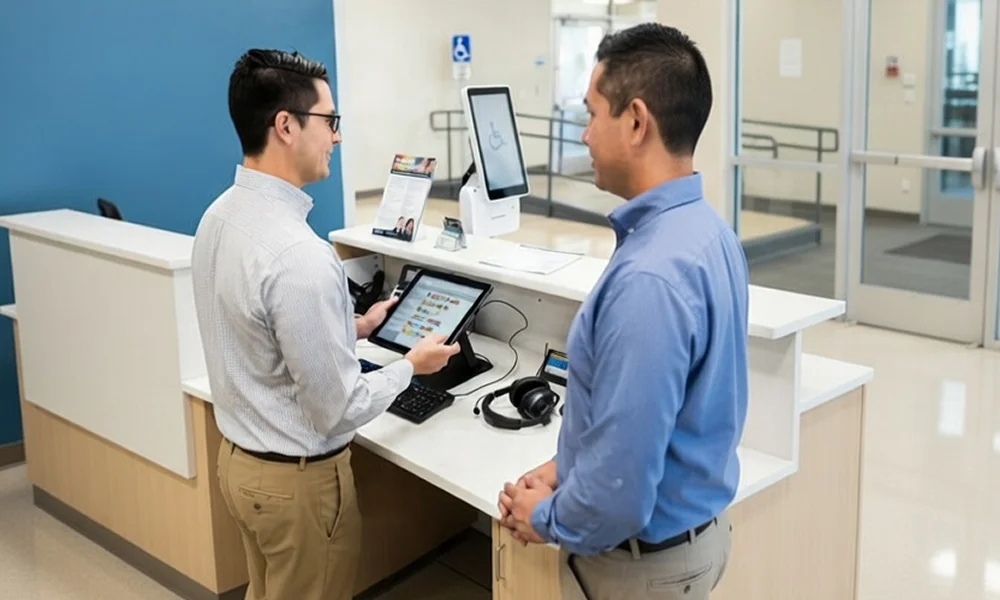
True engagement must reach all populations.
Providing multilingual communication, low-literacy content, and accessible digital interfaces ensures broader participation. Accessibility features such as screen-reader compatibility or adjustable text sizes improve usability.
Understanding social determinants of health—such as transportation barriers or work schedules—allows organizations to tailor messaging and support.
Measuring engagement rates across demographics helps identify gaps. Adjusting strategies to reduce disparities strengthens both equity and outcomes.
Inclusive patient engagement initiatives build trust within diverse communities.
Strategy 10 – Use AI and Automation to Scale Engagement
Artificial intelligence is transforming patient communication and digital engagement.
AI assistants and chatbots can answer questions, schedule appointments, route requests, and provide education around the clock. Automation handles repetitive tasks, freeing staff for higher-value interactions.
However, governance is essential. Clear escalation protocols, transparency about AI use, and ongoing quality monitoring protect trust.
When implemented responsibly, AI enhances, not replaces, human connection.
How to Choose the Right Patient Engagement Tools
Technology should support strategy, not define it. Organizations must align tools with population needs and clinical goals.
Integration with EHR systems, CRM platforms, and analytics dashboards is critical. Disconnected systems undermine engagement efforts.
When evaluating vendors, leaders should ask about measurable outcomes, interoperability, data security, and long-term roadmap alignment. Sustainable patient engagement plans require scalable technology foundations.
How Should Clinics Measure Patient Engagement
Engagement efforts must translate into measurable results.
Engagement metrics include portal usage rates, two-way messaging frequency, response times, and satisfaction scores. Clinical metrics include medication adherence, screening completion, and hospitalization rates.
Operational and financial indicators such as reduced no-shows, improved staff productivity, and increased revenue from closed care gaps demonstrate business impact.
A balanced scorecard ensures patient engagement strategies drive both quality and sustainability.
Conclusion
The future of healthcare depends on meaningful engagement. The most effective patient engagement strategies combine digital tools with human empathy, analytics with personalization, and automation with accountability.
Organizations should begin with a few high-impact patient engagement ideas for clinics, such as omnichannel reminders, self-scheduling, or proactive outreach, measure performance carefully, and iterate over time.
In 2026, engagement is no longer an initiative. It is the foundation of better outcomes, lower costs, stronger retention, and more resilient healthcare systems.
FAQs
What is the most important patient engagement strategy for 2026?
Omnichannel communication, reaching patients on their preferred channel with simple, two-way messaging.
How can small practices improve patient engagement with a limited budget?
Use low-cost tools like online scheduling, SMS reminders, and basic follow-up messages.
What role does AI play in patient engagement now?
AI automates reminders, answers common questions, and helps schedule appointments, saving staff time.
How do I know if my engagement strategy is working?
Check no-shows, response rates, portal usage, and patient satisfaction trends.