

Key Takeaways
-
1Automatic language detection: Bilingual AI receptionists detect language in real-time, eliminating the need for menu options like “Press 1 for English.”
-
2Code-switching handled smoothly: The AI tracks context across language switches, ensuring the conversation flows naturally without repetition or confusion.
-
3Three core technologies: Automatic Speech Recognition, Natural Language Understanding, and Text-to-Speech work together to accurately handle accents and healthcare terminology.
-
4Full-call management: AI receptionists handle everything from greetings to booking appointments and routing calls in the patient’s preferred language, with no human intervention for routine tasks.
-
5Scalability advantage: AI systems handle unlimited multilingual calls 24/7, overcoming the limitations of human bilingual staff during peak times or off-hours.
In today’s global marketplace, language barriers are more than just a minor inconvenience, they’re a revenue leak. Every unanswered question or misunderstood request on the phone can cost leads, bookings, and, most importantly, trust.
Businesses operating in multilingual markets risk losing opportunities if they rely solely on monolingual staff or outdated call systems.
Enter bilingual AI receptionists. These cutting-edge systems bridge language gaps by handling entire conversations in multiple languages, 24/7.
Unlike traditional bilingual answering services or basic IVRs, these AI-driven tools can detect, switch, and respond seamlessly in a variety of languages, creating a smooth experience for callers and a more efficient workflow for businesses.
This guide explores how bilingual virtual receptionists work, including automatic language detection, real-time language switching, context maintenance, integration with business systems, and best practices for implementing a multilingual AI receptionist.
Whether you’re considering AI bilingual answering for your clinic, service business, or enterprise call center, this post covers everything you need to know.
Table of Contents
What Is a Bilingual AI Receptionist?
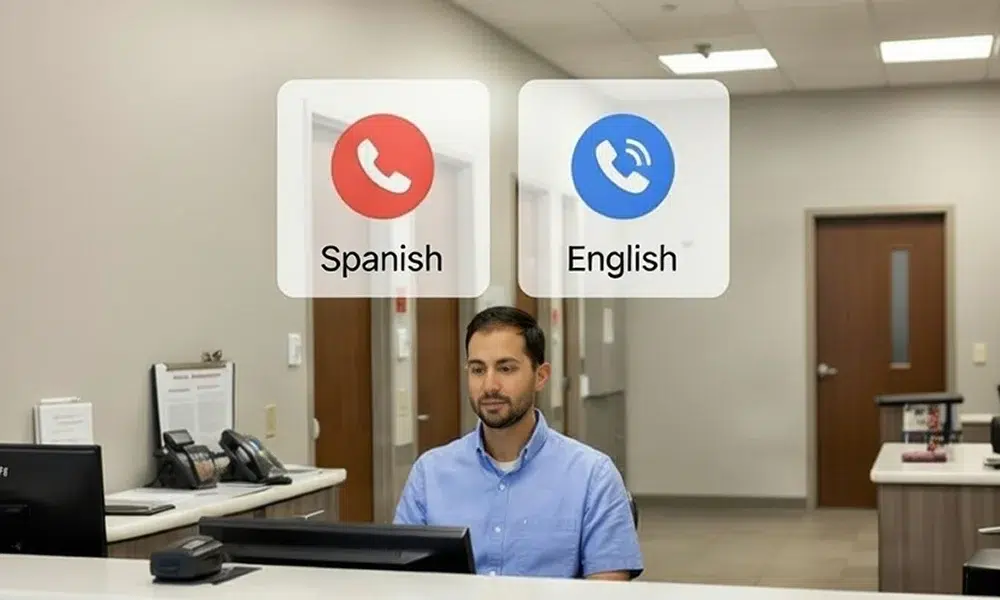
A bilingual AI receptionist is an advanced conversational system capable of understanding and responding to callers in more than one language.
Unlike traditional bilingual answering services, which rely on human operators or scripted IVR menus (“Press 1 for English, Press 2 for Spanish”), modern AI receptionists can:
- Detect the caller’s language automatically
- Respond naturally using speech synthesis and natural language understanding
- Maintain conversation context across multiple turns
- Escalate complex queries to human staff when necessary
Today’s AI receptionists aren’t just virtual operators—they are intelligent call managers capable of performing tasks that previously required a team of multilingual staff.
From scheduling appointments in Spanish English AI receptionist setups to capturing leads in multiple languages, the AI can handle end-to-end call processes, all while logging interactions in your preferred CRM.
Core Mechanics: How Multilingual Calls Are Actually Handled
Automatic Language Detection
The first step in AI bilingual answering is determining the caller’s language. Modern systems analyze audio in real time, detecting accents, phonetics, and sentence structure. This removes the need for cumbersome menus like “Press 2 for Spanish,” allowing callers to engage naturally.
Automatic detection is particularly powerful for businesses with unpredictable call patterns. Whether your customers speak English, Spanish, French, or any other supported language, a bilingual AI phone agent can identify the language almost instantly, enabling smooth conversation from the first word.
Real-Time Language Switching
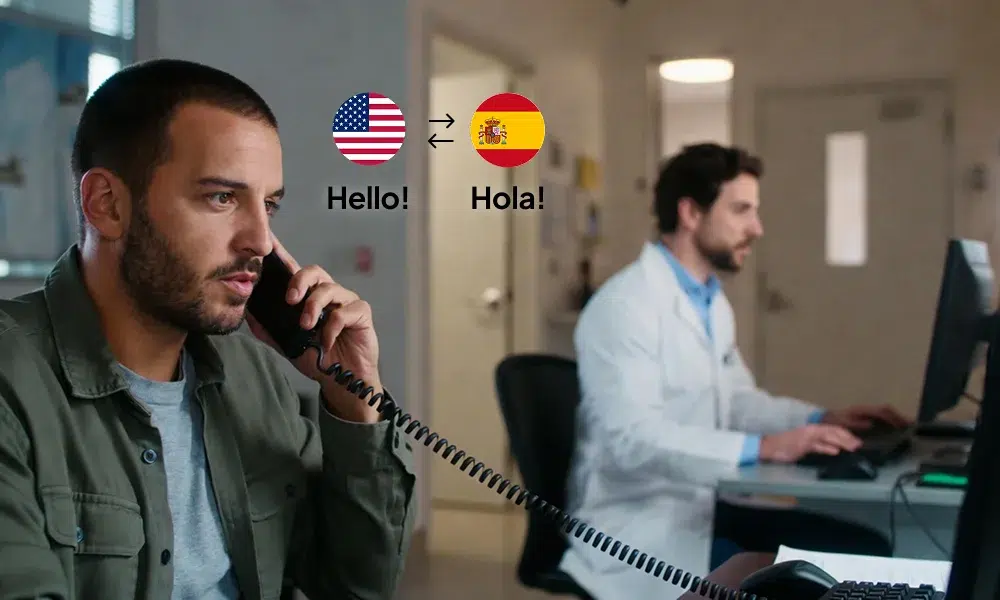
Not all conversations stay in one language. Code-switching—where a caller alternates between languages—is common in bilingual markets. Advanced bilingual AI call handling accounts for this by:
- Locking in the primary detected language
- Dynamically switching when the caller changes languages
- Maintaining context across switches to prevent repetition or confusion.
This makes the experience feel natural, similar to speaking with a multilingual human receptionist. Businesses benefit because fewer calls require escalation purely due to language mismatches.
Understanding and Responding in Multiple Languages
To function effectively, a multilingual AI receptionist relies on three core technologies:
- Automatic Speech Recognition (ASR): Converts spoken words into text
- Natural Language Understanding (NLU): Determines the caller’s intent and context
- Text-to-Speech (TTS): Converts responses back into spoken language
While most major languages sound fluent, some less common or highly tonal languages may require additional tuning to achieve naturalness. Still, AI continues to improve, providing reliable, scalable AI bilingual answering for the majority of business calls.
What Bilingual AI Receptionists Do on a Typical Call

End-to-End Call Flow in Two Languages
A bilingual virtual receptionist can handle calls from greeting to resolution without human intervention. Here’s a typical call flow in English and Spanish:
- Greeting: “Hello, thank you for calling. ¿Cómo puedo ayudarle hoy?”
- Intent Discovery: Asking questions to understand the caller’s needs
- Clarifying Questions: Ensuring the AI has all details before executing tasks
- Confirmation: Summarizing actions and verifying information
Common tasks include scheduling appointments, providing FAQs, capturing leads, and routing callers to appropriate departments—all in the caller’s preferred language.
Tasks Beyond Basic Answering
Bilingual AI phone agents go beyond answering questions. They can:
- Book appointments and send confirmations in the caller’s language
- Update staff with internal notes in a consistent language (like English)
- Integrate seamlessly with CRM or calendar systems to log interactions
This ensures that both customers and employees enjoy smooth communication, regardless of language.
Multilingual Call Logic: From “Hola” to CRM Note
Step-by-Step Example Call
Imagine a Spanish-speaking caller reaching out to book a consultation:
- AI greets: “Hola, gracias por llamar. ¿En qué puedo ayudarle hoy?”
- Caller explains the reason for the call
- AI asks clarifying questions: “¿Prefiere una cita por la mañana o por la tarde?”
- AI confirms the appointment and logs details in English for staff
In a parallel scenario with a French-speaking caller, the logic remains the same, illustrating that AI bilingual call handling is consistent and scalable across languages.
How Context Is Maintained Across Turns
A bilingual AI call agent maintains session memory: names, issues, preferred times, and other key details persist throughout the conversation. This avoids repetition, prevents miscommunication, and ensures a professional caller experience.
Language Coverage: Bilingual vs Truly Multilingual
Popular Language Combinations
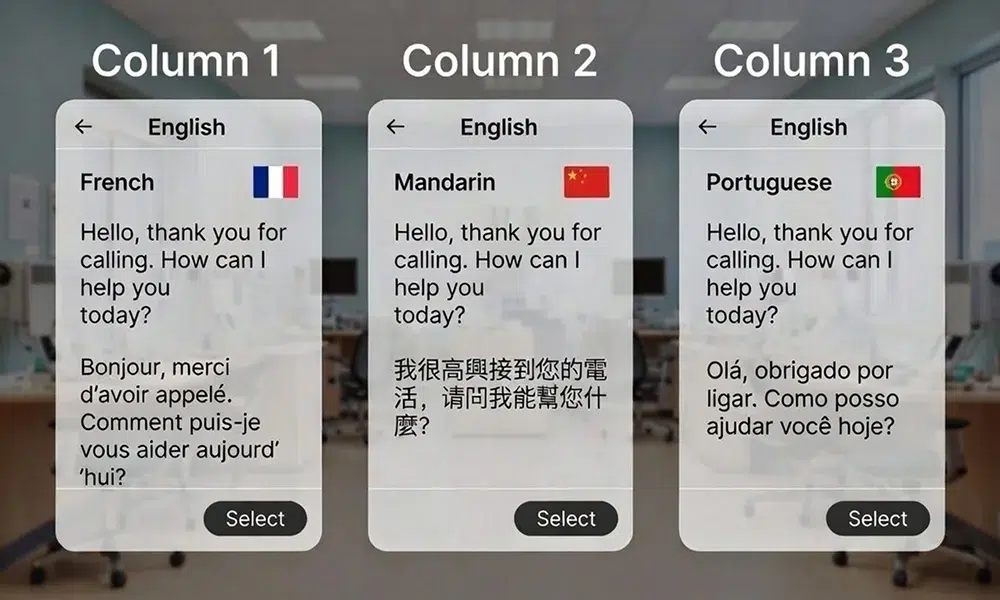
The most common setup is English + Spanish AI receptionist, but leading platforms increasingly support multiple combinations:
- English + French
- English + Mandarin
- English + Portuguese
Businesses can choose the setup that best aligns with their customer base.
Quality Differences by Language
High-traffic languages like English and Spanish typically deliver near-human fluency in AI conversations, while other languages may work well for basic tasks but still need human follow-up for nuanced interactions.
Understanding these differences is essential when implementing bilingual AI call handling to ensure accuracy, clarity, and a consistent patient experience.
How Bilingual AI Receptionists Integrate with Your Stack
Phone System and Routing
Integration is straightforward: the bilingual AI phone agent can be the first touchpoint or an overflow solution. You can forward numbers, configure call flows, and determine which calls the AI handles versus human staff.
Calendars, CRMs, and Practice Management Systems
AI receptionists log every interaction—regardless of language—into your CRM or EHR. This ensures that workflows, follow-ups, and internal reporting remain accurate, whether the call was in English, Spanish, or another supported language.
Training and Tuning for Multilingual Performance
Multilingual Knowledge Base Setup
Building a knowledge base in both primary and secondary languages ensures consistency. It’s important to localize rather than just translate, accounting for cultural nuances in phrasing, idioms, and formality.
Bilingual Prompt Design
Bilingual prompt design involves crafting instructions for the AI about:
- Supported languages and switching rules
- Escalation guidelines for complex or sensitive topics
Well-designed prompts improve the AI’s fluency and decision-making across languages.
Reviewing Transcripts to Improve Language Quality

Regularly auditing transcripts in all supported languages helps refine vocabulary, tone, and escalation thresholds. This continuous improvement cycle ensures your bilingual AI receptionists deliver a high-quality experience consistently.
AI vs Bilingual Staff: Operational and Cost Impact
Side-by-Side Comparison
| Feature | AI Receptionist | Human Staff |
| Coverage | 24/7 | Limited by shifts |
| Cost | Lower at scale | High (training, salary) |
| Training | Initial setup + tuning | Continuous training |
| Scalability | Easily scalable | Limited by workforce |
AI excels in high-volume, routine multilingual calls, while humans remain essential for complex, nuanced, or sensitive interactions.
When Hybrid Models Win
A hybrid model uses AI for routine calls while humans step in for:
- VIP clients
- Emergencies
- Highly technical or legal queries
This approach maximizes efficiency and customer satisfaction.
Common Multilingual Scenarios (With Call Examples)
- After-Hours Emergencies: AI handles basic triage in Spanish, escalating to staff if needed
- New Patient Intake: Full Spanish conversation, English internal notes for staff
- FAQ-Focused Calls: AI answers common questions in multiple languages without human intervention
Limitations and Risks in Multilingual Call Handling
Challenges include:
- Accents and dialects
- Highly technical or legal topics
- Misunderstandings in low-resource languages
Mitigation strategies: conservative escalation rules, clear disclaimers, and seamless human fallback.
Implementation Checklist: Launching a Bilingual AI Receptionist
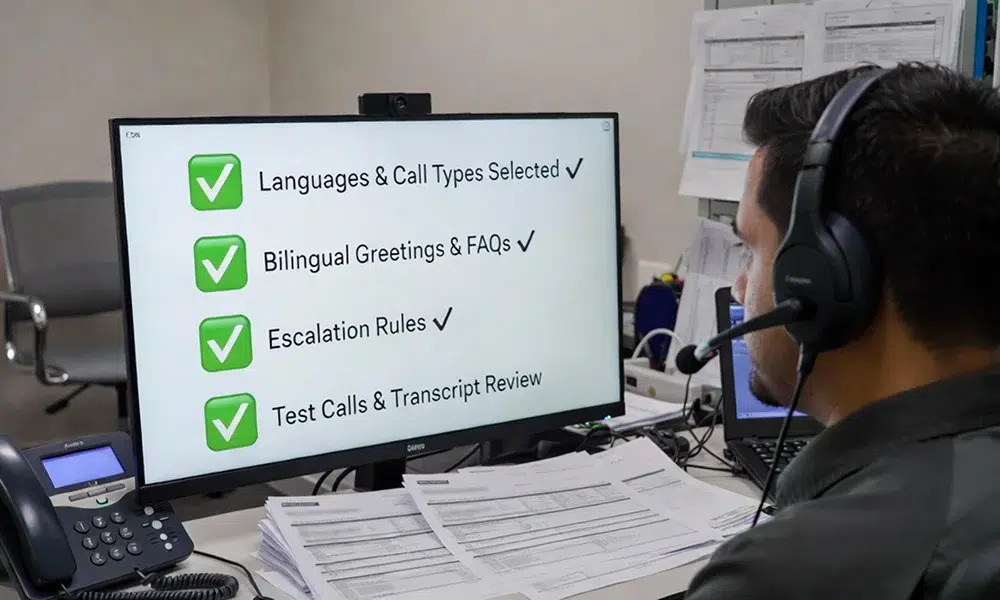
- Choose languages and call types for AI
- Prepare bilingual greetings, FAQs, and policies
- Configure escalation rules for any language
- Run test calls, review transcripts, and iterate
Following this checklist ensures a smooth launch and maximizes ROI.
Metrics That Prove Multilingual Value
Track metrics such as:
- Non-English answer rate
- Conversion rate by language
- After-hours call capture
- Customer satisfaction feedback
These metrics demonstrate the tangible value of AI bilingual answering and guide ongoing optimization.
Conclusion
Bilingual AI receptionists eliminate language barriers, improve customer experience, and capture revenue that would otherwise be lost.
Start with one secondary language, monitor impact, and expand as needed. With the right setup, every multilingual call becomes an opportunity to grow your business and delight your customers.
Implementing a bilingual AI phone agent is no longer just a tech upgrade, it’s a strategic advantage in an increasingly multilingual world.
FAQs
Do I need separate phone numbers per language?
No. A single number can handle multiple languages with automatic detection.
Can AI speak in one language and send follow-ups in another?
Yes. Calls can be in the caller’s language, while notes or confirmations go in staff language.
How does it decide when to transfer to a human?
AI escalates for complex, sensitive, or emergency calls based on predefined rules.
Can it support more than two languages?
Yes. Most systems support multiple languages beyond just English and Spanish.
How natural does it sound in different languages?
Common languages like English and Spanish sound very natural; less common languages may require minor tuning.