
Key Takeaways
-
1Cancellations Signal Issues: Every cancellation reveals gaps in communication, scheduling friction, or attendance barriers the practice can address.
-
2Prevention Beats Recovery: Multi-touch reminders, clear cancellation policies at booking, and flexible scheduling prevent more cancellations than reactive recovery systems.
-
3Waitlists Recover Revenue: Clinics with maintained waitlists and automated slot-filling recapture most same-day cancellations quickly; without them, revenue is lost permanently.
-
4Habitual No-Shows Need Strategy: Patients who repeatedly cancel require personalized outreach, flexible scheduling, and sometimes deposit requirements beyond standard reminders.
-
5Cancellation Data Informs Operations: Tracking reasons, timing, and patient patterns uncovers inefficiencies, peak no-show periods, and high-risk segments for proactive adjustments.
No-shows and last-minute cancellations remain one of the most persistent operational and financial challenges for U.S. clinics.
To reduce no-show appointments, practices must recognize that every empty slot is more than a missed visit. It represents lost revenue, disrupted clinical flow, reduced access for other patients, and gaps in care continuity.
When patients fail to attend follow-up visits, preventive screenings, or chronic care check-ins, outcomes decline and provider efficiency suffers.
Across the United States, no-show rates typically range between 5% and 30%, depending on specialty, geography, and patient demographics. Even at the lower end, the financial impact is substantial.
If your average visit reimbursement is $200 and your clinic experiences five no-shows per week, that equals $1,000 in lost weekly revenue.
Over a year, that becomes $52,000 in preventable revenue loss. Multiply that across multiple providers and the effect becomes significant.
The true cost goes beyond immediate income. No-shows directly reduce patient lifetime value in healthcare because missed visits interrupt treatment plans, reduce follow-up adherence, and weaken long-term engagement.
When clinics calculate patient lifetime value, they rely on factors such as visit frequency, retention duration, and treatment completion rates. Frequent no-shows reduce each of these variables, weakening the overall patient lifetime value model.
Reducing no-show appointments is therefore both a clinical and financial priority. With the right combination of measurement, scheduling design, patient communication, and automation, clinics can significantly improve attendance while strengthening patient retention and lifetime value over time.
Table of Contents
Before You Start: Know Your No-Show Rate and Patterns
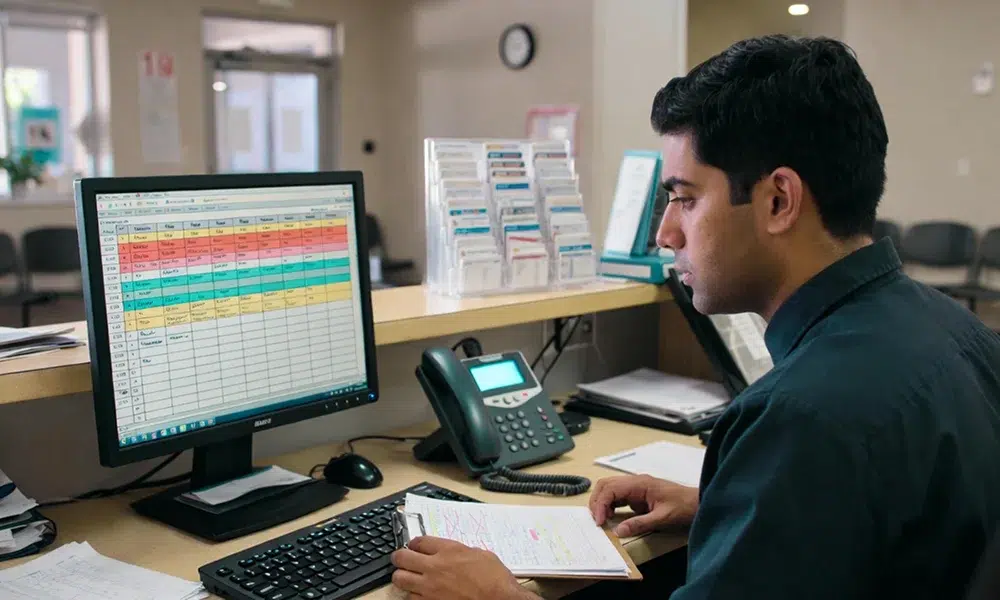
Before implementing solutions, clinics must understand their current performance. Many organizations assume their no-show rate is “around 10%” without tracking late cancellations separately or analyzing provider-specific trends. Without accurate data, interventions are guesswork.
To reduce no-show appointments consistently, measurement and pattern recognition must come first.
How to Calculate Your No-Show Rate
The formula for calculating the no-show rate is straightforward:
No-show rate = (No-shows + Late Cancellations) ÷ Total Scheduled Appointments
Clinics that track this monthly are better positioned to reduce no-show appointments through targeted operational changes.
If a clinic had 50 scheduled appointments in a day and 5 of those resulted in no-shows or last-minute cancellations, the no-show rate would be 10 percent.
Tracking this monthly and quarterly allows clinics to identify trends. It is also useful to segment data by provider, appointment type, payer, day of the week, and lead time between booking and visit.
This metric connects directly to patient lifetime value metrics. When clinics calculate patient lifetime value, they typically consider average revenue per visit, average visits per year, and average retention length.
Missed appointments reduce visit frequency and shorten retention duration, ultimately lowering projected lifetime revenue. Consistently high no-show rates can distort a patient lifetime value formula and weaken financial forecasting.
Why Benchmarks and Causes Matter
Industry benchmarks for no-show rates typically fall between 5 percent and 18 percent, though some specialties experience higher rates. While benchmarking provides context, the more valuable exercise is identifying underlying causes.
For example, appointments scheduled more than 15 days in advance may show significantly higher no-show rates than same-week visits.
Certain appointment types, such as follow-ups or routine preventive visits, may have higher cancellation rates compared to urgent visits. Late afternoon or Monday morning slots may also show patterns.
By analyzing these trends, clinics gain insight into patient cohort lifetime value differences. Some patient groups may require more reminders or easier scheduling access.
Others may need targeted engagement strategies. Understanding these nuances allows clinics to strengthen their patient lifetime value model while reducing operational inefficiencies.
10 Proven Ways to Reduce No-Show Appointments and Last-Minute Cancellations
The following strategies are proven operational steps clinics can implement to reduce no-show appointments while strengthening patient lifetime value.
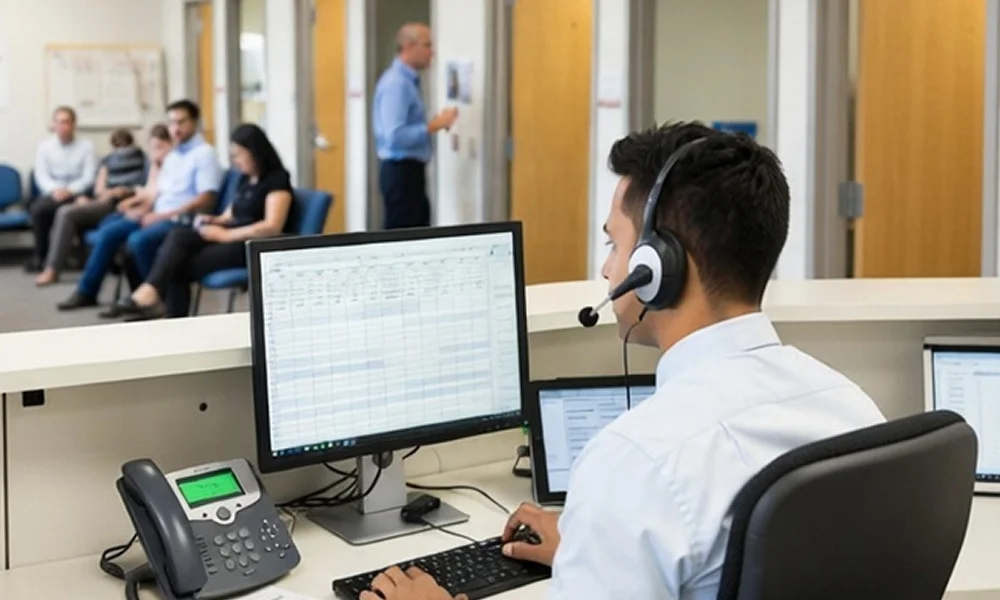
1. Use Multi-Channel, Automated Appointment Reminders
Automated reminders are one of the most effective and immediately deployable tools to reduce no-show appointments. Research shows that text message reminders alone can reduce missed visits by more than 14% in certain populations. Effectiveness increases further when multiple communication channels are layered together.
A proven reminder sequence looks like this: confirmation SMS at time of booking, email reminder 72 hours before the visit, SMS reminder 48 hours before, and a final same-day voice or text notification. Each reminder should include a one-tap confirmation, reschedule, or cancellation link to remove friction.
Before: A busy family medicine clinic with 3 providers was sending a single email reminder 24 hours before each appointment. Their no-show rate sat at 23%. Staff were spending 2–3 hours daily making manual reminder calls on top of the emails, yet the rate barely moved.
After: The clinic switched to an automated 3-touch sequence — SMS at booking, email at 72 hours, and SMS at 48 hours — with a one-tap confirmation link in each message. Within 60 days their no-show rate dropped from 23% to 11%.
With an average visit reimbursement of $180 and 30 appointments per day, that 12-point improvement recovered approximately $19,400 in monthly revenue that was previously being lost to empty slots.
Tactic you can implement today: Audit your current reminder setup. If you are sending only one reminder, or if your reminders do not include a direct rescheduling link, that is the single highest-ROI fix available to you right now. Most EHR and practice management systems have this capability built in — it simply needs to be activated and configured correctly.
2. Reduce the Time Between Booking and the Appointment
The longer the gap between when a patient books and when they are actually seen, the higher the probability of a no-show. Same-day appointments typically have no-show rates below 5%. Appointments booked 3 or more weeks out can see rates climb to 25–30% depending on the specialty and patient demographic.
When too much time passes, patients forget, feel better, lose motivation, find another provider, or simply deprioritize the visit. Redesigning your scheduling templates to allow same-day and next-day access for appropriate visit types is one of the most structurally impactful changes a clinic can make.
Before: A gastroenterology practice had a standard booking lead time of 18–21 days for follow-up appointments due to a backlogged schedule. Their no-show rate for follow-up visits was 29%. Clinicians were frustrated by the wasted slots and patients who had genuinely forgotten why they were coming in.
After: The practice redesigned their scheduling template to reserve 4 same-day and next-day slots per provider per day specifically for follow-up visits. They also introduced a pre-visit SMS at day 7 and day 3 before the appointment recapping the reason for the visit and what to bring.
No-show rates for follow-up appointments dropped from 29% to 13% over one quarter. Provider utilization improved and the average daily revenue per provider increased by $340.
Tactic you can implement today: Look at your current schedule and identify your highest no-show appointment type. Check the average lead time for those appointments.
If it exceeds 10 days, carve out even 2–3 shorter-lead slots per day for that appointment type and measure whether no-show rates improve within 30 days.
3. Offer Online Self-Scheduling and Easy Self-Cancellation
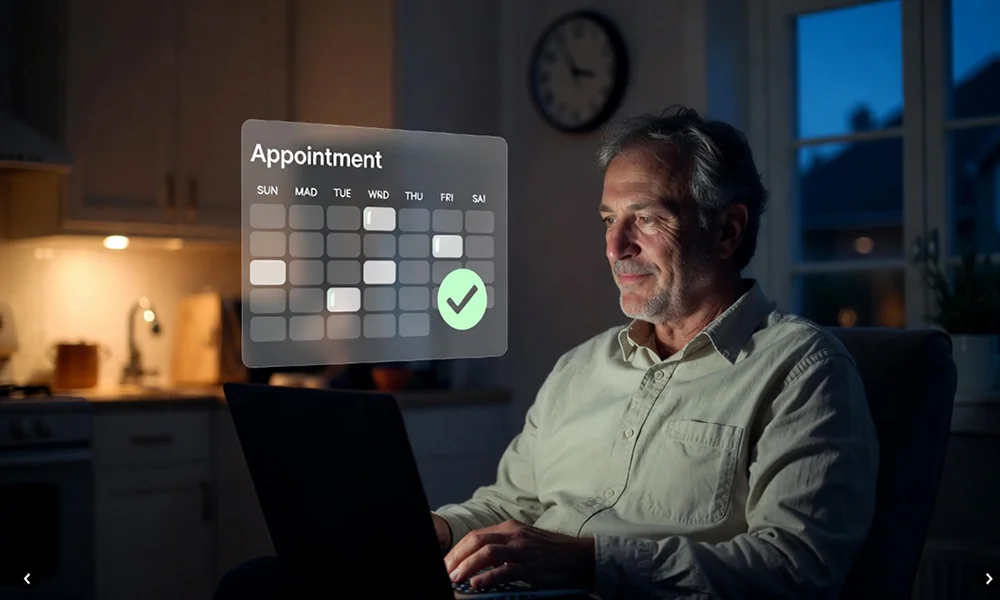
A significant driver of no-shows is the friction involved in cancelling or rescheduling. If a patient cannot attend and the only way to cancel is to call during business hours, wait on hold, and speak to a receptionist — many will simply not show up rather than go through that process. Making cancellation easy paradoxically reduces no-shows because it gives patients an alternative to ghosting.
Online self-scheduling with 24/7 access removes the most common access barrier — the inability to book outside office hours. Studies suggest that up to 40% of online bookings happen after 5pm, a window when most clinic phones are unmanned.
Before: A dermatology practice with 2 locations accepted bookings only by phone between 8am and 5pm. Their new patient no-show rate was 31% and their front desk was fielding over 80 calls per day. Patients frequently reported that they had tried to cancel but could not get through.
After: The practice introduced online self-scheduling with confirmation, reschedule, and cancellation links embedded in every reminder message. Within 90 days, new patient no-show rate dropped to 14%.
Front desk call volume dropped by 35%, freeing staff to focus on in-clinic experience. The practice also captured 22% more new patient bookings — appointments that were previously being lost to after-hours voicemails that never converted.
Tactic you can implement today: Add a reschedule and cancellation link to every appointment reminder you send today. Even if your full scheduling system is not yet online, a simple form or a direct call-back link dramatically reduces the friction that turns a would-be cancellation into a no-show.
4. Convert At-Risk Visits to Telehealth Instead of Losing Them
Many no-shows are not about disinterest — they are about logistics. Transportation challenges, childcare conflicts, work schedule constraints, bad weather, and physical mobility issues can all prevent a patient from making it in person even when they fully intend to attend. Telehealth offers a way to preserve the visit entirely rather than lose it.
Telehealth appointments consistently show lower no-show rates than in-person visits — in some studies as much as 50% lower — because the logistical barrier essentially disappears. A proactive offer to convert a difficult appointment to virtual before the patient cancels is far more effective than trying to reschedule after a no-show.
Before: A psychiatry practice in a rural area had a chronic no-show problem, with rates hovering around 34%. Exit interviews revealed that transportation was the primary barrier for over half of the patients who missed appointments. The practice had telehealth capability but was only offering it on request — most patients did not know to ask.
After: The practice introduced a proactive telehealth offer in their 48-hour reminder message: “Can’t make it in person? We can convert your appointment to a video visit — just reply YES and we’ll send you a link.”
In the first month, 18% of patients converted their appointment to telehealth rather than cancelling. Overall no-show rate dropped from 34% to 19% within one quarter. Annual revenue recovered from this single change was estimated at over $60,000.
Tactic you can implement today: Add a single line to your 48-hour reminder SMS: “Can’t make it in? Reply VIRTUAL and we’ll switch your visit to video.” This costs nothing to implement and can recover appointments that would otherwise be permanently lost.
5. Create a Clear, Fair No-Show and Late Cancellation Policy
A well-communicated no-show policy does two things simultaneously — it sets expectations that make patients more accountable, and it signals that your clinic values its time and the time of other patients waiting for appointments. The key word is communicated. A policy buried in a 4-page intake form no one reads will have zero impact on behavior.
The most effective policies are those communicated at booking, reinforced in reminders, and applied consistently but with built-in empathy for genuine emergencies.
Before: A physical therapy practice had a no-show policy in their intake paperwork but it was never verbally communicated, never mentioned in reminders, and never enforced.
Patients who no-showed repeatedly faced no consequence. The practice had a 27% no-show rate and a chronic waitlist of patients who could not get appointments because habitual no-showers were occupying slots.
After: The practice introduced a 3-step policy overhaul: the policy was verbally acknowledged at the first visit, included in every confirmation message, and a $35 fee was applied after the second no-show within 6 months with a one-time waiver for documented emergencies.
Staff were trained to communicate it warmly rather than punitively. No-show rate dropped from 27% to 12% within 4 months. Habitual no-showers either started showing up or self-selected out — freeing slots for patients who genuinely wanted care.
Tactic you can implement today: Add one sentence to your booking confirmation: “We kindly ask for 24 hours notice if you need to cancel or reschedule. This helps us accommodate other patients who need care.” No fee required at this stage — the act of acknowledging the policy alone improves accountability significantly.
6. Use an Automated Waitlist to Refill Cancellations Fast
Cancellations will always happen — the goal is to ensure that when they do, the slot does not stay empty. An automated waitlist system notifies patients who want earlier appointments the moment a slot opens up, turning a cancellation from a revenue loss into a revenue-neutral event.
Without a waitlist, a same-day cancellation almost always means an empty slot and lost revenue. With one, the same cancellation becomes an opportunity for a waitlisted patient and a scheduling win for the clinic.
Before: A cardiology practice was losing an average of 6–8 appointments per week to same-day cancellations with no system to fill them. Front desk staff would occasionally call patients on a handwritten waitlist but coverage was inconsistent and most slots stayed empty. At $320 average reimbursement per visit, that represented up to $2,560 in weekly lost revenue — over $130,000 annually.
After: The practice implemented an automated waitlist system that instantly notified the top 3 waitlisted patients via SMS the moment a cancellation was entered into the system. The first to respond secured the slot.
Within 6 weeks, slot fill rate on same-day cancellations improved from 15% to 74%. Weekly recovered revenue from cancelled slots averaged $1,890 — recovering over $98,000 annually that had previously been written off as unavoidable loss.
Tactic you can implement today: Start a manual waitlist this week. At the end of every booking call, ask: “Would you like to be added to our waitlist for an earlier appointment if one opens up?” Even a simple spreadsheet waitlist managed by one staff member will recover more revenue than having no system at all.
7. Address Fear, Confusion, and Social Barriers Proactively
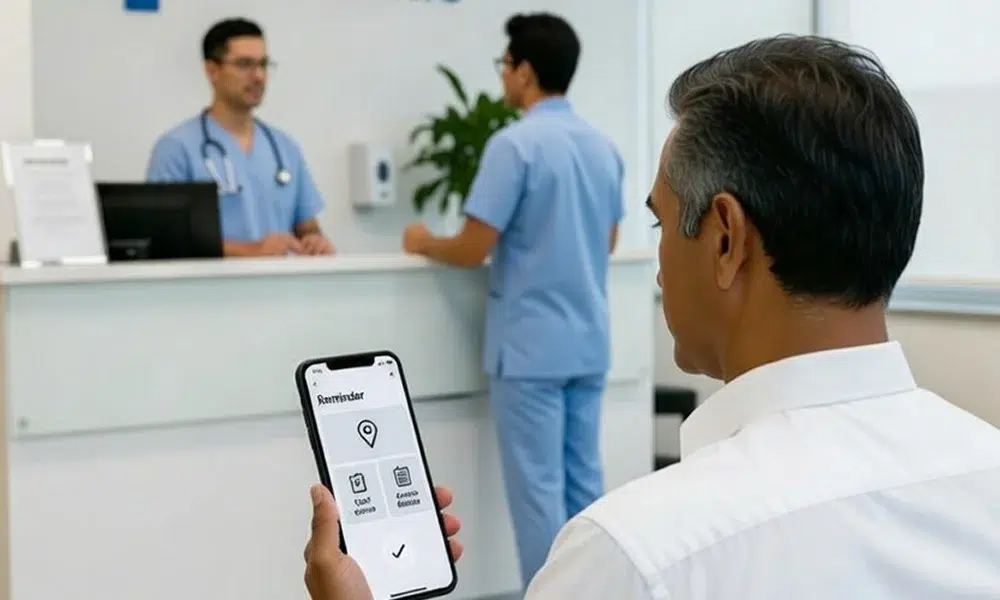
Not every no-show is a scheduling problem. A meaningful percentage of missed appointments — particularly in mental health, oncology, and chronic disease management — stem from fear, anxiety, shame, confusion about what the visit involves, or practical social barriers like language, cost, or transportation. These patients will not respond to more reminders because the problem is not forgetfulness.
Proactive pre-visit communication that addresses these emotional and logistical barriers can reach the patients that standard reminder systems miss entirely.
Before: A community health clinic serving a largely Spanish-speaking population had a 38% no-show rate for new patient appointments. Analysis revealed that most no-shows were first-generation immigrants with language barriers and fear of navigating an unfamiliar healthcare system. Standard English-language reminder SMS had no impact on this segment.
After: The clinic introduced bilingual reminder messages, a pre-visit “what to expect” video in Spanish, and a transportation assistance line communicated in the confirmation message. They also added a staff member who made a personal welcome call to all new patients 48 hours before their first visit.
New patient no-show rate for this demographic dropped from 38% to 16% within 3 months. Patient satisfaction scores for this group improved from 3.1 to 4.7 out of 5.
Tactic you can implement today: Review your last 20 no-shows and look for patterns beyond just appointment type. Were they new patients? A specific demographic?
A particular visit type like mental health or chronic disease management? The pattern will tell you whether you have a communication barrier that reminders alone will never solve.
8. Strengthen Relationships and Engagement Between Visits
Patients who feel a genuine connection to their provider and clinic are significantly less likely to cancel casually. When the relationship feels transactional — book, visit, pay, repeat — there is nothing stopping a patient from switching providers or simply drifting away. Engagement between visits creates a sense of continuity and accountability that reduces no-shows organically.
This does not require a large investment. A monthly health tip email, a birthday message, a follow-up call after a procedure, or a check-in SMS after a diagnosis all signal to patients that they are known and valued — not just a slot on a schedule.
Before: An internal medicine practice had zero between-visit communication with patients. No newsletters, no follow-up calls, no seasonal reminders.
Their chronic care patients — those with diabetes, hypertension, and obesity — had a 31% no-show rate for quarterly follow-up visits. Clinicians felt frustrated that patients were not taking their care seriously.
After: The practice introduced a quarterly health check-in email for all chronic care patients between visits, a personalized SMS 2 weeks before each follow-up appointment referencing their specific condition, and a post-visit summary email recapping what was discussed and what the next visit would cover.
No-show rate for chronic care follow-ups dropped from 31% to 13% over two quarters. HbA1c compliance among diabetic patients also improved — a clinical outcome directly linked to the engagement strategy.
Tactic you can implement today: Identify your 5 highest-no-show patient segments. For each one, create a single between-visit touchpoint — one email, one SMS, one call — that is personalized to their condition or visit history. Measure whether no-show rates for that segment change over the next 60 days.
9. Keep Wait Times Reasonable
In-clinic wait time is one of the most underappreciated drivers of future no-shows. Patients who experienced a 45-minute wait at their last visit are far less likely to prioritize attending their next one. The emotional calculus becomes: “Last time I waited almost an hour, so it probably won’t matter if I’m late or skip it.”
Tracking and actively reducing in-clinic wait times is therefore not just a patient experience initiative — it is a direct no-show prevention strategy.
Before: A pediatric clinic was averaging 38 minutes of in-clinic wait time due to overbooking and inefficient intake processes. Patient satisfaction surveys repeatedly flagged wait times as the top complaint. Their no-show rate for follow-up well-child visits was 24% — among the highest in their network.
After: The clinic redesigned their scheduling template to add 5-minute buffers between appointments and introduced digital pre-visit intake forms that patients completed at home before arriving. Average wait time dropped from 38 minutes to 11 minutes.
Over the following two quarters, no-show rate for well-child follow-ups dropped from 24% to 10% — without any change to their reminder system. Patient satisfaction scores improved from 3.6 to 4.8 out of 5.
Tactic you can implement today: For one week, track the actual time between each patient’s scheduled appointment and the time they are seen by a provider. If the average exceeds 15 minutes, you have an operational problem that is actively contributing to your no-show rate — and fixing it requires no new technology whatsoever.
10. Follow Up Quickly After No-Shows with Empathy
How a clinic responds to a no-show in the first 24–48 hours determines whether that patient reschedules or disappears permanently. A punitive or cold response — or worse, no response at all — signals that the clinic does not value the relationship. A warm, empathetic follow-up signals the opposite and gives the patient an easy path back.
The goal of a post-no-show follow-up is not to scold — it is to remove whatever barrier caused the missed appointment and make rescheduling as frictionless as possible.
Before: An orthopedic practice had no formal post-no-show follow-up process. If a patient missed an appointment, the slot was marked as a no-show and the patient received no outreach.
Analysis showed that 67% of patients who no-showed once never rescheduled — they simply fell out of the practice permanently. At $280 average visit revenue, each unrecovered no-show represented not just one missed visit but an average of $1,400 in lost lifetime revenue per patient.
After: The practice implemented a 2-touch post-no-show sequence: an empathetic SMS within 2 hours of the missed appointment — “We noticed you weren’t able to make it today — no worries, we’d love to get you rescheduled. Here’s a link to pick a new time: [link]” — followed by a personal phone call from a care coordinator the next morning if the patient had not rescheduled.
Recovery rate for no-show patients improved from 33% to 61% within 90 days. Monthly recovered revenue from the post-no-show sequence alone averaged $8,400.
Tactic you can implement today: Write one post-no-show SMS template right now and save it in your system. Make it warm, brief, and include a direct rescheduling link. Send it within 2 hours of every missed appointment starting today.
This single change — requiring no new software or budget — can recover a meaningful percentage of patients who would otherwise be permanently lost.
Practical Tips for Building a No-Show Reduction Plan

A structured approach improves implementation success. Clinics should begin by collecting at least two to three months of baseline data to identify patterns. From there, selecting two or three high-impact strategies for initial rollout allows manageable change.
Involving front-desk staff and clinicians ensures workflows are realistic and sustainable. Regular review of results, ideally on a quarterly basis, allows for refinement.
Tracking improvements alongside financial indicators such as patient acquisition cost vs lifetime value helps quantify the impact of reduced no-show rates on overall profitability.
How Automation and AI Receptionists Help Prevent No-Shows
Automation reduces variability and increases consistency in patient communication. AI receptionists can answer missed calls, schedule appointments instantly, and offer telehealth options when appropriate. This reduces access barriers that often lead to missed visits.
Automated reminder systems ensure timely, multi-channel communication without increasing administrative workload. Smart waitlists refill canceled appointments efficiently.
Together, these technologies improve visit completion rates, strengthen patient loyalty and lifetime value, and support long-term financial sustainability.
Conclusion
No-shows are not random events. They are predictable outcomes influenced by scheduling design, communication systems, patient experience, and engagement strategies.
By measuring accurately, reducing booking lead times, implementing automated reminders, offering flexible care options, and strengthening patient relationships, clinics can meaningfully reduce no-show appointments.
Every attended visit improves outcomes and protects revenue. Every retained patient strengthens patient lifetime value in healthcare.
Reducing no-show appointments is not simply about filling time slots. It is about building a more resilient, efficient, and patient-centered practice that maximizes both care quality and long-term financial health.
FAQs
What’s a realistic no-show rate target for a typical clinic?
For most clinics, a realistic and achievable target is between 5% and 10%. Rates below 5% are considered excellent, while anything consistently above 15% usually signals scheduling or communication gaps that need attention.
Should we charge a fee for no-shows?
A reasonable no-show fee can improve accountability, especially when clearly communicated in advance. However, it should support your reminder and engagement strategy, not replace it.
Will stricter policies scare patients away?
Strict policies can create friction if they feel too harsh. Clear, fair policies delivered with empathy and flexibility for emergencies typically improve attendance without harming retention.
How long should we keep appointment slots open before offering them to the waitlist?
If an appointment remains unconfirmed 24–48 hours before the visit, it’s smart to begin waitlist outreach. For same-day cancellations, immediate notification to waitlisted patients helps maximize utilization.