


Efficient clinic operations start long before a patient meets a clinician. One of the most critical yet often overlooked aspects of healthcare delivery is the patient registration process. This process is the first touchpoint a patient has with the clinic and plays a vital role in shaping their overall experience.
When registration is accurate, organized, and patient-friendly, clinics run smoothly, staff remain focused, and patients begin their visits with confidence. Conversely, a disorganized registration process can cause billing issues, delayed care, workflow disruptions, and frustration for both patients and staff.
The patient registration process is not just about collecting basic details. It sets up health records, verifies insurance, captures consent, and ensures that all relevant information flows seamlessly between administrative and clinical teams.
With the increasing complexity of healthcare, including diverse patient needs and multiple insurance providers, clinics that prioritize registration as a core operational function see improved patient satisfaction, higher staff efficiency, and fewer administrative errors.
For example, a patient arriving for a routine check-up might face delays if their insurance is not verified or contact details are incorrect. In contrast, a streamlined registration system ensures that the patient’s profile is ready, benefits are confirmed, and the visit proceeds without unnecessary interruptions.
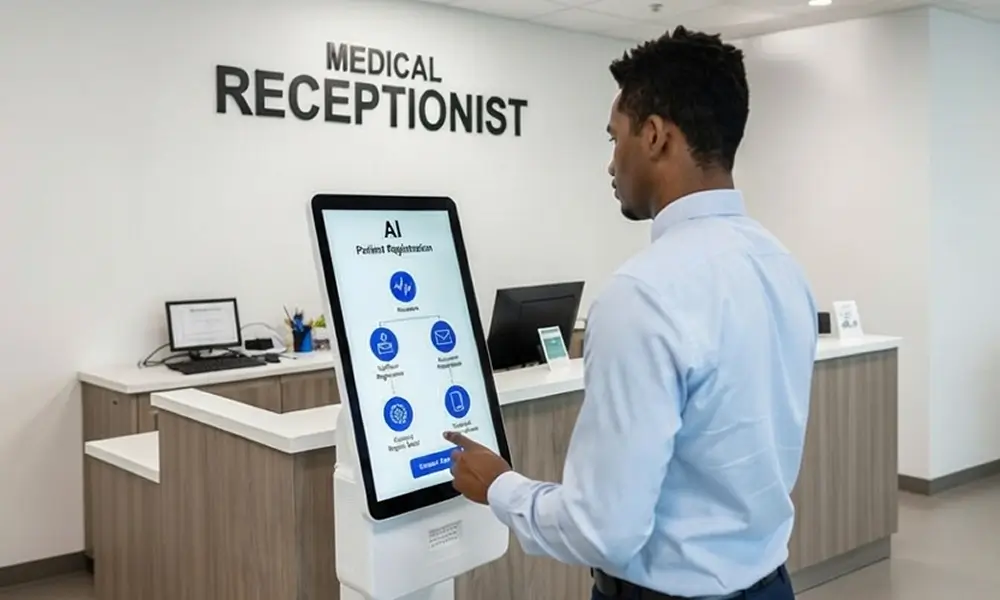
Modern clinics are increasingly adopting healthcare automation solutions, including AI medical receptionist tools and digital patient registration systems, to make this process faster and more accurate.
What Is the Patient Registration Process?

The patient registration process is the structured method clinics use to collect, verify, and document essential patient information. Its goal is to create a complete, accurate, and accessible patient profile that supports all clinical, administrative, and billing activities.
Registration typically begins when a patient schedules an appointment or arrives at the clinic. It involves confirming identity, collecting demographic information, verifying insurance coverage, capturing consent forms, and setting up initial health records. This process ensures that all necessary details are available for clinicians, administrative staff, and billing departments.
There are two main types of registration: manual registration and digital registration. Manual registration involves paper forms filled out by patients or staff, which can be prone to errors or delays.
Digital registration, often integrated with a patient registration system, allows patients to submit information online before the visit. This not only reduces errors but also speeds up check-in and improves staff efficiency.
A reliable registration process connects administrative and clinical workflows. When patient information flows accurately from the front desk to clinicians and billing teams, errors are minimized, and patient care can proceed smoothly.
Without this connection, small mistakes can cascade into bigger issues, including delayed appointments, claim rejections, and duplicate medical records.
Why Is Accurate Patient Registration Important?
Accuracy in registration is critical for multiple reasons: patient safety, operational efficiency, and financial performance. Even minor mistakes, such as an incorrect date of birth, policy number, or contact information, can lead to claim denials, delayed treatment, or mismatched medical records.
Industry research suggests that as much as 35% of claim denials are caused by registration and eligibility mistakes, with hospitals losing an average of $5 million annually due to incorrect patient data.
From a clinical perspective, accurate registration ensures that clinicians have reliable information for decision-making. From an administrative perspective, it reduces the time and resources spent correcting errors.
Accurate registration also supports compliance with privacy and regulatory requirements, such as HIPAA, by ensuring that patient data is complete, secure, and correctly documented.
Common errors in registration can include:
- Incorrect or missing insurance details, leading to denied claims
- Outdated contact information, causing missed appointment reminders
- Incomplete consent forms, delaying procedures
- Duplicate patient records, creating confusion in the clinic
Accurate registration directly impacts operational efficiency. It enables faster check-ins, minimizes billing issues, and ensures patients can be routed correctly within the clinic. For patients, smooth registration builds trust and confidence in the clinic’s professionalism and care quality.
What Information Is Collected on a Patient Registration Form?

A patient registration form collects information necessary for creating and maintaining an accurate patient profile. While forms vary depending on clinic type and specialty, the following core elements are usually included:
- Patient contact information: Full name, date of birth, address, phone number, and email for reminders, follow-ups, and communication.
- Insurance information: Provider details, policy numbers, coverage specifics, and eligibility information. This supports insurance verification and prevents unexpected billing issues.
- Identification and demographics: Basic demographic details help avoid duplicate records and ensure correct patient identification.
- Consent forms and acknowledgments: Treatment consent, privacy policy acknowledgment, and financial responsibility agreements.
- Health record setup: Basic medical history, current medications, allergies, or reasons for visit, supporting initial documentation for clinicians.
- Optional fields: Emergency contacts, preferred communication methods, and language preferences. These additional details improve patient engagement, reduce miscommunication, and enhance care coordination.
Digital patient registration workflows often allow patients to complete these forms online before their visit, reducing waiting times and improving accuracy. Integrating this information with electronic health records ensures that staff and clinicians have instant access to complete, validated patient data.
Steps in the Patient Registration Process
While workflows differ across clinics, most registration processes follow a standard sequence:
Initial Patient Interaction
Registration begins at the first contact point—online, by phone, or in person. Staff confirm appointment details and guide patients through completing required forms. Clear instructions reduce confusion and anxiety, while pre-registration online or through a Patient Registration System accelerates the process.
Verification of Insurance and Benefits

Confirming insurance coverage ensures that benefits are active and understood before services are rendered. This protects both clinic and patient from unexpected billing issues. Some advanced clinics use automated AI patient scheduling tools to match patients with available slots and verify coverage in real time.
Updating and Verifying Patient Information
Returning patients review and update their information to maintain accuracy. Address changes, new insurance plans, or updated contact information are validated to avoid future errors.
Data Entry and Documentation
Collected information is entered into the clinic’s Patient Registration System. Digital systems reduce manual data entry, perform basic validation checks, and integrate with billing and EHR systems, streamlining workflows.
Continuous Monitoring and Quality Assurance
Registration is an ongoing process. Clinics routinely audit registration data, check for errors, and provide staff training to maintain accuracy. Continuous improvement ensures efficiency and prevents small errors from becoming major operational challenges.
Best Practices for Patient Registration
Clinics that excel at registration follow several best practices:
- Standardize forms and workflows to ensure consistency
- Use clear and simple language so patients understand what is required
- Verify insurance and contact details at each visit
- Train staff regularly on registration procedures and privacy requirements
- Limit duplicate data entry through integrated systems and EHRs
- Collect patient feedback on the registration process for improvement
Technology also plays a major role. Using AI medical receptionist systems or Healthcare IT Solutions allows clinics to manage registrations efficiently, improve accuracy, and reduce staff workload.
How to Improve the Patient Registration Process
Improvement begins with identifying common delays and errors. Clinics can monitor metrics such as check-in times, rejected claims, and patient feedback.
Strategies include:
- Pre-visit registration through online portals
- Structured digital forms to reduce errors
- Validation checks in registration software
- Clear division of responsibilities between front-desk and billing staff
- Collecting feedback from staff who interact directly with patients
Continuous monitoring of KPIs, such as registration completion rates and error frequency, helps clinics refine workflows. For example, one mid-sized clinic implementing a digital registration and automated verification system reduced patient wait times by 35% and billing errors by 40% within six months.
How to Reduce Patient Registration Errors
Registration errors can be caused by rushed workflows, incomplete information, or unclear instructions. Clinics can reduce errors by:
- Verifying key details verbally during check-in
- Encouraging patients to review their information
- Integrating Patient Registration Systems with EHR and billing
- Using validation checks to prevent duplicate records
- Regular audits and staff training to identify recurring issues
Focusing on process improvement rather than assigning blame ensures sustainable accuracy. Automated tools like AI-powered intake systems also reduce human error while maintaining patient satisfaction.
The Role of Technology in Patient Registration

Modern clinics increasingly use Healthcare Automation Solutions to streamline the registration process. Digital forms, online pre-registration, and AI Medical Receptionist tools reduce manual work, improve data accuracy, and enhance patient experience.
Key technological benefits include:
- Real-time validation of insurance and demographic information
- Faster check-in and patient flow
- Integration with EHR and billing systems
- Automated alerts for missing or inconsistent data
By embracing technology, clinics can handle higher patient volumes without sacrificing quality or accuracy.
Conclusion
The patient registration process is a cornerstone of efficient clinic operations. Accurate, organized, and patient-friendly registration supports clinical decision-making, improves billing accuracy, and enhances patient satisfaction.
By adopting best practices, leveraging Patient Registration Systems, and integrating AI and automation tools, clinics can minimize errors, improve workflows, and reduce staff workload. Continuous evaluation, staff training, and technology adoption ensure the registration process evolves to meet increasing patient demands.
Strong patient registration practices not only improve operational efficiency but also strengthen the overall patient experience, laying the foundation for better care delivery, increased retention, and sustainable clinic growth.