


Key Takeaways
-
1Scheduling is the Root Cause: Most wait time problems are designed into the schedule through uniform appointment lengths and overbooking, not caused by staff performance.
-
2Delays Start Before Arrival: Long hold times and misrouted calls create a poor experience before the patient even walks through the door.
-
3Perception Beats Reality: With denial rates around 10–15%, accurate coding, timely claims, and denial management are critical for healthy cash flow.
-
4Fix One Bottleneck at a Time: Targeted interventions on specific friction points produce more measurable gains than broad unfocused changes across the entire operation.
-
5AI Needs Right Setup: A poorly configured AI receptionist creates more delays than it solves, making setup as important as the decision to adopt it.
Long patient wait times remain one of the most frustrating and costly problems in healthcare. Patients sitting in waiting rooms past their scheduled time, spending minutes on hold just to reach the front desk, or waiting weeks for the next available appointment are not just inconveniences. They are signals that something in the operational system is broken.
In today’s healthcare environment, patients have more choices than ever. A clinic that consistently runs behind schedule does not just create frustration, it loses patients to competitors who offer faster, more predictable access to care.
Studies show that when waits creep past 30 minutes, satisfaction tanks and patients quietly switch to clinics that see them faster—taking their revenue with them.
The root causes behind long wait times are rarely a single problem. They typically involve a combination of scheduling design flaws, front desk bottlenecks, phone handling inefficiencies, and poorly configured digital tools that compound each other throughout the day. Fixing one in isolation rarely produces lasting results.
This guide outlines 7 proven strategies to reduce patient wait times in healthcare settings, each targeting a specific root cause with practical, implementable solutions that clinics can act on without overhauling their entire operation.
Table of Contents
Why Patient Wait Times Remain a Persistent Problem in Clinics

Despite years of improvement efforts, clinics continue to struggle with long patient wait times in medical offices. The causes are rarely isolated. Instead, delays are the result of interconnected operational gaps that begin before the patient arrives and continue throughout the visit.
In-Clinic Delays
In-clinic delays typically stem from structural scheduling problems and workflow inefficiencies. Overbooked schedules are one of the most common causes of long patient wait times. Many clinics intentionally double-book providers to hedge against no-shows.
While this may protect revenue on paper, it often builds hidden delays into every day. When most patients arrive as scheduled, providers fall behind within the first few hours.
Multiple studies show that waiting time and satisfaction are tightly linked. In one analysis of outpatient clinics, patients who waited less than 10 minutes had about a 77% chance of giving the highest satisfaction score, but this dropped to 53% when total waiting reached 60 minutes.
Front desk understaffing also contributes to delays. When staff are juggling check-ins, phone calls, insurance verification, and walk-in questions simultaneously, check-in times lengthen. This creates immediate patient wait time bottlenecks at the front of the visit.
Rooming delays and inefficient provider handoffs add further strain. If medical assistants are unavailable or exam rooms are not turned over quickly, patients wait longer between check-in and provider interaction.
Pre-Visit Access Delays
Phone access issues are just as damaging as in‑clinic waits. Healthcare call center data suggest that around 60% of patients will abandon a call if they are kept on hold for more than about one minute.
The problem often begins before the appointment. Inefficient call routing, misrouted or dropped calls, and long hold times contribute to delayed access to care. When patients struggle to schedule appointments or clarify instructions, they may postpone visits or abandon calls entirely.
Pre-visit access delays often begin with human limitations. Front-desk teams juggle multiple responsibilities at once, answering phones, checking in patients, verifying insurance, and handling walk-ins.
During peak hours, calls are missed, placed on long holds, or rushed through. Human fatigue, multitasking errors, inconsistent scripting, and manual scheduling mistakes all contribute to slower response times and appointment delays.
Even highly capable staff cannot answer multiple calls simultaneously, which naturally creates wait times before a patient even steps into the clinic.
An AI receptionist eliminates many of these human constraints. Unlike staff who can handle only one caller at a time, AI can respond instantly to every incoming call, route patients accurately, schedule appointments in real time, and provide consistent information without fatigue or error.
While human teams are essential for empathy and complex problem-solving, AI removes the pre-visit friction caused by overload and manual processes. By reducing missed calls, long hold times, and scheduling mistakes, clinics can significantly cut pre-visit delays and improve overall patient flow before the appointment even begins.
Proven Strategies to Reduce Patient Wait Times in Healthcare
The following strategies address structural scheduling flaws, front-desk inefficiencies, and call handling issues that drive long patient wait times in medical offices. Each strategy targets a root cause and provides an operational approach to improve patient flow and reduce wait times without compromising care quality.
Strategy 1 – Fix Scheduling Templates and Access Before Anything Else
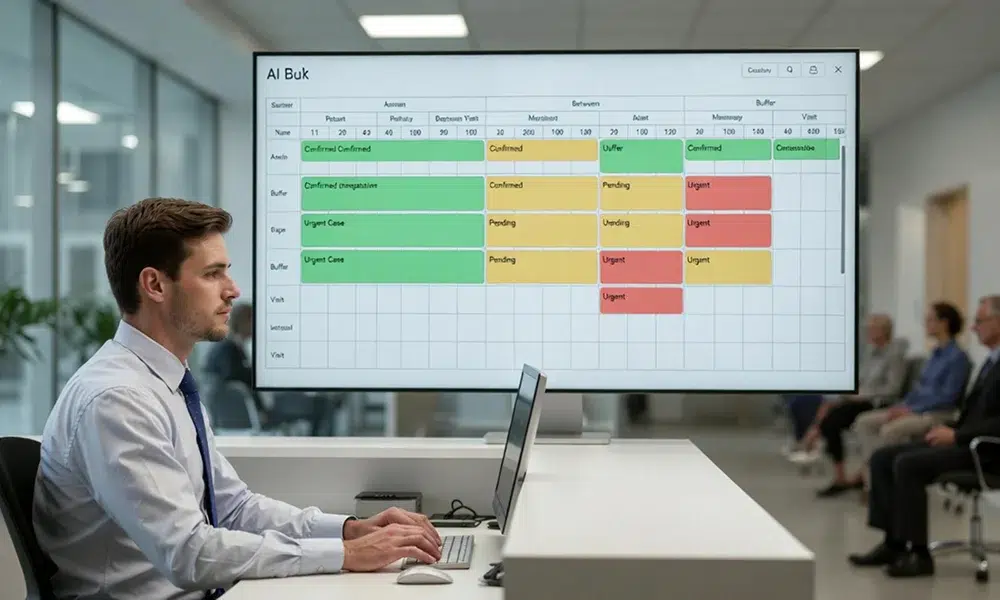
The foundation of any effort to reduce patient wait times in healthcare begins with scheduling templates. Many clinics unknowingly design delay into their schedules by using uniform appointment lengths regardless of visit complexity.
New patient visits typically require more time than follow-ups. Procedures require buffer time. Urgent same-day visits disrupt tightly packed templates. When appointment lengths are not right-sized to visit type, providers inevitably run behind schedule.
Protecting same-day or short-notice appointment slots is another essential adjustment. Without reserved access, urgent cases are squeezed into already full schedules, causing cascading delays.
Chronically overbooking physicians may appear productive, but it often produces consistent in-clinic wait time inflation.
For example, a mid-sized specialty clinic revised its templates by extending new patient appointments by 10 minutes and protecting two same-day urgent slots daily.
Within three months, average in-clinic wait times decreased by nearly 15 minutes, and patient complaints about delays dropped significantly.
Scheduling design is often the most overlooked yet most powerful patient wait time reduction strategy.
Strategy 2 – Streamline Check-In and Registration to Remove Front-Desk Bottlenecks
Front desk delays causing patient wait times are highly visible and deeply frustrating. Even if providers are running on time, inefficient registration can create an immediate negative impression.
Digital pre-registration allows patients to complete forms, upload insurance cards, and sign consents before arrival. This significantly reduces administrative workload during peak arrival periods.
Self check-in options such as kiosks or mobile “I’m here” text confirmations further decrease congestion at the front desk.
Standardizing scripts and workflows ensures that staff do not re-ask previously answered questions or spend unnecessary time searching for information.
When check-in processes are consistent, door-to-room time decreases, and patients perceive the visit as more efficient.
Improving check-in operations directly supports efforts to improve patient flow and reduce wait times while also reducing staff stress.
Strategy 3 – Use Digital Tools to Smooth Patient Flow Across the Day
Digital tools can meaningfully reduce patient wait times in clinics when properly configured. Online scheduling systems should include clear rules that match visit types to appropriate providers and time blocks.
Mismatched appointments frequently cause delays when providers must address more complex issues than scheduled time allows.
Waitlist and auto-fill features help maintain full schedules without overbooking. Instead of stacking patients early in the day, cancellations can be filled strategically, preserving schedule balance.
Virtual waiting rooms allow patients to check in remotely and wait in their cars rather than crowded lobbies. This does not shorten actual wait time, but it significantly improves patient experience by reducing perceived delays.
When thoughtfully implemented, digital systems enhance both operational efficiency and the overall patient access experience.
Strategy 4 – Attack the Biggest Bottlenecks in Your Patient Journey

Patient wait time bottlenecks rarely exist in isolation. Clinics must map the entire patient journey, from scheduling to checkout, to identify where delays cluster.
Time-stamped data from EHR systems, check-in platforms, and call logs provide valuable insight. Staff feedback adds context that data alone cannot reveal.
Common bottlenecks include providers consistently running late after lunch due to compressed morning schedules, diagnostic labs causing backups because of limited staff, or exam rooms remaining occupied due to inefficient turnover processes.
Addressing one major bottleneck at a time produces measurable gains. Implementing targeted patient flow solutions such as adjusting provider buffer time after lunch or reordering the sequence of vitals, labs, and provider visits can eliminate recurring delays and smooth overall movement through the clinic significantly.
Targeted interventions focused on specific friction points are consistently more effective than broad, unfocused changes applied across the entire operation.
Strategy 5 – Improve Phone and Call Handling So Delays Don’t Start Before Arrival
Long patient wait times in medical offices often begin on the phone. Excessive hold times and high abandonment rates create a poor patient access experience before care even begins.
Reducing time-to-answer and triaging calls appropriately prevents unnecessary queuing. Urgent calls should not sit in the same line as routine scheduling requests.
Misrouted calls increasing patient wait times is a frequent operational oversight. Inefficient IVR systems and unclear routing logic contribute to frustration.
When AI receptionist causing call delays becomes an issue, the solution lies in configuration, not abandonment of automation.
Reducing phone delays prevents delayed access to care and supports smoother daily operations.
Strategy 6 – Configure AI Receptionists to Reduce, Not Create, Wait Times
AI systems can either streamline or disrupt access. Poorly configured AI receptionists contribute to call handling delays and downstream bottlenecks.
Clear intent routing ensures appointment scheduling, prescription refill requests, and clinical questions are directed correctly on the first attempt. Emergency and urgency rules must be strict, ensuring serious issues receive immediate human attention.
Concise scripts reduce unnecessary back-and-forth. Passing summarized context to human staff prevents repetition, reducing call transfer time.
When optimized, AI tools shorten time to action and support patient wait time reduction strategies. When misconfigured, they compound delays.
Strategy 7 – Communicate About Waits and Set Expectations Transparently

Even when some delays are unavoidable, communication significantly influences patient perception.
Research consistently shows that patients are less frustrated when informed about expected wait times. Proactive messaging, such as text notifications about providers running 20 minutes behind, allows patients to adjust expectations.
In-clinic transparency also matters. Front desk updates, digital signage showing estimated wait times, and providers acknowledging delays all contribute to perceived respect and professionalism.
Reducing patient wait times in healthcare improves satisfaction, but transparent communication enhances care even when minor delays remain.
Practical Tips for Reducing Wait Times Without Burning Out Staff
Start by measuring current wait times at each stage of the patient journey for two to four weeks. Focus on fixing one bottleneck per quarter rather than attempting sweeping reforms.
Involve front-desk and clinical staff in redesign discussions, as they understand where time is lost. Pair new technology implementations with clear workflows and staff training. Monitor improvements monthly and adjust incrementally.
What Are Good Patient Wait Time Benchmarks

Before a clinic can improve its wait times, it needs to understand how its current performance compares with realistic targets seen in well‑run outpatient settings. The ranges below reflect commonly cited goals and best practices from high‑performing clinics, rather than rigid national rules.
Scheduling Access Time
The time between when a patient requests an appointment and when they are seen is one of the most important access metrics a clinic can track.
Many access‑to‑care frameworks use the third next available appointment (TNAA) as the standard measure, with primary care clinics encouraged to drive TNAA as close to same‑day as possible, and often using about 7 days or less as a practical target for routine visits.
Specialty clinics frequently work toward roughly 14 days or less for non‑urgent visits, recognizing that longer waits are associated with lower satisfaction with access. Anything consistently beyond these ranges usually signals a capacity or scheduling design problem that nudges patients toward competitors.
Door to Room Time
Door to room time measures how long a patient waits from check‑in to being placed in an exam room. Outpatient and ambulatory studies show that patients are generally willing to wait around 30–45 minutes in total, and dissatisfaction rises as waits approach or exceed an hour.
Many high‑performing clinics therefore aim to keep check‑in‑to‑room times under about 15–20 minutes, so that overall time to see the clinician can stay within the Institute of Medicine’s recommendation that at least 90% of patients be seen within 30 minutes of their scheduled time.
Provider Wait Time
Once a patient is roomed, a common operational goal is to keep waiting time for the clinician in the 10–15 minute range. When combined with door to room time, this means total in‑clinic wait from arrival to first contact with the provider ideally stays under about 25–30 minutes for scheduled appointments, which aligns with evidence that longer waits are negatively correlated with satisfaction and willingness to return.
Phone Answer Time
For inbound calls, call‑center benchmarks suggest that healthcare organizations typically target an average speed of answer around 30–60 seconds, balancing access with staffing realities.
Call abandonment standards for healthcare place an acceptable range at roughly 3–5%, with rates above about 8% viewed as high and likely to cause patient frustration and lost business.
Clinics with abandonment rates consistently above 5% can assume phone access is creating a pre‑visit barrier that is costing appointments and weakening patient trust before care even begins.
Overall Visit Duration
For a standard follow‑up appointment, total visit time from arrival to checkout is often designed to fall in the 45–60 minute range, including registration, waiting, consultation, and checkout.
Studies from outpatient clinics report average total waiting times around 40–60 minutes, with most patients remaining satisfied if the full process stays under about 90 minutes, and satisfaction dropping as total time lengthens.
When visits routinely stretch beyond 75–90 minutes, it usually reflects workflow inefficiencies that accumulate across the day and contribute to patient frustration.
Illustrative Target Ranges (With Sources)
| Metric | Common High‑Performance Target |
|---|---|
| Third next available appointment | ≈ 7 days or fewer (primary care); ≈ 14 days or fewer (many specialties) |
| Door to room time | 15–20 minutes or less |
| Provider wait after rooming | 10–15 minutes |
| Total in‑clinic wait time | Under 25–30 minutes |
| Phone answer time | 30–60 seconds |
| Call abandonment rate | Under 5 percent (healthcare standard ≈3–5%) |
| Total visit duration | 45–60 minutes for routine follow‑ups; generally under 90 minutes overall |
Clinics that consistently operate within these ranges across most metrics tend to sit closer to the top tier of outpatient performance in access, experience, and throughput.
Most practices will find at least two or three of these areas outside their desired range, which is exactly where the improvement strategies in the next section deliver the greatest return.
Conclusion
Efforts to reduce patient wait times in healthcare are not cosmetic. Long delays directly affect access, patient satisfaction, clinical outcomes, and financial performance.
Long patient wait times in medical offices often result from structural scheduling flaws, front-desk inefficiencies, call routing gaps, and poorly configured digital tools. Addressing these systematically can dramatically improve patient flow and reduce wait times.
Clinics do not need to implement all seven strategies at once. Instead, baseline current performance, select one or two high-impact strategies, implement operational changes, and review results after 60 to 90 days.
Sustainable improvement begins with disciplined measurement, targeted intervention, and consistent monitoring. Reducing delays is not simply about speed, it is about respect, access, and better care delivery.
FAQs
What is a reasonable wait time goal in a clinic setting?
A reasonable wait time goal in a clinic setting is about 10–15 minutes from the scheduled appointment time to seeing the provider, with consistent performance mattering more than occasional perfection.
How much can digital check-in reduce wait times?
Digital check-in can typically reduce patient wait times by around 5–10 minutes per visit by eliminating paperwork at the front desk and speeding up registration.
Will adding an AI receptionist help or frustrate patients?
Adding an AI receptionist helps patients when it is well-configured because it reduces call delays and improves access, but a poorly set up system can misroute calls and increase frustration.
How do we reduce waits without rushing visits?
You can reduce waits without rushing visits by improving scheduling templates and front-desk workflows so patients move through check-in and rooming more efficiently while provider time with each patient stays the same.
How do patient wait times affect satisfaction scores?
Patient wait times directly impact satisfaction scores because patients who wait longer than expected rate their experience lower even when care quality is high. Clinics that communicate delays proactively consistently score higher on satisfaction surveys than those that leave patients waiting without updates.
What Causes Long Wait Times in Healthcare?
Long wait times in healthcare are usually caused by multiple operational issues. Common causes include poor scheduling that ignores visit complexity, front desk bottlenecks during peak times, inadequate staffing, slow room turnover, and phone access delays that create scheduling backlogs.
How Long Is Too Long to Wait at a Clinic?
Patient satisfaction typically declines when wait times exceed 20 minutes after the scheduled appointment. Waits longer than 30 minutes are strongly linked to lower satisfaction and a higher chance of patients switching providers.
Most high-performing outpatient clinics aim for 15 minutes or less from check-in to seeing the provider.
Eliminate Wait Times Before the Patient Even Arrives
Book a call to see how MedLaunch’s AI handles every call instantly, reducing hold times to zero and streamlining your schedule so your clinic never runs behind.