


Key Takeaways
-
1Problems Hide in Plain Sight: Most patient flow issues are embedded in everyday workflows and go unnoticed until they are already costing the clinic time and revenue.
-
2Scheduling is the First Domino: Inefficient templates, overbooking, and limited online booking create bottlenecks that cascade into every stage of the patient visit.
-
3Manual Processes Multiply Delays: Paper-based registration, manual billing, and disconnected systems slow every touchpoint from check-in to discharge while increasing error risk.
-
4Flow Problems are a Staff Problem Too: Poor patient flow overloads staff, accelerates burnout, and drives turnover which makes the problem progressively worse over time.
-
5Every Issue has a Root Cause: Patient flow problems are not random, each one stems from a specific operational gap that can be identified and fixed with the right systems in place.
Patient flow Issues in medical practices are one of the most common and costly operational challenges clinics face today. When patients move slowly through check-in, waiting, consultation, and discharge, the entire system backs up.
Staff become overwhelmed, patients become frustrated, and the clinic quietly loses revenue and trust with every avoidable delay.
Understanding the root causes of patient flow problems is the essential first step toward fixing them permanently rather than managing them day by day.
Organized patient flow in medical practices is essential for delivering timely, high-quality care and maintaining patient satisfaction, especially when supported by modern healthcare IT solutions.
Yet many clinics struggle with operational inefficiencies and workflow gaps that create unnecessary delays, frustrate patients, and place added pressure on staff at every stage of the care delivery process.
So, here in this blog, you’ll find the top 10 patient flow issues and the root causes in medical practices.
Table of Contents
What is Patient Flow in Medical Practices ?
Patient flow refers to the movement of patients through every stage of a clinical visit, from the moment they arrive at the front desk to the moment they leave after consultation, billing, and discharge.
It covers every step in between including check-in, registration, triage, waiting, examination, and follow-up scheduling. When each of these steps connects smoothly to the next, the clinic operates efficiently, patients receive timely care, and staff can manage their workload without constant pressure.
Poor patient flow does the opposite. Bottlenecks build up at key touchpoints, wait times grow longer, staff become overwhelmed trying to manage the backlog, and patients leave feeling frustrated and undervalued.
Research published in the National Library of Medicine found that average wait times from registration to consultation can reach 41 minutes, with longer waits directly linked to lower patient satisfaction scores.
When this happens consistently, the consequences extend well beyond a bad experience. Patients stop returning, negative reviews accumulate, and the clinic loses revenue it never gets back.
Understanding patient flow is not just an operational exercise. It is the foundation of everything else a clinic tries to improve. Scheduling efficiency, staff productivity, patient satisfaction, and revenue performance all depend on how well patients move through the care delivery process.
A clinic that understands its flow can identify exactly where time is being lost and fix it at the root. A clinic that does not is left guessing why things feel chaotic even on days when the schedule looks manageable.
When patient flow runs smoothly, patients wait less and get more care, staff can stay organized, and the clinic runs more efficiently. Studies also show that long waits often increase frustration for both patients and staff.
The 10 Most Common Patient Flow Issues in Medical Practices
Below are the most common challenges faced in healthcare, including long waits and inefficiencies. Patient flow management solutions can help address these issues and streamline clinic operations.
1: Long Wait Before Consultation

Patients often face long waits before seeing a clinician. These delays can happen in the waiting room or between the consultation and discharge. As a result, patients may feel frustrated, dissatisfied, and view the care as inefficient.
Root Causes:
- Appointment schedules often don’t match patients’ actual needs. Some visits take longer than expected, while others are shorter, but fixed time slots treat every appointment the same. This can cause delays and make patients wait longer than necessary.
- Clinics often overbook appointments to make up for missed visits. This can overwhelm staff and make wait times longer for everyone.
- Unpredictable events like late arrivals, longer consultations, or sudden clinical needs can disrupt the schedule. These delays can build up and affect later appointments.
How to Fix It:
- Implement variable appointment slot lengths based on visit type so complex cases get more time and simple cases do not consume unnecessary slots
- Introduce a real-time schedule monitoring system that flags when a provider is running behind so front desk staff can proactively notify waiting patients
- Reserve a small number of buffer slots each day to absorb unexpected overruns without cascading delays into later appointments
- Use digital check-in to start the registration process before the patient physically arrives, reducing in-clinic processing time at the front desk
2: Inefficient Scheduling Systems
Inefficient scheduling systems can cause backlogs and idle periods, which disrupt the steady movement of patients through the clinic. These problems frustrate patients, add stress for staff, lower productivity, and may reduce the quality of care.
Root Causes:
- When self-service online booking is limited, patients have to rely on phone calls or talking to front desk staff to make appointments. This adds to the administrative workload and can delay getting timely appointments.
- There is often a mismatch between patient demand and available appointment slots, especially during busy times. This can cause overbooking, long waits, and empty slots during slower periods. These issues disrupt patient flow and reduce clinic operational efficiency.
How to Fix It:
- Replace phone-only booking with an online self-scheduling system that allows patients to book, reschedule, and cancel appointments at any time without staff involvement
- Design appointment templates that reflect actual visit demand by time of day, visit type, and provider rather than applying a single slot length to every appointment
- Use historical scheduling data to identify peak demand windows and adjust template capacity accordingly so overbooking and idle periods are both reduced
- Implement an automated waitlist system that fills last-minute cancellations instantly without requiring manual staff follow-up
3: Staff Shortages and Burnout
Clinics facing staff shortages often struggle to keep patient flow smooth, leading to delays at multiple points, including check-in, rooming, and the consultation itself. These interruptions not only affect the patient experience but also place significant pressure on existing staff, creating a cycle of stress, inefficiency, and dissatisfaction.
Root Causes:
- Staff members are frequently overburdened, balancing clinical responsibilities with administrative tasks such as scheduling, documentation, and patient coordination, which reduces their capacity to manage patient flow efficiently.
- Chaotic workflows and constant pressure contribute to high levels of stress, fatigue, and burnout among healthcare workers. This can lead to higher staff turnover, making staffing shortages worse and disrupting continuity of care.
How to Fix It:
- Audit current staff workflows to identify which administrative tasks can be automated or delegated to reduce the burden on clinical staff
- Introduce role clarity documentation so every team member has a clearly defined set of responsibilities and does not spend time on tasks outside their primary function
- Use automation tools for repetitive tasks like appointment reminders, insurance verification, and patient follow-ups to free staff time for higher-value work
- Monitor staff workload metrics monthly and use the data to make informed hiring or scheduling decisions before burnout reaches a critical level
4: Manual Administrative Processes

Using paper-based or manual administrative processes can slow key clinic tasks such as patient check-in, documentation, billing, and discharge. These delays make patients wait longer, increase the chance of mistakes, and lower overall efficiency.
Root Causes:
- Many clinics still use manual forms and registration, so staff have to enter data by hand. This takes a lot of time and can lead to mistakes.
- When medical records, insurance checks, and other admin tasks are not managed well, problems can happen. This is especially true during busy times or with complicated cases.
- Without digital workflows and automation, staff spend too much time on repetitive tasks. This raises the risk of errors, slows down patient flow, and makes the clinic less efficient.
How to Fix It:
- Implement digital patient intake forms that patients complete before arriving so registration time at the front desk is reduced to verification rather than data entry
- Integrate insurance verification into the scheduling workflow so eligibility is confirmed automatically at the time of booking rather than on the day of the visit
- Connect billing, EHR, and scheduling systems so data flows automatically between departments without manual re-entry at each handoff point
- Audit current paper-based processes quarterly and prioritize the highest-volume tasks for digital replacement first to maximize early impact
5: Poor Communication and Coordination
When clinic staff fail to communicate or coordinate effectively, patient care can be delayed, and problems may arise at multiple points throughout the patient journey.
Poor communication not only slows down work but also increases the risk of errors, creates duplicated tasks, and negatively impacts the overall patient experience, contributing to significant patient flow inefficiencies.
Root Causes:
- Disconnected systems and the lack of real-time information sharing make it challenging for staff to access accurate patient data when needed, leading to delays in care and slower decision-making.
- Inefficient handoffs between the front desk, clinical staff, and billing teams can create confusion and prolong essential tasks, such as rooming patients, updating medical records, or processing payments.
- Unclear roles, responsibilities, and workflows increase the likelihood of duplicated work, miscommunication, and reduced operational efficiency, all of which disrupt the smooth movement of patients through the clinic.
How to Fix It:
- Implement a real-time internal messaging or task management system that allows front desk, clinical, and billing teams to communicate without leaving their workstations
- Define clear handoff protocols between departments so every patient transition from check-in to rooming to billing follows a documented and consistently followed process
- Hold brief daily huddles at the start of each shift to align staff on the day’s schedule, anticipated challenges, and any patients requiring special handling
- Use shared digital dashboards that give all departments live visibility into patient status so no one is working from outdated or incomplete information
6: Clinic Layout and Physical Restrictions
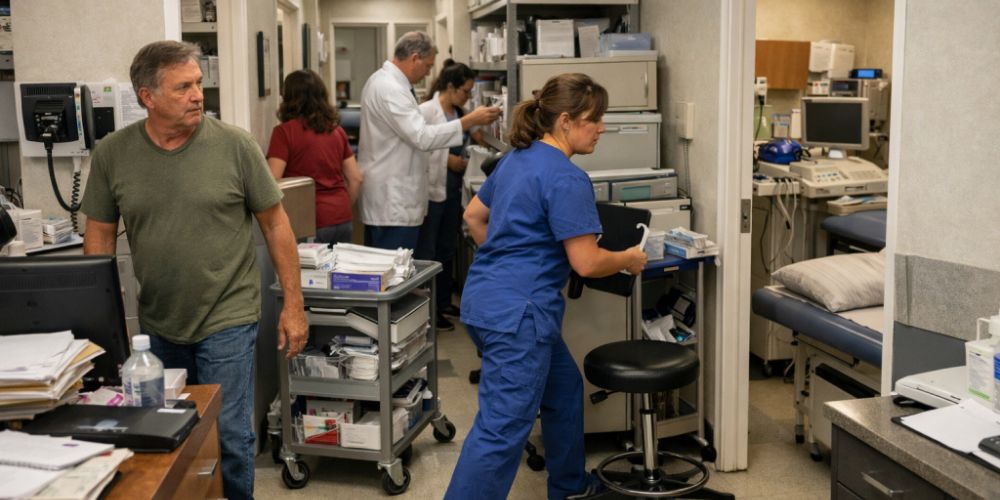
A poor clinic layout can significantly delay the smooth movement of patients and staff, creating unnecessary delays and limiting access to essential services.
Inefficient use of space can lead to congestion, confusion, and a sub-optimal patient experience, ultimately reducing clinic operational efficiency.
Root Causes:
- Patients and staff often have to backtrack or navigate awkward pathways due to poorly designed spaces, which slows down transitions between check-in, consultation, and discharge areas.
- Examination rooms may not be standardized in terms of size, equipment placement, or setup, making it difficult for clinicians to move quickly between patients and for staff to support clinical workflows efficiently.
- Essential medical equipment and supplies may be poorly located or inconsistently placed, forcing staff to spend extra time searching or moving items, further contributing to patient flow delays.
How to Fix It:
- Conduct a patient journey walkthrough from the perspective of a first-time visitor to identify navigation pain points, confusing signage, and unnecessary backtracking in the physical space
- Standardize examination room setup so equipment, supplies, and documentation tools are in the same location in every room, allowing clinical staff to move between rooms without adjustment time
- Zone the clinic by visit type where possible so low-complexity visits like lab draws and injections are handled in a dedicated area separate from consultation rooms
- Place high-use supplies and equipment in central locations that are equally accessible from all clinical areas to eliminate time lost searching or fetching items
7: Walk-In and Unscheduled Visits
Unplanned walk-in or unscheduled visits can disrupt the day’s carefully planned schedule, causing delays not only for the arriving patients but also for those with pre-booked appointments.
These interruptions can slow down overall clinic operations, create congestion in waiting areas, and increase stress for staff, ultimately impacting patient satisfaction and care quality.
Root Causes:
- Many clinics lack dedicated slots or effective strategies to accommodate walk-in patients without destabilizing the existing schedule, which leads to unexpected interruptions and patient flow delays.
- When clinics avoid flexible scheduling, unscheduled visits can disrupt the day, leading to longer waits and slower operations.
- Without a clear system for handling walk-ins, front desk and clinical staff must constantly reprioritize tasks, which slows down patient processing and creates a ripple effect that impacts the entire day’s workflow.
How to Fix It:
- Reserve a defined number of same-day appointment slots each morning specifically for walk-in and urgent care patients so their arrival does not displace scheduled appointments
- Implement a triage protocol at the front desk that quickly assesses walk-in urgency and routes patients to the appropriate queue rather than adding them to the general waiting list
- Use a digital queue management system that gives walk-in patients a position in line and estimated wait time so they can wait comfortably without creating congestion at the front desk
- Train front desk staff on a standardized script for managing walk-in expectations so patients receive consistent information about wait times and their options
8: No-Shows and Late Arrivals
Missed appointments and late arrivals can significantly disrupt a clinic’s daily schedule, leading to inefficient use of time and resources.
When patients do not arrive as planned or show up late, it not only affects their own care but also creates delays for other patients, extend staff workloads, and reduce overall clinic productivity.
Root Causes:
- Many clinics lack effective reminder systems or confirmation mechanisms, such as automated calls, texts, or emails, that help ensure patient recall and adherence to scheduled appointments.
- Some clinics don’t have clear policies to manage late arrivals, leaving staff to handle disruptions as they come, which causes frustration and inconsistency.
- Scheduling systems are often not designed to absorb variability, such as late arrivals or no-shows, which makes it difficult for clinics to adjust in real-time without creating delays for other patients.
How to Fix It:
- Implement a multi-step automated reminder sequence that contacts patients by their preferred channel at 72 hours, 24 hours, and 2 hours before their appointment with a one-tap confirmation option
- Introduce a clear late arrival policy that defines how late a patient can arrive before their slot is reassigned and communicate this policy at the time of booking and in reminder messages
- Use overbooking strategically in slots with historically high no-show rates based on visit type, patient segment, and time of day data from your scheduling system
- Build a real-time waitlist of patients who want earlier appointments so that last-minute cancellations and no-show slots are filled automatically rather than left empty
9: Billing and Discharge Delays

Even after a consultation is complete, delays in billing, follow-up scheduling, and patient education can significantly slow down patient discharge.
These delays not only prolong the patient’s time in the clinic but also create issues that affect subsequent appointments, staff workload, and overall operational efficiency.
Root Causes:
- Reliance on manual billing processes and insurance verification procedures consumes considerable staff time, often leading to errors and slower processing of patient accounts.
- A lack of integrated discharge planning and follow-up coordination means that patients may leave without clear instructions or next steps, requiring additional staff intervention and further extending their stay.
- Inefficient handoffs between clinical and administrative staff can result in miscommunication, duplicated efforts, and delays in completing necessary discharge tasks, all of which contribute to slower patient throughput and operational inefficiencies.
How to Fix It:
- Begin insurance verification and billing preparation before the appointment so that by the time the consultation ends, the billing process is already partially complete
- Implement a structured discharge checklist that clinical staff complete at the end of every consultation covering follow-up scheduling, prescription processing, patient instructions, and billing handoff
- Integrate clinical and billing systems so that charges are captured automatically from the clinical record rather than requiring manual entry by billing staff after the visit
- Assign a dedicated discharge coordinator during peak hours whose sole responsibility is moving patients smoothly through the final stage of their visit without delays
10: Inefficient Patient Management in Busy Hours
When clinics are not well-organized during busy hours, patients often experience long waits and confusion. Delays and disorganization can make patients feel ignored or frustrated, leading to lower satisfaction and loss of trust in the clinic.
Poor management during peak times also affects the clinic’s reputation and can make patients less likely to return.
Root Causes:
- Long waiting times and slow handling of patients leave them feeling unimportant.
- Staff may not communicate clearly, or consultations may feel rushed, reducing confidence in care.
- Patients’ needs may not be fully met, such as delays in getting prescriptions, limited time with the doctor, or unclear instructions for follow-up.
How to Fix It:
- Use arrival pattern data from the past 90 days to identify consistent peak windows and schedule additional front desk and clinical support staff during those specific hours
- Implement a real-time queue dashboard visible to all staff so that developing bottlenecks are spotted and addressed before they affect the full patient population
- Pre-position high-demand resources such as additional exam rooms, diagnostic equipment, and billing staff during known peak periods rather than reacting after congestion has already formed
- Designate a flow coordinator role during peak hours whose job is to monitor the entire patient journey in real time, identify delays as they form, and redirect resources to relieve pressure before it cascades
Conclusion
Efficient patient flow is essential for delivering high-quality care in medical practices. Long waits, inefficient scheduling, staff shortages, poor communication, and suboptimal layouts do not just slow operations.
They erode patient trust, lower retention, and drain revenue over time. Left unaddressed, these patient flow issues compound into systemic problems that become harder and more expensive to fix.
Every patient flow issue in this blog has a root cause, and every root cause has a practical solution. Clinics that identify where their flow breaks down and address it systematically see measurable improvements in wait times, satisfaction, staff productivity, and overall performance.
Improvement does not require a complete overhaul. Optimizing appointment templates, introducing digital check-in, and improving internal communication can produce meaningful results faster than most practice managers expect.
The clinics that struggle longest with patient flow issues are rarely facing the hardest problems. They are simply waiting too long to start fixing them.
MedLaunch provides AI-powered solutions that manage every stage of the patient journey including scheduling, check-in, consultation, discharge, and follow-up, so that better patient flow becomes a built-in feature of how the practice operates rather than an ongoing challenge to manage.
FAQs
How can medical practices identify patient flow problems early?
Clinics can monitor wait times, appointment delays, and staff workload regularly. Early tracking helps spot inefficiencies before they affect patients or staff.
How does patient flow differ between peak and off-peak hours?
During peak hours, clinics experience longer waits and higher staff stress. Off-peak hours are generally smoother, with faster patient movement and less pressure on staff.
How does patient flow affect clinic revenue?
Inefficient patient flow reduces the number of patients seen and increases idle time. This directly lowers revenue and clinic productivity.
How does patient flow impact patient trust and satisfaction?
Smooth patient flow makes patients feel valued and well-cared-for. Delays or disorganization can frustrate patients and reduce their trust in the clinic.
Can improving patient flow reduce staff turnover?
Efficient workflows reduce stress, fatigue, and burnout among staff. Happier, less-stressed employees are more likely to stay, lowering turnover rates.