
Key Takeaways
-
1Instagram DMs as High-Intent Leads: Instagram DMs provide a highly engaged and specific lead source. Patients who DM a clinic are actively looking for answers and are more likely to convert compared to passive leads.
-
2The Problems with Manual DM Management: Managing Instagram DMs manually results in significant issues such as high volume, inconsistent responses, delays outside of business hours, and lack of tracking, which leads to missed opportunities and wasted ad spend.
-
3Automated Instagram DM Pipeline: Automating the DM-to-appointment pipeline is essential for efficient lead conversion. The 7-step system includes triggering conversations, qualifying leads with AI, answering FAQs, providing booking options, and sending automated follow-ups to ensure bookings.
-
4HIPAA Compliance: While automating Instagram DMs, it is crucial to maintain HIPAA compliance by limiting the exchange of sensitive health information and using secure channels for clinical data.
-
5No-Show Reduction with Automated Reminders: Automated appointment reminders significantly reduce no-shows, ensuring that booked appointments are kept by patients without manual intervention from staff.
Picture this: a potential patient sees your Instagram ad about spinal decompression, gets curious, and sends your clinic a DM asking whether they’re a candidate. By the time your front desk gets to it the next morning, they’ve already booked with someone else.
This isn’t a rare occurrence. It’s happening every single day in clinics across the country, and most owners don’t even realize how many leads they’re losing.
Healthcare practices invest significant time and money creating content, running paid ads, and building an Instagram presence, all to generate interest in their services. But the moment a lead lands in the DMs, the entire process collapses into something completely manual, inconsistent, and unreliable.
The fix isn’t hiring someone to watch your inbox around the clock. It’s building an automated Instagram DM-to-appointment pipeline, a system that takes a lead from first message to confirmed booking without requiring any staff involvement.
In this guide, we’ll walk through exactly why Instagram DMs are such a high-value lead source for healthcare practices, why manual DM management breaks down at scale, and the step-by-step process to automate the entire conversion journey.
Table of Contents
Why Instagram DMs Are One of the Highest-Intent Lead Sources for Healthcare Practices
Not all leads are created equal. A patient who takes the time to send a clinic a direct message on Instagram is fundamentally different from someone who simply clicks an ad or visits a website. They’ve already moved past passive awareness, they have a specific problem, they’ve identified your clinic as a potential solution, and they’ve taken action.
That’s a warm lead. And warm leads convert at dramatically higher rates than cold ones, when they’re followed up on quickly.
Healthcare content performs especially well on Instagram for specialty clinics. Condition-specific content around back pain, disc injuries, scoliosis, posture correction, and similar topics consistently draws engagement from people actively looking for answers. When that content includes a clear call to action, “DM us to find out if you’re a candidate”, the leads that respond are often highly motivated.
There’s also a behavioral component worth understanding. According to Meta’s own research on messaging behavior, a growing number of consumers, particularly in healthcare, prefer messaging a provider over calling because it feels lower-pressure and more private. For patients dealing with chronic pain, disc injuries, or conditions they may feel self-conscious about, sliding into a DM feels far more approachable than picking up the phone.
The problem is that most clinics treat DMs as a secondary, informal channel rather than a live lead pipeline with real revenue implications. That mindset is costing them bookings every single day.
Why Manual DM Management Doesn’t Work at Scale

Before building the solution, it’s worth understanding exactly why the manual approach breaks down — and it breaks down in four distinct ways.
The Volume Problem
When a paid ad campaign is running well, DM volume can spike overnight. One well-targeted ad or a video that gets shared can generate dozens of inquiries simultaneously. A front desk staffer who is also answering phones, checking in in-clinic patients, handling paperwork, and managing scheduling simply cannot respond to DMs in real time. The result is a growing backlog of unanswered messages and wasted ad spend.
The After-Hours Problem
Most patient inquiries on Instagram happen outside of clinic hours, evenings, and weekends when people are scrolling and have time to think about their health. A 9-to-5 front desk means a lead that comes in at 8pm on Friday doesn’t get a response until Monday morning. By that point, the urgency has faded, the patient has moved on, or they’ve already booked with a competitor who responded faster.
Research from Harvard Business Review found that businesses that respond to leads within an hour are seven times more likely to qualify that lead than those that respond even one hour later. In healthcare, where patients are often in pain and actively seeking relief, that window is even narrower.
The Consistency Problem
Even during office hours, the quality of DM responses varies entirely based on who handles them. Some staff are thorough and ask the right questions; others miss key details, make promises that don’t get followed through, or simply don’t have the clinical knowledge to answer basic questions about the treatment. There’s no standardized script, no qualification checklist, and no guaranteed process. The patient experience from first DM to booked appointment is completely dependent on individual performance rather than a reliable system.
The Tracking Problem
DMs that don’t convert simply disappear with no record of what happened. There’s no data on how many people messaged, what they asked, why they didn’t book, or whether anyone ever followed up a second time. Clinics are flying blind on one of their most valuable lead sources — unable to measure conversion rates, identify drop-off points, or improve the process over time. Read more about how these tracking gaps compound over time in our guide on how to automate patient messaging in healthcare.
The Instagram DM-to-Appointment Pipeline: How It Works
Here is the complete 7-step system for turning Instagram DMs into booked appointments automatically.
Step 1 — Trigger the Conversation Automatically
The pipeline begins before a patient even sends a message. There are several entry points that can kick off an automated DM conversation:
- Comment-to-DM triggers: A patient comments on a post or ad, and they automatically receive a DM with a warm greeting and a prompt to start the conversation.
- Story reply triggers: A patient replies to an Instagram story, and an automated response fires immediately.
- Bio link flows: A patient taps the link in your bio and is directed to a chatbot or intake page that feeds directly back into the DM pipeline.
- Ad-to-DM campaigns: Meta allows ads to open directly into an Instagram DM conversation, this is the highest-intent entry point available and is ideal for condition-specific paid campaigns.
The goal at this stage is to move the patient from passive interest to active conversation as frictionlessly as possible. Every second of delay between their first point of interest and a real conversation is an opportunity to lose them.
Step 2 — Greet and Qualify with an AI Chatbot
Once the conversation is triggered, an AI chatbot takes over immediately — responding within seconds, warmly and consistently, regardless of the time of day.
What the chatbot does in the first exchange matters enormously. The tone should feel like a knowledgeable, caring team member, not a robotic FAQ machine. Best practice is to open with a single, conversational question rather than presenting the patient with a wall of text or a formal intake form:
“Thanks for reaching out! Are you dealing with back pain, neck pain, or something else? I’d love to point you in the right direction.”
This is where clinical credibility and brand voice get established in the first few seconds of the interaction. A clunky, impersonal opener here can kill an otherwise warm lead.
Step 3 — Answer FAQs Automatically
Before a patient commits to a booking, they almost always have questions. They want to know whether the treatment will work for them, what it costs, whether it’s covered by insurance, and how many sessions they’ll need. If those questions go unanswered or if they have to wait until business hours to get answers, the lead goes cold.
The AI chatbot should be pre-loaded with clear, accurate answers to the most common questions your clinic receives:
- How does the treatment work, and what does it involve?
- What does it cost? Is any portion covered by insurance?
- How many sessions are typically needed, and how long is each one?
- Is the treatment painful or uncomfortable during the session?
- Am I likely a candidate based on my condition?
One often-overlooked strategy here is transparent pricing in the chatbot. Many practices hesitate to share costs upfront, but including pricing information actually improves lead quality — it pre-filters patients who won’t proceed regardless of how good the treatment is, saving clinical time for genuine candidates. Our AI appointment setter is built around this exact principle.
Step 4 — Run the Qualification Flow
After answering initial questions, the chatbot moves the lead through a structured qualification sequence. This is where you gather the information needed to determine whether this patient is the right fit for your service, before any staff member spends a minute of their time on the lead.
Core qualifying questions to automate include:
- Have you had an MRI or imaging done for your condition?
- Have you been formally diagnosed (herniated disc, bulging disc, spinal stenosis, etc.)?
- What symptoms are you currently experiencing — back pain, neck pain, sciatica?
- What other treatments have you tried so far?
- What is your age range?
Beyond basic qualifications, the chatbot should also be programmed with contraindication logic recognizing red flags such as active cancer, pregnancy, or severe osteoporosis and responding appropriately. Either the lead is flagged for human review, or the chatbot gently explains that the service may not be the right fit and offers to help them find appropriate care elsewhere.
The outcome of this step: every lead that reaches the booking stage is pre-vetted, informed, and genuinely interested. No more clinical time wasted on leads who were never going to move forward.
Step 5 — Present Booking Options and Confirm the Appointment
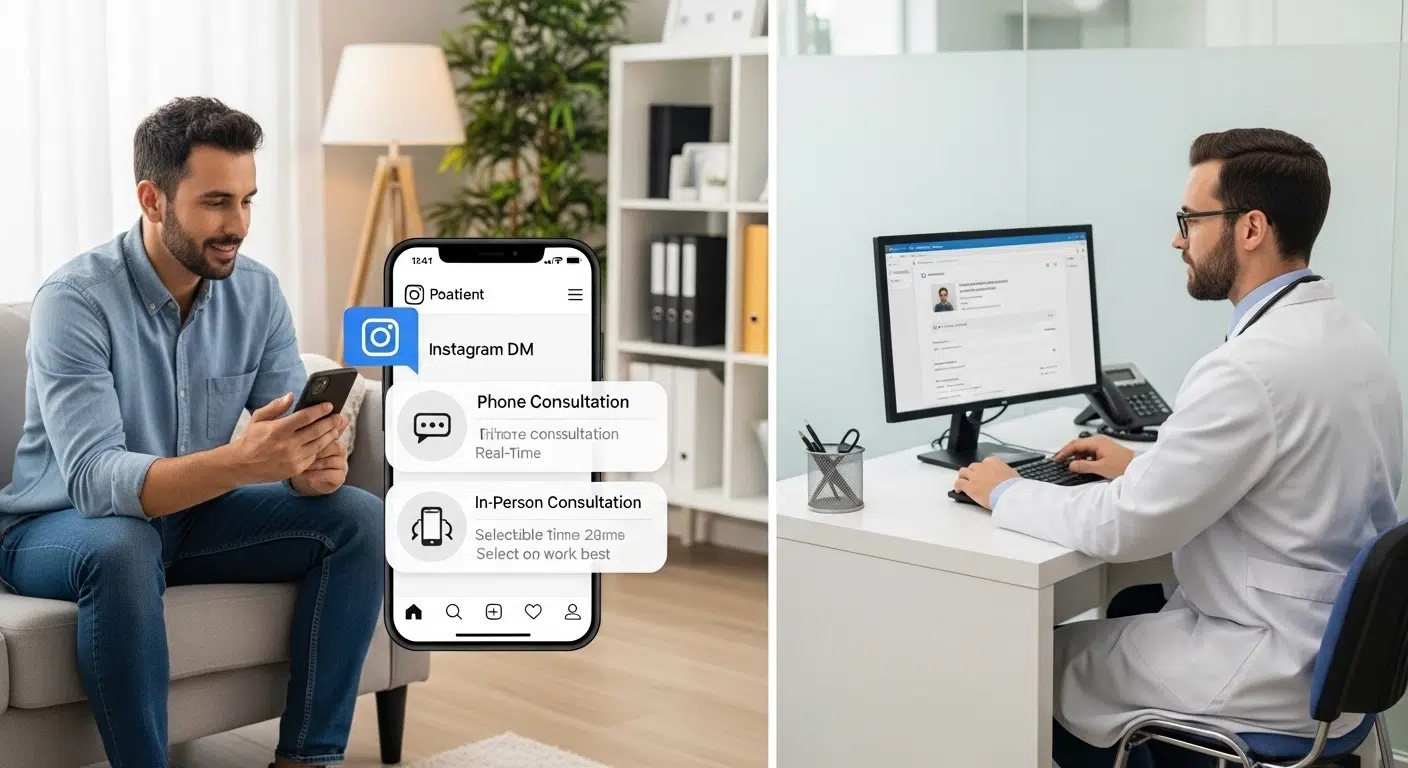
Once a lead is qualified, the chatbot presents their booking options clearly and without pressure. Giving the patient a choice here is strategic; it removes the barrier of a single, high-commitment ask and lets them self-select based on where they are in their decision-making process.
A proven two-path approach:
- Option A — Phone consultation: Low friction, fast, ideal for patients who are still weighing their options or have a few remaining questions.
- Option B — In-person consultation + clinical review: Higher commitment, but also higher intent — patients who choose this option are more likely to proceed to paid treatment.
The patient selects their preferred option, and the chatbot presents available time slots in real time, synced directly with the clinic’s Google Calendar or EMR scheduling system. The patient books without ever speaking to a staff member. Confirmation is sent immediately via DM and SMS. The calendar is updated automatically. No manual entry, no double-booking risk.
This entire process, from first DM to confirmed appointment, can happen in under five minutes, at 11 pm on a Saturday, with zero staff involvement.
Step 6 — Automated Follow-Up for Non-Converters
Not every lead will book on the first conversation. That’s completely normal and expected. What separates a high-performing pipeline from a leaky one is what happens to leads that go quiet after the initial exchange.
A structured, automated follow-up sequence ensures that no lead is quietly abandoned:
- 24-hour follow-up: A gentle check-in asking if the patient has any remaining questions or wants to explore their options.
- 48–72 hour follow-up: A value-add message, a short piece of educational content relevant to their condition (e.g., “What to know about disc decompression before your first consultation”), reinforcing clinical expertise without being pushy.
- Day 5–7 final follow-up: A direct but soft call-to-action to book their free consultation, with a note that slots are limited.
All of this runs automatically. Staff are only looped in if the lead re-engages. Leads that complete the full sequence without responding are tagged in the CRM for periodic reactivation campaigns, a future touchpoint that often converts leads that went cold months earlier.
Step 7 — Reduce No-Shows with Automated Reminders
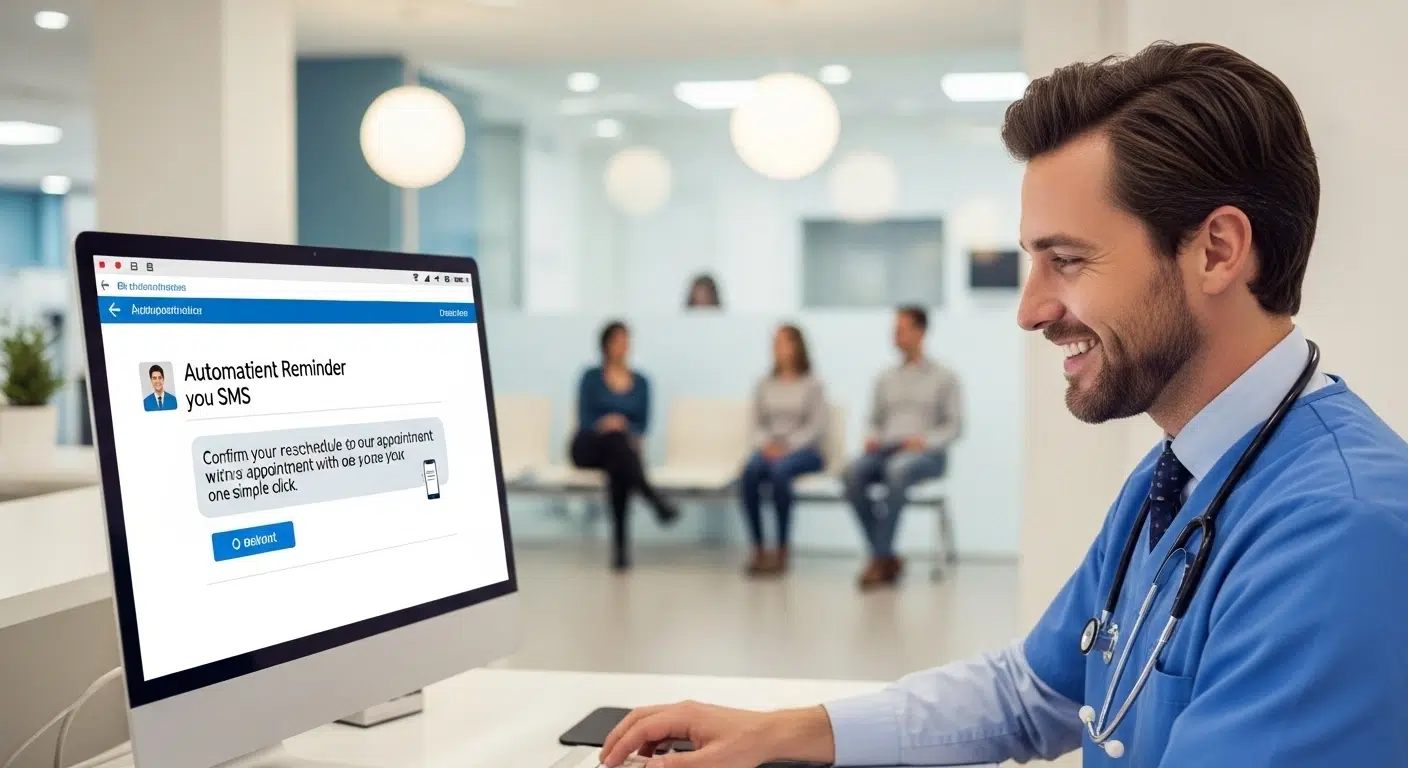
Getting the booking is not the end of the pipeline. The patient still has to show up — and no-shows represent one of the most significant and preventable sources of revenue loss in specialty clinic operations. According to research cited by the American Medical Association, no-show rates in specialty clinics can run as high as 30%.
An automated reminder sequence dramatically reduces this:
- Immediate: Confirmation message with appointment details sent right after booking
- 48 hours before: Reminder with a one-tap confirm or reschedule option
- 2–3 hours before: Final reminder on the day of the appointment
Two-way confirmation is what makes this powerful. The patient replies YES to confirm or asks to reschedule — and if they cancel, the slot is automatically freed and can be offered to the next qualified lead in the pipeline. You can read more about proven approaches in our guide on why patients miss appointments and how clinics can prevent it.
What You Need to Build This Pipeline
The good news is that you don’t need to be technically sophisticated to build this system. But you do need the right components, and critically, they need to work together.
Instagram Business Account with DM automation capabilities enabled through Meta Business Suite. This is the foundation everything else plugs into.
AI chatbot platform that integrates natively with Instagram DMs and supports healthcare use cases, including qualification flows and FAQ management. This is where the intelligence lives — the chatbot needs to be configured specifically for your service, your qualification criteria, and your brand voice.
CRM to capture, store, and track every lead through the pipeline from first contact to booked appointment. Without a CRM, there’s no audit trail, no follow-up sequencing, and no performance data. Our AI medical receptionist integrates directly with CRM systems to make this seamless.
Scheduling integration connected to your live calendar, whether that’s Google Calendar, your EMR, or both. Real-time availability checking is non-negotiable; without it, double-booking and scheduling conflicts remain a risk.
SMS and email follow-up capability for the post-DM nurture sequences. Some patients disengage from Instagram but are reachable via text or email or a multi-channel follow-up approach captures leads that a single-channel approach would miss.
The most critical warning here: these tools need to be properly connected. A chatbot that doesn’t feed into a CRM, or a CRM that doesn’t sync with your calendar, creates the same gaps that manual processes do. The pipeline is only as strong as its weakest integration point. This is precisely why an end-to-end solution — rather than a patchwork of disconnected tools — delivers better results and requires far less ongoing maintenance.
HIPAA Considerations for Instagram DM Automation
Compliance is the question that stops many clinic owners from automating patient communication — and it’s a legitimate concern. But HIPAA compliance and Instagram automation are not mutually exclusive. They just require the right setup.
Instagram DMs are not inherently HIPAA-compliant, which means they should not be used to exchange detailed protected health information (PHI). The role of the DM channel in this pipeline is initial engagement, basic qualification, and appointment booking, not clinical information exchange.
Key compliance practices to follow:
- Work only with automation platforms that offer signed Business Associate Agreements (BAAs) where PHI may be involved
- Keep chatbot conversations general in the DM stage — detailed clinical data should transition to a secure, HIPAA-compliant platform
- Always obtain explicit patient consent before initiating automated messaging sequences
- Avoid storing sensitive health information in non-compliant systems
The U.S. Department of Health and Human Services provides clear guidance on what constitutes PHI and which safeguards are required. When in doubt, err on the side of caution and consult with a compliance specialist.
Done correctly, this pipeline operates entirely within HIPAA boundaries while delivering a seamless, modern patient experience.
Additional Best Practices
- Run separate campaigns per service line. A disc injury lead and a scoliosis lead need different chatbot flows, different FAQs, and different qualification questions. Mixing them creates confusion for both the patient and the system.
- Keep chatbot messages short. Instagram is a mobile-first platform. Long walls of text cause drop-off. Each chatbot message should deliver one clear piece of information or ask one question.
- Test your DM flow regularly as a patient would. Message your own account and experience the journey firsthand. You’ll spot friction points that are invisible when you’re only looking at it from the admin side.
- Update FAQ responses as new questions emerge. Review chatbot conversation logs monthly and add responses to questions that the bot is currently escalating unnecessarily.
- Don’t over-automate the escalation. If a patient expresses urgency, severe pain, or frustration, the system should flag immediately for a human to step in. Automation handles the routine; humans handle the exceptions.
- Track conversion at every stage. DM received → conversation started → qualification completed → booking made → appointment kept. Knowing exactly where leads are dropping off is how you improve the pipeline over time.
Conclusion
Instagram is already generating interest in your clinic. Patients are watching your content, seeing your ads, and taking the step of reaching out directly. The question is whether you have a system to capture and convert that interest or whether you’re leaving it to chance, manual follow-up, and whatever bandwidth your front desk has on any given day.
The 7-step pipeline covered in this guide: trigger the conversation, greet and qualify with AI, answer FAQs automatically, run the qualification flow, present booking options, follow up non-converters, and reduce no-shows transforms Instagram from an unpredictable lead source into a structured, measurable, 24/7 appointment booking machine.
This isn’t about removing the human element from patient care. Your clinical expertise, your bedside manner, your ability to help people avoid surgery and reclaim their quality of life, none of that gets automated. What gets automated is the administrative layer between a patient’s first point of interest and their first appointment. And when that layer works reliably, your team can focus entirely on what they do best.
If you’re ready to stop losing leads in your DMs and start converting them into booked appointments, speak with a MedLaunch specialist to map out your clinic’s Instagram lead pipeline and see exactly where you’re leaving revenue on the table.
FAQs
Can I automate Instagram DMs without violating HIPAA?
Yes. The key is to use the DM channel for initial engagement and appointment booking rather than clinical information exchange. Work with HIPAA-aware platforms, obtain patient consent, and transition detailed health discussions to secure, compliant channels.
How quickly can an AI chatbot respond to Instagram DMs?
Properly configured AI chatbots respond within seconds of receiving a message — 24 hours a day, 7 days a week, including evenings, weekends, and holidays when most patient inquiries arrive.
What if a patient’s question isn’t in the chatbot’s FAQ list?
A well-built chatbot is configured to recognize when it doesn’t have a sufficient answer and escalate gracefully — either collecting the patient’s contact details for a staff callback or offering to connect them directly with the clinic during business hours.
Do I need to run paid ads for this pipeline to work?
No. The pipeline works with organic DM inquiries as well as paid lead generation. However, combining it with condition-specific paid ads on Instagram and Facebook significantly increases lead volume and accelerates ROI.
How long does it take to set up this kind of automation?
With the right implementation partner, a functional Instagram DM-to-appointment pipeline can be live within a few weeks — including chatbot configuration, CRM integration, and calendar syncing.